
Technology & AIAnalysis
China Elevates AI to Pillar Industry Status in Mid-Year Policy Blueprint
The Politburo shifts from broad rollouts to in-depth industrial integration, pairing basic research support with evolving governance.
Share
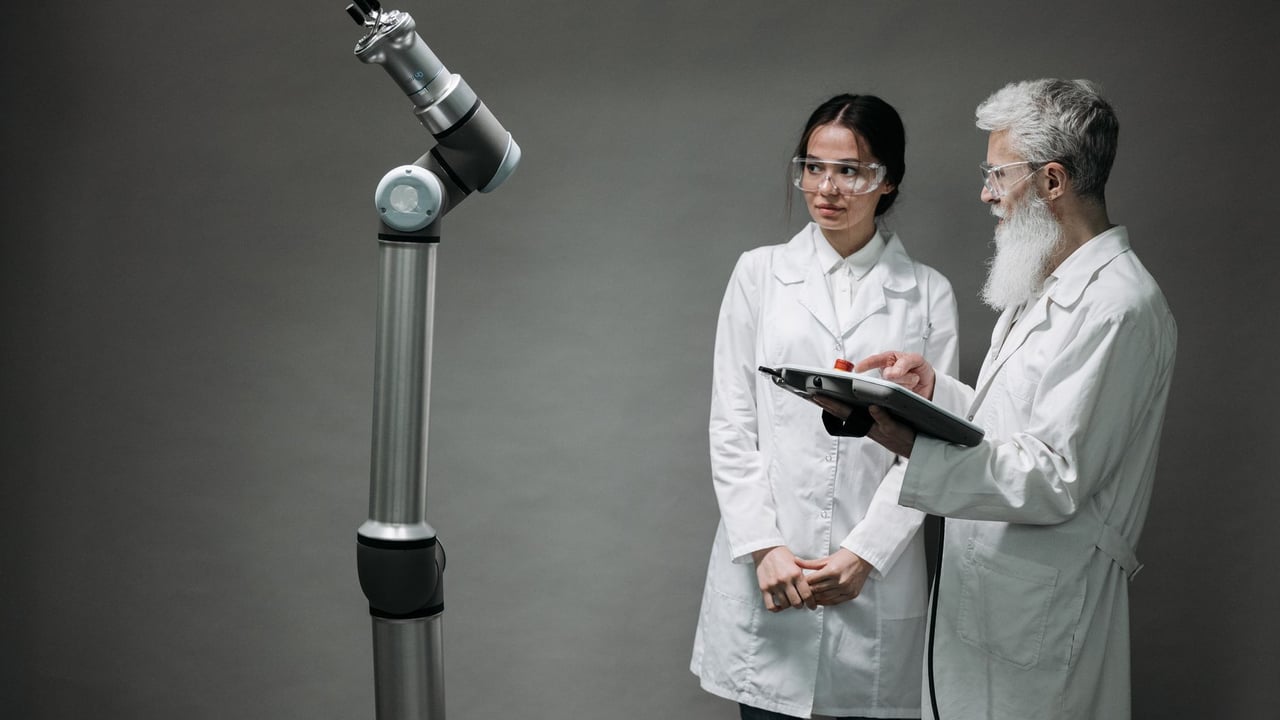
Photo by Pavel Danilyuk on Pexels
The Brief
China's top leadership has adjusted its strategic formulation for artificial intelligence, upgrading its mandate from 'comprehensive' to 'in-depth' implementation of the national 'AI+' initiative during a Politburo economic meeting. According to state media and policy analysts, the shift formally elevates AI from an auxiliary growth point into an emerging pillar industry tasked with reshaping traditional manufacturing and real-economy supply chains. The leadership simultaneously emphasized steady funding for foundational research alongside balanced governance standards.
Why it matters
The elevated policy status signals that Beijing is directing greater state resources and coordination toward integrating artificial intelligence into core industrial sectors, moving beyond initial demonstration projects to full-chain industrial deployment.
China context
At the start of the 15th Five-Year Plan cycle, Chinese policymakers view artificial intelligence as a primary engine for developing 'new quality productive forces' and modernizing the country's extensive industrial base amid international technological competition.
Editor's View
EDITOR'S VIEW — Analysis and inference, not factual reporting.
Beijing's transition from 'comprehensive' to 'in-depth' AI deployment highlights a recognition that widespread superficial adoption must now translate into measurable productivity gains in traditional industry. However, achieving deep restructuring across full industrial supply chains requires addressing persistent bottlenecks in computing infrastructure, enterprise software integration, and the commercial viability of domestic foundational models.
What to watch
- Follow-up implementation guidelines and sector-specific roadmaps issued by the National Development and Reform Commission and industry ministries
- Adoption rates of intelligent manufacturing solutions and commercialization timelines across heavy industry and robotics
- New regulatory frameworks and safety review mechanisms as AI governance requirements evolve alongside industrial deployment
Key Takeaways
- 1The Politburo upgraded its AI policy mandate from 'comprehensive' to 'in-depth' implementation of the national 'AI+' initiative.
- 2Policy analysts note artificial intelligence is now formally positioned as an emerging pillar industry rather than merely an experimental growth driver.
- 3The leadership outlined a balanced approach combining immediate industrial integration with long-term funding for basic research and cutting-edge technology.
- 4Development goals remain paired with continuous improvements to the national AI governance and regulatory framework.
China's top policymakers have formally elevated the role of artificial intelligence in the national economy, shifting policy guidance toward deeper integration with physical industries and long-term scientific foundations, according to an analysis published by People's Daily.
During a meeting on July 30 to review economic performance and set priorities for the second half of the year, the Politburo of the Communist Party of China emphasized the need to "deeply implement the 'AI+' initiative, develop new forms of the intelligent economy, and improve the artificial intelligence governance system."
State economic analysts highlighted a deliberate shift in phrasing. In late April, the leadership called for "comprehensively implementing" the AI+ campaign, whereas the July meeting upgraded the mandate to "deeply implementing" it. Zhao Rui, a senior economist and deputy director at the Economic Forecasting Department of the State Information Center, told People's Daily that this shift marks a transition from wide-scale superficial application and early demonstrations to structural restructuring across complete industrial supply chains and production workflows.
The leadership's statement also linked the AI+ initiative directly to the goal of "focusing on building emerging pillar industries," refining earlier formulations that aimed more broadly to create a cluster of such industries. According to Zhao, this sequence reflects a strategic repositioning of AI from an incremental "growth point" to a core "pillar" underpinning macroeconomic stability and high-quality development, indicating concentrated state resources and heightened policy support.
The policy blueprint outlines a dual-track strategy designed to balance short-term economic returns with long-term technological resilience. While directing industries to apply AI across sectors, the Politburo highlighted stable, sustained support for basic research and cutting-edge breakthroughs. The leadership maintained its paired framing of economic expansion and systemic regulation, underscoring that accelerating industrial adoption must proceed in tandem with a robust AI governance apparatus.
Sources
- 人工智能这匹“千里马”如何发力? --经济·科技--人民网 — People's Daily · 8/7/2026