
Policy & RegulationAnalysis
China Revises Agriculture Law to Strengthen Rural Governance and Food Security
The updated statute legally enshrines food security mechanisms, rural operating structures, and party oversight.
Share
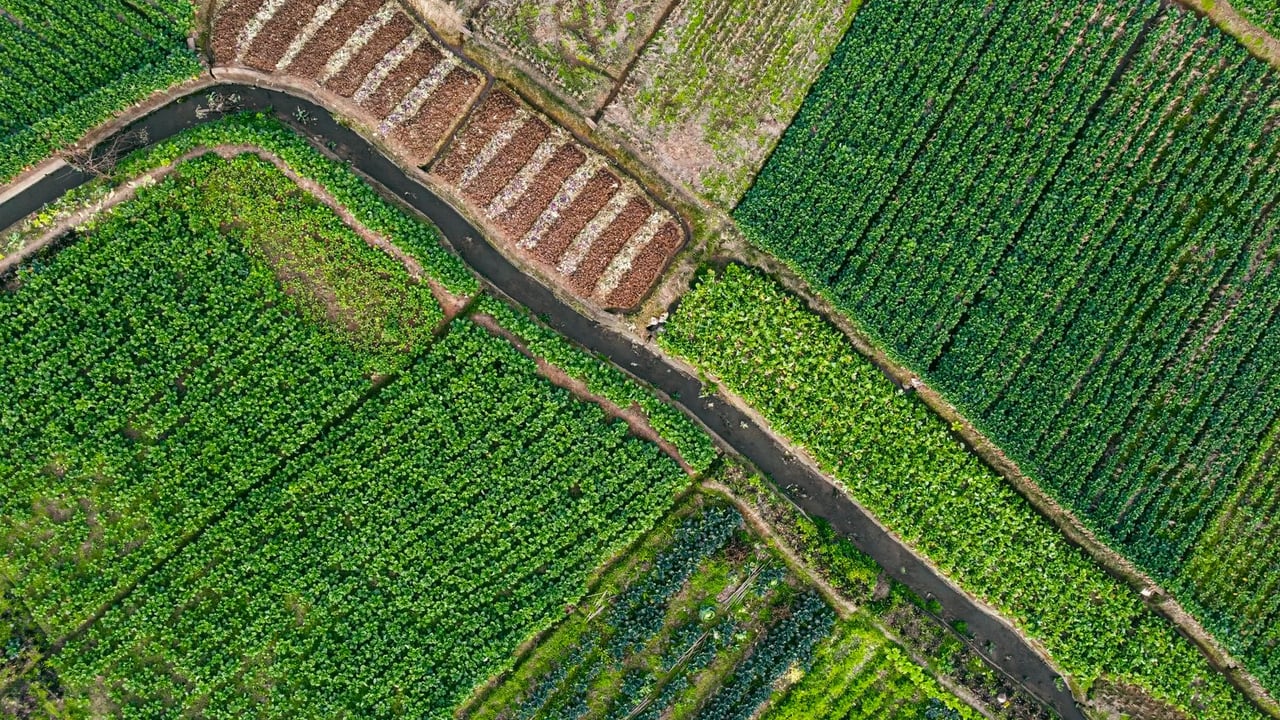
Photo by Harry Xie on Pexels
The Brief
Chinese President Xi Jinping signed Presidential Order No. 82 on August 28, 2026, promulgating the newly revised Agriculture Law adopted by the 24th session of the Standing Committee of the 14th National People's Congress. Totaling 14 chapters and 115 articles, the fundamental statute codifies the ruling party's leadership over rural affairs, institutionalizes national food security strategies, and establishes compensation systems for grain-producing regions and farmer incomes. The revision seeks to align rural development and moderate-scale agricultural operations with modern legal governance.
Why it matters
As the foundational statute governing China's rural economy, the revised Agriculture Law formally codifies central priorities into state law. By cementing compensation mechanisms for major grain-producing regions, protecting farm operational rights, and guaranteeing the prioritization of agricultural spending, the law establishes a binding regulatory baseline for China's drive to build a strong agricultural nation and secure domestic food supply lines against external volatility.
China context
The revision of the Agriculture Law translates policy directives from the 20th Party Congress into legal norms. Confronted with farmland pressures, complex geopolitical food supply chains, and widening rural-urban income disparities, Beijing is shifting from reliance on annual policy documents to durable statutory frameworks. This approach combines administrative mandates with legal protections for family farms and state-owned agricultural enterprises, embedding dual-tier land management firmly into China's legal infrastructure.
Editor's View
EDITOR'S VIEW — Analysis and inference, not factual reporting.
The revised Agriculture Law highlights how Beijing uses overarching legislation to reconcile modern industrial scale with smallholder protection. Rather than altering core property structures, the statute reinforces the existing dual-tier management framework while providing statutory authorization for commercialized socialized services and moderate-scale family farming. Crucially, the legal formalization of compensation mechanisms for major grain-producing areas addresses a persistent structural friction: major agricultural regions often bear heavy fiscal costs for food security while generating less fiscal revenue than industrial hubs. By placing revenue protections and compensation for grain producers on statutory footing, policymakers are attempting to build institutional guardrails against the diversion of agricultural land to non-grain uses.
What to watch
- Publication of the complete statutory text and the official effective date of the revised Agriculture Law.
- State Council and ministry-level issuance of implementing regulations, particularly governing socialized agricultural services and local grain-producer subsidies.
- Rollout of concrete inter-regional financial compensation mechanisms directed toward major grain-producing provinces.
Key Takeaways
- 1President Xi Jinping signed Presidential Order No. 82 on August 28, 2026, officially enacting the revised Agriculture Law.
- 2Passed by the NPC Standing Committee, the law comprises 14 chapters and 115 articles as the primary framework for rural economic governance.
- 3The statute legally codifies the national food security strategy, instituting compensation systems for grain-producing areas and farmer revenue safeguards.
- 4It reinforces the dual-tier rural management system, supporting moderate-scale family farms and professional socialized service networks.
- 5The text formally incorporates party leadership and prioritizes urban-rural integrated development within the legal code.
Chinese President Xi Jinping signed Presidential Order No. 82 on August 28, 2026, promulgating a comprehensively revised Agriculture Law following its passage by the Standing Committee of the 14th National People's Congress at its 24th session, according to state media reports.
The updated statute, which spans 14 chapters and 115 articles, serves as a fundamental and overarching framework governing China's rural economic sector. Official commentary published by People's Daily stated that the legislative overhaul is intended to convert the Communist Party's strategic decisions on rural revitalization and modernization into statutory state law, providing legal backing for agricultural development.
A central focus of the revised text is elevating national food security mechanisms into binding law. The statute explicitly incorporates the national food security strategy, formalizes compensation frameworks for major grain-producing regions, and mandates income protection mechanisms for grain producers alongside market regulation tools. These provisions aim to stabilize domestic agricultural output and preserve incentives for both local administrations and farmers to maintain grain acreage.
The revised law also consolidates China's rural basic management system. It reiterates adherence to the dual-tier operating system—which integrates collective ownership with household contract management—while promoting moderate-scale farming appropriate to local conditions. The law outlines measures to build modern agricultural production and industrial systems, bridge individual smallholder operations with wider agricultural industrialization, and develop multi-tiered professional socialized service networks. Furthermore, the provisions explicitly protect the legitimate land rights of family farms as well as state-owned agricultural, forestry, pastoral, and fishery enterprises.
In addition to economic management provisions, the law incorporates statutory mandates ensuring that rural and agricultural affairs remain under party leadership. It formalizes policy concepts including rural ecological development, the prioritization of agricultural and rural spending, and integrated urban-rural governance frameworks.
State authorities have emphasized that the implementation of the law will focus on closing regulatory gaps and institutionalizing recent rural reform experiments, establishing a unified legal baseline for China's broader agricultural modernization agenda.
Sources
- 为加快建设农业强国推进农业农村现代化夯实法治根基 --时政--人民网 — People's Daily · 8/31/2026