
Policy & RegulationAnalysis
China Coordinates 'Six Networks' Infrastructure Drive for Smart Industry
Beijing pushes cross-sector integration of computing, 5G, energy, water, logistics, and pipelines ahead of the 15th Five-Year Plan.
Share
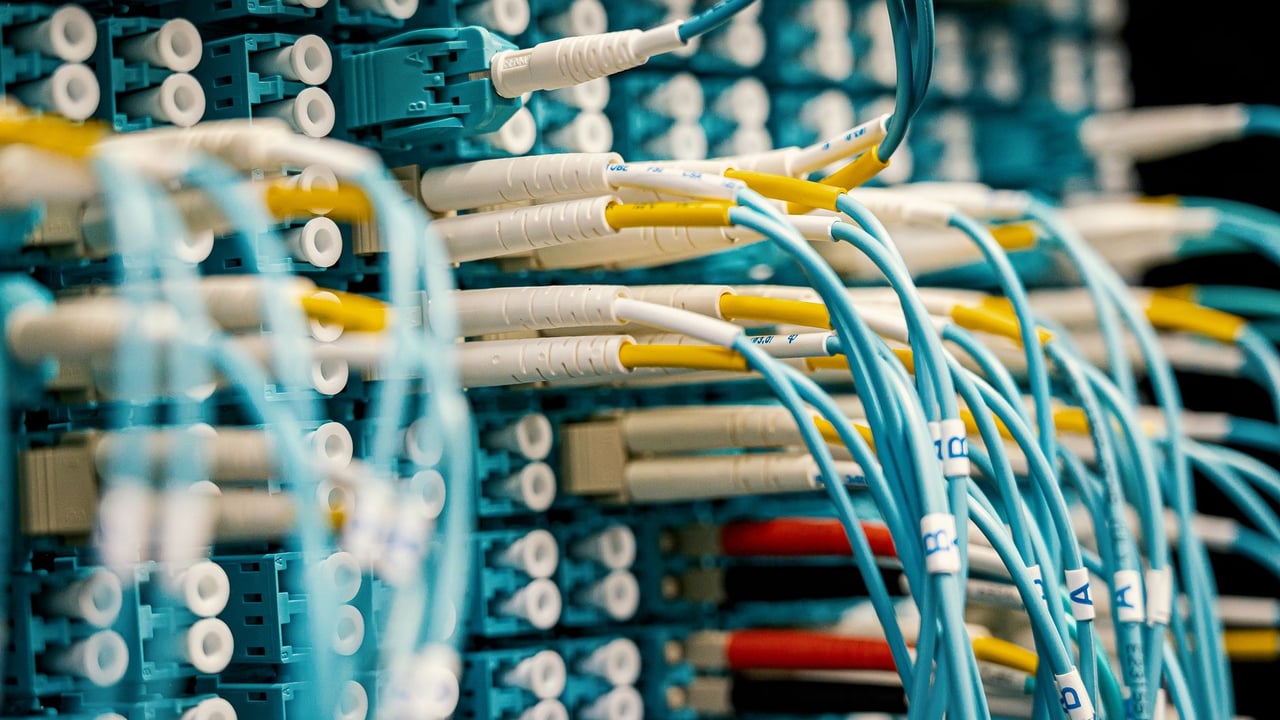
Photo by Brett Sayles on Pexels
The Brief
Chinese authorities are rolling out a strategic infrastructure agenda known as the "Six Networks" to unify computing, next-generation communications, modern power grids, logistics, water systems, and underground municipal pipelines ahead of the 15th Five-Year Plan. The initiative marks a policy pivot from building isolated infrastructure projects toward systemic cross-network integration. Officials and industrial operators highlight that synchronizing these physical and digital systems is already driving operational gains in sectors ranging from smart home appliance manufacturing to automotive-grade semiconductor fabrication.
Why it matters
The "Six Networks" agenda signals a structural shift in Chinese infrastructure investment, moving away from standalone capex expansion toward coordinated efficiency. By aligning computing and 5G connectivity with traditional power, water, logistics, and pipeline assets, Beijing aims to lower comprehensive factor costs, optimize energy and water consumption, and strengthen manufacturing supply chain resilience across high-tech industrial hubs.
China context
Preparing for the 15th Five-Year Plan (2026–2030), the National Development and Reform Commission (NDRC) and line ministries are emphasizing "high-efficiency investment" to foster new quality productive forces. Rather than relying on traditional debt-fueled civil engineering alone, China is leveraging its unified domestic market to intertwine digital infrastructure, such as 5G-Advanced and AI computing nodes, directly with physical utilities and industrial production floors.
Editor's View
EDITOR'S VIEW — Analysis and inference, not factual reporting.
The operational significance of the "Six Networks" lies in addressing long-standing structural silos between utility operators, telecom carriers, and industrial parks. If execution succeeds, unified digital management across water, energy, and communications can sharply reduce operational waste and downtime in precision manufacturing. However, cross-ministerial coordination and fragmented municipal financing across water, telecom, and grid authorities will serve as the true test of whether systemic synergy can be scaled nationwide.
What to watch
- Whether the National Development and Reform Commission issues formal guidelines and major project catalogs for "Six Networks" coordination.
- How provincial and municipal authorities allocate infrastructure funding across computing, power, and municipal pipelines in their local 15th Five-Year Plans.
- Further adoption of unified smart-infrastructure standards in high-end semiconductor and advanced equipment manufacturing facilities.
Key Takeaways
- 1China's central planners are advancing the "Six Networks" initiative covering computing, next-gen communications, power grids, logistics, water, and underground pipelines for the 15th Five-Year Plan.
- 2The policy focuses on cross-network synergy rather than fragmented, standalone infrastructure construction.
- 3At Haier's Tianjin smart factory, integrated utilities and digital networks have enabled multi-model flexible manufacturing and cut water usage by 54 percent.
- 4In Guangzhou's Nansha District, third-generation semiconductor production is being anchored by 5G-Advanced upgrades and dedicated power infrastructure.
Chinese economic planners and industrial ministries are shifting their infrastructure strategy toward systemic synergy, launching major coordination mechanisms for the "Six Networks" ahead of the upcoming 15th Five-Year Plan period. According to state media reports, the initiative brings together six critical pillars: computing networks, next-generation communications, modern power grids, logistics, water networks, and urban underground pipeline networks.
National Development and Reform Commission (NDRC) officials and state researchers note that the framework moves beyond standalone infrastructure projects toward "multi-network, software-hardware, and scenario-based" coordination. Xiao Hongwei, a researcher at the State Information Center's Economic Forecasting Department, stated that the strategy elevates infrastructure planning from individual network construction to coordinated synergy. NDRC spokesperson Li Chao compared the different networks to interrelated systems in the human body, such as respiratory and circulatory functions, which must operate collaboratively.
Industrial sites are serving as testing grounds for this integrated model. At Haier's smart washing machine factory in Tianjin's Jinnan District, a single production line can switch between 320 product models, turning raw steel into a finished appliance in 38 minutes. Zhang He, an engineering platform lead at the facility, said the plant integrates AI computing decisions with a private 5G network covering 15 manufacturing scenarios, while underground pipeline sensors provide predictive maintenance and upgraded water circulation systems reduce total water consumption by 54 percent.
A parallel dynamic is taking shape in southern China's Greater Bay Area. In the Wanqingsha Integrated Circuit Industrial Park in Guangzhou's Nansha District, automotive-grade compound semiconductor manufacturer Guangdong Xinyueneng Semiconductor Co., Ltd. relies on dense infrastructure backing. Company Chairman Xiao Guowei noted that precision chip manufacturing demands continuous, high-reliability electricity and rapid data flows. Nansha has deployed nearly 9,000 5G base stations, upgraded seven industrial parks to 5G-Advanced networks, and extended 10-gigabit optical connectivity to ensure real-time analytics across semiconductor production lines.
Sources
- 从智能工厂看“六张网”建设(经济聚焦·“六张网”这样建) --经济·科技--人民网 — People's Daily · 9/4/2026