
Technology & AIAnalysis
China Upgrades Edge Computing Infrastructure to Bolster AI Deployment
Industrial operators in Shanghai coordinate proprietary hardware and software to support low-latency artificial intelligence workloads.
Share
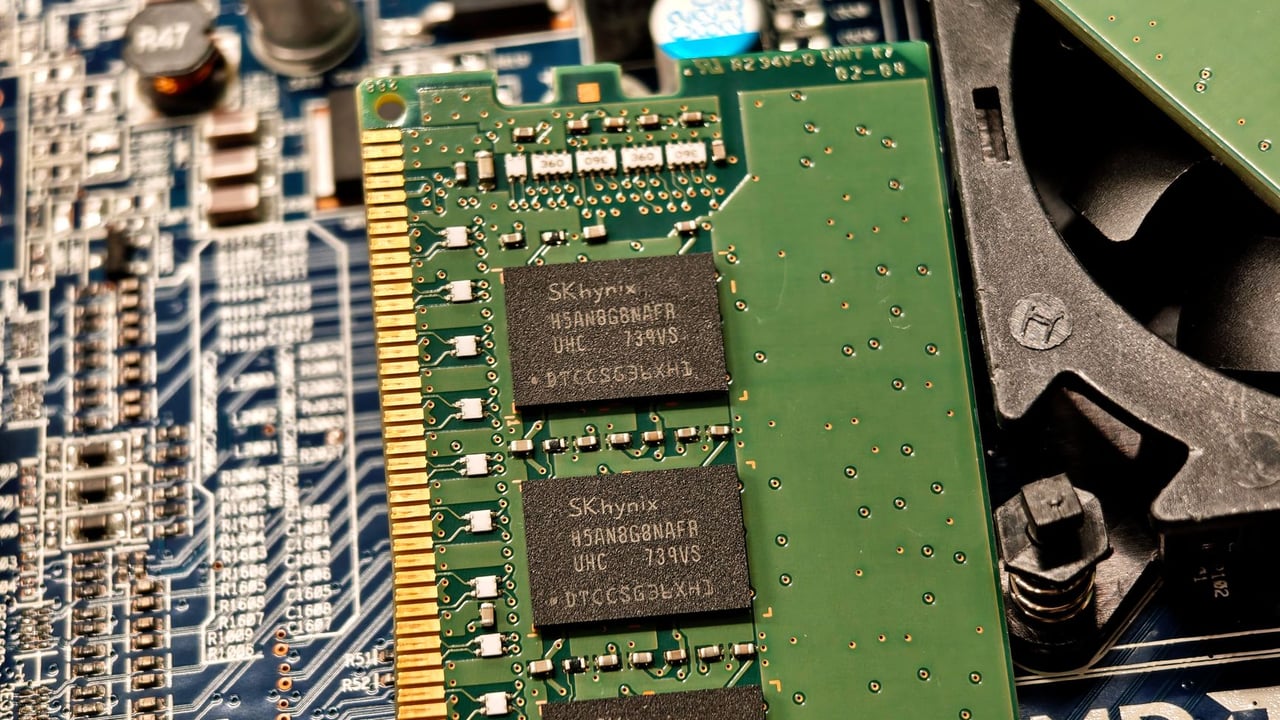
Photo by Adriano Ponte Abreu on Pexels
The Brief
Chinese telecommunications and computing enterprises are accelerating upgrades to edge computing nodes to build out the physical and digital foundation for broad artificial intelligence adoption. Centered on projects such as the National (Shanghai) New-type Internet Exchange Center, domestic firms including Kunlun Cloud and Sanjianxi E-commerce Group are combining proprietary hardware, software-defined networking, and AI content safety tools. Platform operators report maintaining over 95% operating capacity since 2021, illustrating an ongoing push to anchor compute-network integration within a domestic, self-reliant supply chain.
Why it matters
Edge computing nodes reduce data transmission latency and bandwidth overhead by moving intelligence closer to industrial endpoints, connected vehicles, and consumer devices. Creating an efficient, domestic hardware and scheduling ecosystem at internet exchange points directly impacts how cost-effectively enterprises can operationalize generative AI and large models at scale under national digital economy blueprints.
China context
Beijing is actively prioritizing its 'AI+' action plan, which seeks to integrate artificial intelligence across industrial manufacturing, urban governance, and digital commerce. National New-type Internet Exchange Centers serve as critical shared network fabrics connecting major telecom carriers, cloud providers, and data centers. Integrating edge nodes into this setup aligns with China's broader objective of building an autonomous, resilient compute-and-network backbone.
Editor's View
EDITOR'S VIEW — Analysis and inference, not factual reporting.
The deployment at the Shanghai exchange hub demonstrates how Chinese edge computing strategies emphasize vertical supply-chain coordination over isolated technology bets. By pairing custom networking protocols like SRv6 with proprietary edge hardware and dedicated generative AI compliance layers, operators are constructing an integrated pipeline that addresses both throughput efficiency and domestic regulatory compliance directly at the distribution boundary.
What to watch
- Whether additional regional National New-type Internet Exchange Centers adopt similar edge computing and intelligent scheduling architectures.
- Commercial rollout and independent technical benchmarks for Sanjianxi E-commerce Group's proprietary edge computing hardware.
- The development of standard regulatory frameworks for generative AI corpus validation at the CDN edge.
Key Takeaways
- 1China is speeding up edge node upgrades to establish resilient infrastructure for widespread 'AI+' industrial adoption.
- 2The National (Shanghai) New-type Internet Exchange Center is applying SDN and SRv6 protocols to facilitate interconnected, low-latency computing.
- 3A domestic consortium involving Kunlun Yunsheng, Sanjianxi E-commerce Group, and Beijing Zhiyu'ai Technology handles scheduling, hardware, and AI content compliance.
- 4Platform operators state the Shanghai deployment has operated at over 95% full load capacity across five major upgrades since 2021.
Chinese technology enterprises and network operators are accelerating the optimization and technical upgrading of internet edge nodes to bolster foundational infrastructure for scaled artificial intelligence deployment, according to a report by People's Daily.
As smart terminals proliferate across connected urban management, automated manufacturing, and consumer tech, Chinese industrial strategists are advocating an approach that pairs proactive backbone infrastructure expansion with targeted edge node deployment. The goal is to build an integrated compute-and-network system that anchors the country's broader 'AI+' initiative, ensuring data-heavy workloads can be processed with low latency and lower transit costs across disparate cloud environments.
A key reference model cited in the initiative is the National (Shanghai) New-type Internet Exchange Center. The facility leverages software-defined networking (SDN) and Segment Routing over IPv6 (SRv6) to realize a flexible networking architecture that enables single-point network access with multi-point interconnection, supported by a multi-layered digital security apparatus. Domestic cloud vendor Kunlun Cloud has taken a central role in constructing and operating the platform, drawing upon in-house research across semiconductor chips, telecom gear, optical-electrical communications, and cybersecurity.
The deployment relies on a distinct domestic division of labor across the computing chain. Within the consortium, Kunlun Yunsheng manages underlying software platform development, automated workload scheduling, and commercialized platform operations. Edge computing hardware is supplied directly by Sanjianxi E-commerce Group. To address distribution and regulatory demands, the ecosystem also partners with Beijing Zhiyu'ai Technology, integrating generative AI corpus curation and cognitive optimization tools to safeguard compliance and content delivery across content distribution networks (CDNs).
Platform leadership reported that the edge-integrated system has maintained a continuous full-load operating rate above 95% since its interconnection in 2021, having completed five major technical iterations guided by Kunlun Cloud. Domestic technology experts cited by People's Daily noted that sustaining this momentum will require further independent innovation across hardware, deeper integration across industrial application scenarios, and more robust compliance controls to weave an interoperable national edge computing web.
Sources
- 夯实人工智能发展底座 业界加快互联网边缘节点优化升级--经济·科技--人民网 — People's Daily · 9/2/2026