
Policy & RegulationAnalysis
China Advances Urban Renewal with New Housing Standards and Financing Models
Nationwide initiative targets housing quality and old neighborhood retrofits for 940 million urban residents.
Share
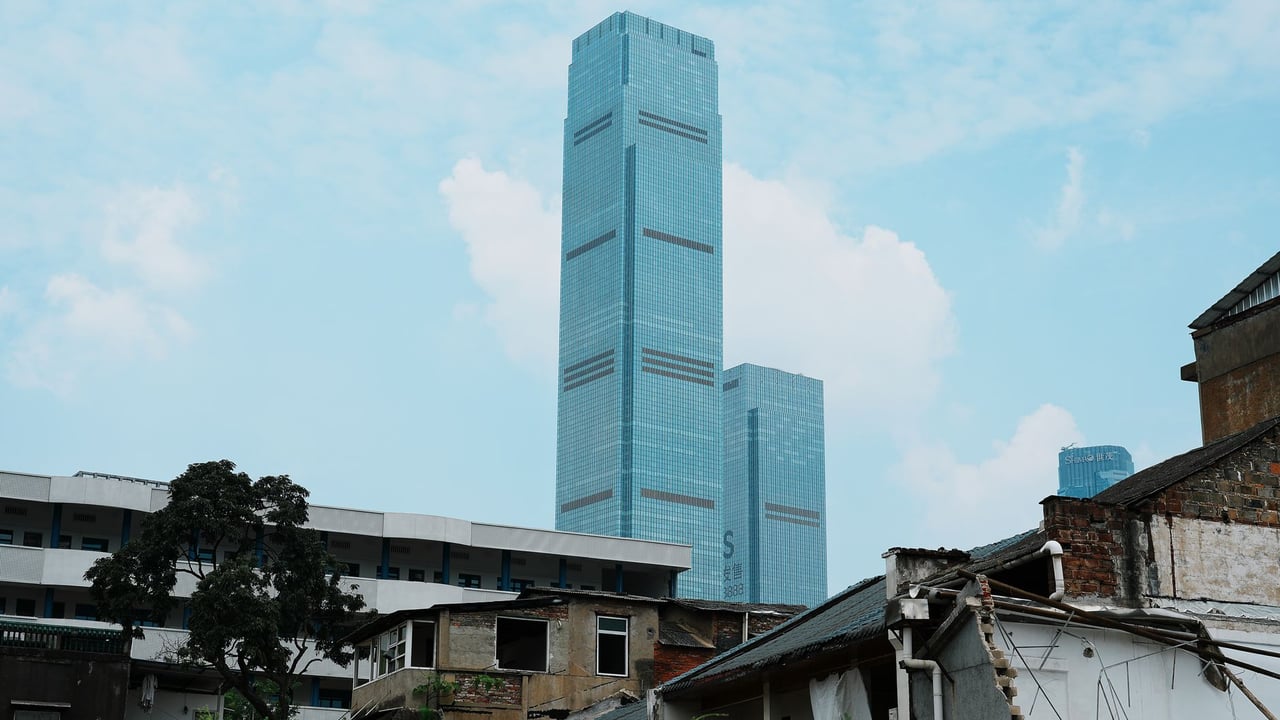
Photo by Evon Feng on Pexels
The Brief
China is expanding its urban renewal drive across its more than 690 cities to upgrade living standards for 940 million urban residents. According to People's Daily, local authorities and state developers are rolling out updated residential construction standards alongside tailored retrofitting projects for older neighborhoods. Following national guidelines enacted in May 2025, Sichuan became the first province to launch a local "good housing" rating framework in June 2025. Financing for old neighborhood upgrades relies on a blended model combining fiscal subsidies, commercial loans, and revenue generated from shared neighborhood assets.
Why it matters
Urban renewal and the creation of quality residential spaces directly impact the living conditions and safety of over 900 million urban residents in China. Moving from basic shelter to higher quality living serves as both a public welfare initiative to address infrastructure deficits and an economic engine. Upgrading existing urban housing stock stimulates domestic demand while driving long-term transformation in the construction, building materials, and property management sectors.
China context
As China's urbanization shifts toward high-quality development, urban renewal has moved to the center of city planning. The central government is deploying updated national specifications and regional evaluation benchmarks to guide old neighborhood retrofits and affordable housing construction. Local officials are actively testing co-funding mechanisms that combine public guidance, commercial debt, and neighborhood asset monetization to sustain large-scale stock upgrades without relying solely on state budgets.
Editor's View
EDITOR'S VIEW — Analysis and inference, not factual reporting.
The implementation of localized standards like Sichuan's star-rating system signals a shift toward measurable quality metrics in Chinese residential development. However, the long-term viability of urban renewal projects will largely depend on the performance of public-private financing models. While commercial low-interest loans and revenues from underground garages or shared assets provide immediate funding for retrofits, sustaining long-term property maintenance and operational management in older communities remains a structural challenge.
What to watch
- Implementation and adoption of local 'good housing' evaluation standards across additional Chinese provinces.
- Expansion and financial sustainability of community asset monetization and co-funding models in old neighborhood retrofits.
- Delivery milestones for major affordable housing initiatives, such as Shanghai's Yunqi Huating project by late 2027.
Key Takeaways
- 1China is advancing urban renewal across 690+ cities where 940 million residents live.
- 2An updated national Housing Project Specification took effect in May 2025, followed by Sichuan's localized star-rating system in June 2025.
- 3Shanghai's Yunqi Huating project showcases new design norms, including 30 dB nighttime noise controls and 2,681 units scheduled for delivery by late 2027.
- 4Old neighborhood retrofits, such as Shanghai's Citizens' New Village, rely on tailored design options based on resident feedback.
- 5Retrofit financing structures incorporate city and district fiscal support, low-interest bank loans, and rental income from shared neighborhood assets.
China is stepping up its urban renewal efforts across more than 690 cities, targeting improved living conditions for its 940 million urban residents, according to a report by People's Daily. The national push focuses on developing high-quality housing, neighborhoods, communities, and urban districts through upgraded technical standards and diversified retrofitting models.
In July, Chinese leadership reiterated during an inspection in Shanghai that high-quality urban renewal serves as a key driver for urban modernization, calling for measures grounded in public needs and feedback. The initiative builds on the updated national Housing Project Specification, which came into effect on May 1, 2025, establishing detailed quality baselines for residential projects.
Following the national framework, Sichuan province implemented its own Good Housing Evaluation Standard on June 1, 2025, marking the country's first regional rating system under the new guidelines. The provincial standard assigns a one- to three-star rating based on building dimensions, spatial layouts, acoustic insulation, lighting, and environmental factors. In Shanghai, projects like the Yunqi Huating resettlement housing in Minhang District demonstrate these standards in practice. Constructed by CSCEC 8th Bureau, the 2,681-unit project incorporates three-meter ceiling heights, dual balconies, and soundproofing materials designed to maintain nighttime indoor noise below 30 decibels before its expected delivery at the end of 2027.
Parallel to new construction, local governments are tackling older residential complexes. In Shanghai's Huangpu District, a retrofit of the Citizens' New Village community replaced shared facilities with independent kitchens, bathrooms, and balconies across 351 households. Project planners developed over 40 customized floor plans based on resident input. Funding for the renovation combined district and municipal fiscal support, low-interest commercial bank loans, and rental revenues generated from commercial assets such as underground parking garages. An official from the Ministry of Housing and Urban-Rural Development noted that authorities will continue coordinating standards, design, materials, construction, and operations to expand high-quality housing across both new and existing residential stock.
Sources
- 推进城市更新 打造“四好”空间(经济新方位) --经济·科技--人民网 — People's Daily · 8/2/2026