
Technology & AIAnalysis
China's Icebreaker Xue Long Completes 12 Arctic Ice Station Operations
Researchers deployed over 30 ice-based buoys and profiling floats to collect continuous climate data across the central Arctic Ocean.
Share
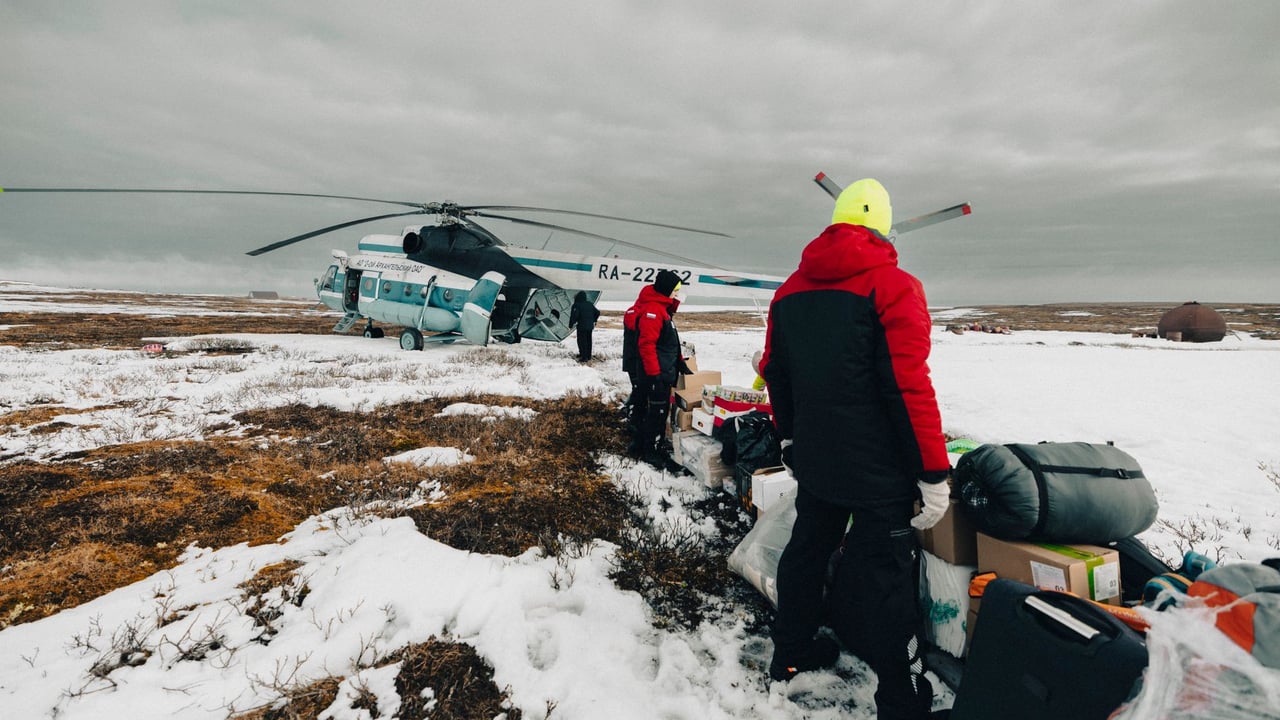
Photo by Dmitriy Ryndin on Pexels
The Brief
The Chinese polar research icebreaker Xue Long has concluded its 12th and final ice station operation at 83°50′N in the central Arctic Ocean as part of China's 16th Arctic Ocean scientific expedition. Operating alongside the Xue Long 2, the vessel deployed more than 30 autonomous ice-based buoys and oceanographic profiling instruments designed to overcome the temporal limitations of summer-only shipboard observations and gather multi-season climate and ocean data.
Why it matters
Arctic sea ice plays an essential role in regulating global climate and atmospheric circulation. Because conventional ship-based polar research is heavily constrained to summer months, deploying unmanned autonomous monitoring stations on sea ice enables continuous, year-round data collection across the atmosphere-ice-ocean boundary. This continuous data stream is vital for refining global climate models and predicting mid-latitude extreme weather events.
China context
China describes itself as a 'near-Arctic state' and has conducted Arctic scientific expeditions since 1999. This voyage marks the 10th Arctic mission for the Xue Long and its first return to the northern polar region in six years. Conducting operations jointly with the Xue Long 2, the mission highlights China's expanding logistics and autonomous monitoring infrastructure in high-latitude polar environments.
Editor's View
EDITOR'S VIEW — Analysis and inference, not factual reporting.
The deployment of autonomous ice-tethered platforms and drifting Argo floats reflects a broader structural transition in oceanographic research from episodic, vessel-bound sampling to persistent sensor networks. By establishing a denser array of uncrewed buoys in the central Arctic Basin, researchers can capture winter freeze-up and transitional dynamics that have historically suffered from sparse in-situ measurement.
What to watch
- Telemetry performance and survival rates of the 30-plus ice-based buoys as sea ice drifts and deforms through the autumn freeze.
- Subsequent oceanographic section surveys scheduled for Xue Long and Xue Long 2 before their return transit.
- Scientific publications analyzing the air-ice-sea interface and upper-ocean heat content data collected during the expedition.
Key Takeaways
- 1Xue Long completed its 12th ice station at 83°50′N, concluding its ice-bound observation tasks for the 16th Arctic expedition.
- 2More than 30 sets of autonomous ice-based observation buoys were deployed across the central Arctic Ocean.
- 3The vessel deployed XCTD probes and Argo floats in the Northwest Pacific starting July 7 before entering the Arctic Circle on July 15.
- 4This voyage marks the 10th Arctic mission for Xue Long and its first expedition to the region in six years.
The Chinese polar research vessel Xue Long has completed its 12th and final ice station operation in the central Arctic Ocean at latitude 83°50′N, according to reports published by Chinese state media from Science and Technology Daily.
The operation marks the completion of the ice station phase for the vessel during China's 16th Arctic Ocean expedition. Expedition deputy leader and chief scientist He Jianfeng stated that the mission set a new record for the number of ice station operations completed during an expedition and successfully deployed more than 30 sets of uncrewed, ice-based observation buoys.
The expedition departed from Dalian on July 3, deploying both the Xue Long and the newer icebreaker Xue Long 2. The Xue Long traversed the Bering Strait to enter the Arctic Circle on July 15 before initiating full-scale scientific operations in the central Arctic Basin.
Prior to entering Arctic waters, the vessel deployed expendable conductivity-temperature-depth (XCTD) probes and core Argo profiling floats in international waters of the Northwest Pacific starting July 7. XCTD instruments capture real-time temperature, salinity, and depth profiles while the ship is underway. Argo floats repeatedly descend to programmed target depths and ascend to the surface, transmitting oceanographic data via satellite to global observation networks.
According to mission scientists, ice-based operations serve two primary functions: fine-scale sampling of sea ice and the air-ice-sea interface, and serving as stable drifting platforms for autonomous long-term monitoring equipment. Traditional vessel-based surveys are largely restricted to polar summer months due to operational and logistical constraints. Placing unmanned instruments on drifting floes allows researchers to collect continuous, multi-season data on ice thickness, atmospheric flux, and upper-ocean properties, addressing long-standing data gaps in Arctic climate research.
Sources
- “雪龙”号完成12个冰站作业任务--经济·科技--人民网 — People's Daily · 8/12/2026