
Business & IndustryAnalysis
Long March 10B Reusable Flight Targeted for Completion by Late 2026
Following successful recovery tests, China's heavy-lift rocket variant moves toward operational reusability.
Share
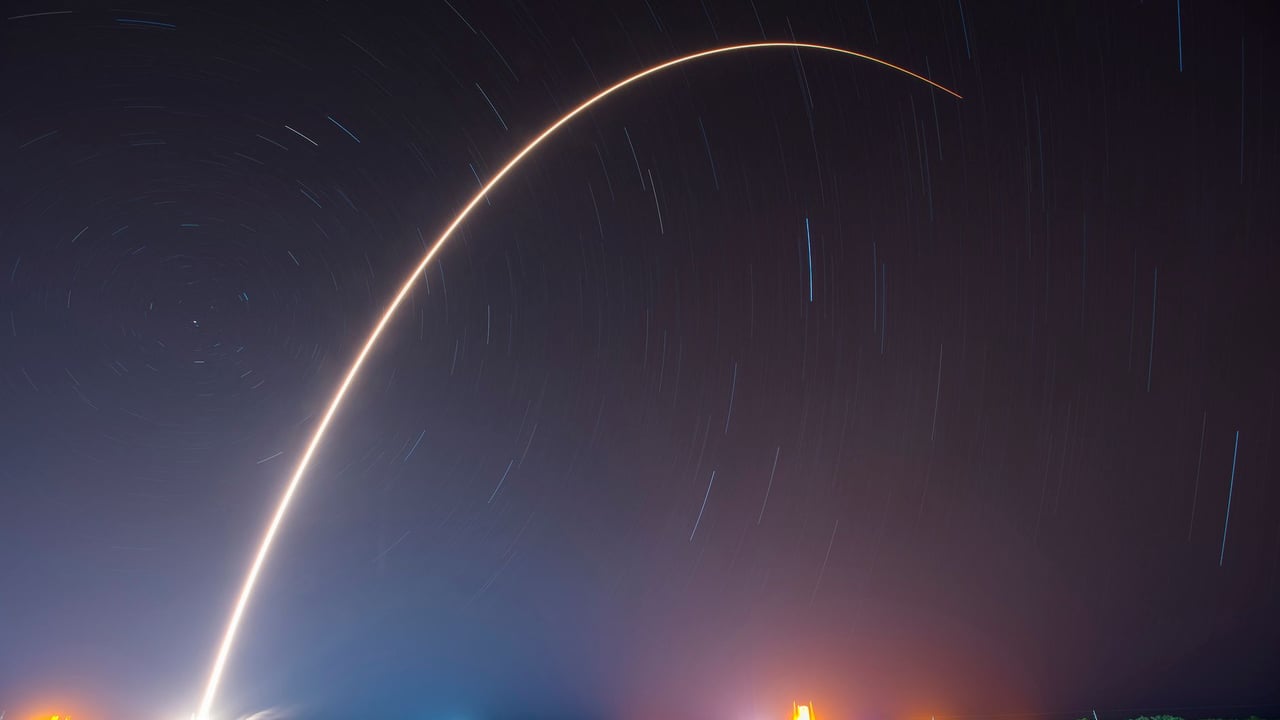
Photo by SpaceX on Pexels
The Brief
China's Long March 10B rocket is projected to achieve its first reusable flight by the end of 2026. This follows successful recovery milestones for the launch vehicle. As a critical component of China's broader space ambitions, the Long March 10 series is designed to support lunar exploration and heavy-payload missions. The transition to reusability for such high-thrust rockets signifies a strategic shift toward lowering launch costs and increasing launch frequency, aligning with international trends in aerospace technology.
Why it matters
The reusable flight plan for the Long March 10B marks an acceleration in China's transition toward reusable heavy-lift rockets, which is essential for reducing deep-space exploration costs and enhancing international competitiveness.
China context
This development aligns with China's "Space Power" strategy and the positioning of commercial aerospace as a strategic emerging industry, particularly in the context of benchmarking against advanced international reusable rocket technologies.
Editor's View
EDITOR'S VIEW — Analysis and inference, not factual reporting.
While the 2026 target is ambitious, it reflects the high priority the Chinese government places on matching the capabilities of private Western firms like SpaceX. The Long March 10B is not just a technical milestone; it is a prerequisite for sustainable lunar missions. However, the transition from successful recovery tests to a full reusable flight cycle involves significant engineering hurdles in refurbishment and engine durability that remain to be proven at scale.
What to watch
- Official technical parameters and test announcements from the China Aerospace Science and Technology Corporation (CASC).
- Progress of ground tests and suborbital recovery trials for the Long March 10 series between 2025 and 2026.
- Performance and R&D investment changes in related listed aerospace companies such as China Satellite and AVIC Shenyang Aircraft.
Key Takeaways
- 1Long March 10B reusable flight targeted for late 2026.
- 2Follows successful recovery tests of the launch vehicle.
- 3Part of China's strategy to lower deep-space exploration costs.
- 4Aligns with the national "Space Power" strategic objective.
China’s aerospace sector is advancing its capabilities in reusable launch technology, with the Long March 10B rocket now projected to complete its first reusable flight by the end of 2026. This target follows the successful recovery of the vehicle, a milestone that validates the technical path toward sustainable heavy-lift operations.
The Long March 10B is a critical variant within China’s next-generation rocket family. Unlike traditional expendable models, the 10B is designed to incorporate vertical landing technologies, allowing the first stage or boosters to be refurbished and flown again. This shift is central to China’s broader "Space Power" strategy, which seeks to establish a more cost-effective and frequent presence in Earth orbit and beyond.
The move toward reusability is particularly significant for China’s deep-space ambitions. By reducing the cost per kilogram of payload delivered to orbit, the Long March 10B will play a vital role in supporting future lunar exploration missions and the assembly of large-scale space infrastructure. The 2026 timeline indicates an accelerated development schedule, likely aimed at narrowing the technological gap with international competitors who have already demonstrated operational reusability.
However, reaching the 2026 goal will require overcoming several engineering challenges. While recovery tests have been successful, the transition to a full reusable flight cycle involves ensuring that engines can withstand the thermal and mechanical stresses of multiple launches without extensive and costly overhauls. Observers will be looking for upcoming ground tests and suborbital trials to gauge the program's progress.
The development also has implications for China’s domestic commercial aerospace industry. As the state-led program achieves these milestones, it provides a technological roadmap and potential infrastructure support for emerging private rocket companies in China. The success of the Long March 10B could catalyze further investment in the sector, reinforcing aerospace as a strategic emerging industry for the nation.
Sources
- 回收成功之后,长征十号乙预计2026年底前将完成复用飞行! — NetEase · 7/13/2026
- China’s Long March-10B Maiden Flight: First-ever Controlled Rocket Recovery — Leonarddavid