
Business & IndustryAnalysis
Longi Solar Base Secures Level 4 Intelligent Manufacturing Certification
The company's Wuhu plant deployed seven AI engines across back-contact module production lines, cutting quality defects and energy use.
Share
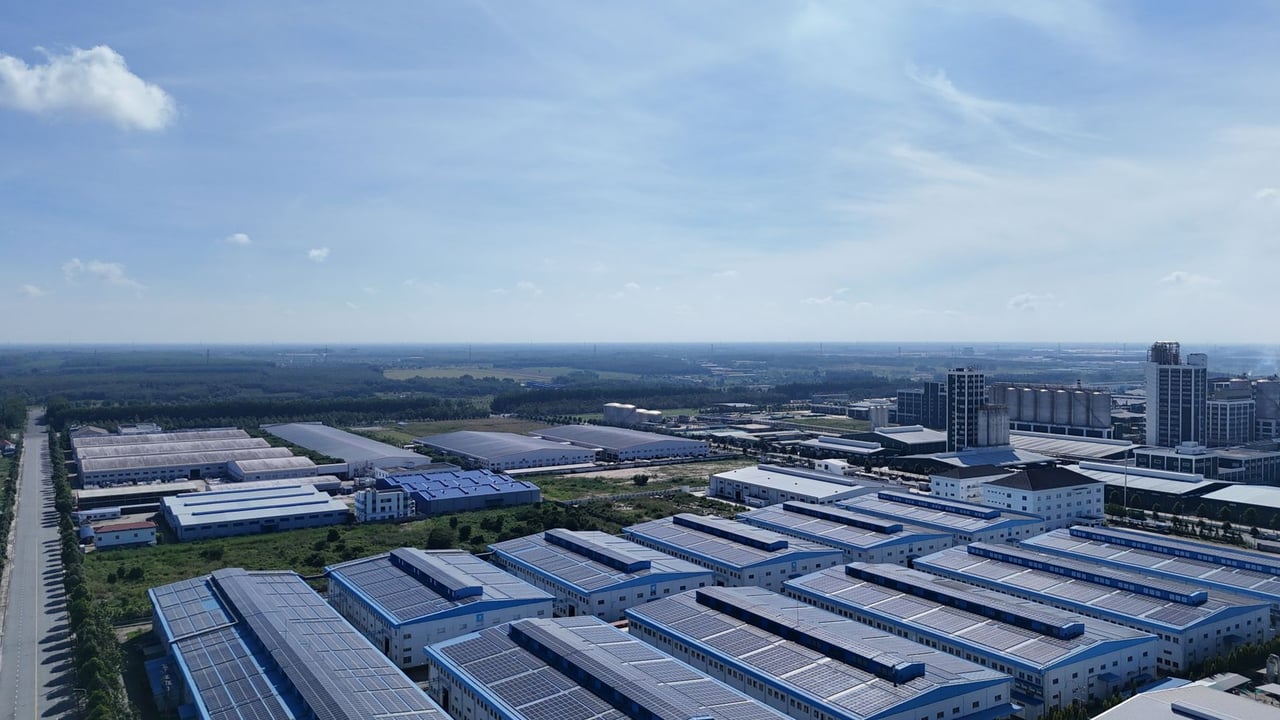
Photo by Vietnam Real Estate on Pexels
The Brief
Longi Green Energy's manufacturing base in Wuhu has achieved Level 4 certification under China's Intelligent Manufacturing Capability Maturity Model (CMMM), according to state media. As a primary production hub for Longi's proprietary back-contact (BC) modules, including the Hi-MO 9 and Hi-MO X10 lines, the facility deployed seven specialized artificial intelligence engines spanning quality inspection, process optimization, and energy management. The company reported measurable efficiency gains, reflecting an industry-wide push to leverage automation amid tightening market margins.
Why it matters
The solar photovoltaic industry faces severe margin pressure, capacity consolidation, and rapid technology iteration. In this environment, manufacturers rely on operational discipline, yield improvements, and cost reduction as core competitive moats. Longi's deployment of AI across its BC module production demonstrates how high-end solar manufacturing is shifting from discrete robotic automation to end-to-end algorithmic process control.
China context
China's Ministry of Industry and Information Technology promotes the CMMM framework as a benchmark for industrial digitalization, with Level 4 representing advanced enterprise-wide integration and optimization. As Beijing encourages high-tech manufacturing to pursue green and intelligent transformation, clean energy equipment makers are increasingly treated as testing grounds for advanced industrial software and artificial intelligence.
Editor's View
EDITOR'S VIEW — Analysis and inference, not factual reporting.
While solar manufacturers frequently tout AI adoption, Longi's specific operational metrics illustrate where software yields tangible cost advantages on the factory floor. The reported 40 percent drop in defect rates and 7 percent cut in energy consumption directly address the primary cost drivers in high-efficiency cell and module assembly. However, the broader commercial success of Longi's back-contact strategy will still hinge on global downstream market adoption and overall supply-demand stabilization.
What to watch
- Whether Longi expands the seven-engine AI architecture across its other domestic and international manufacturing hubs.
- Reported yield rates and per-watt manufacturing cost trajectories for Hi-MO 9 and Hi-MO X10 modules as production scales.
- Broader adoption of CMMM Level 4 standards across competing Chinese tier-one solar manufacturers.
Key Takeaways
- 1Longi's Wuhu manufacturing plant earned CMMM Level 4 certification across 15 operational areas.
- 2The plant serves as the production hub for Longi's Hi-MO 9 and Hi-MO X10 back-contact modules.
- 3Seven specialized AI engines were deployed across quality, scheduling, energy, and process control.
- 4Reported operational gains include an 80% rise in defect detection efficiency, a 40% decline in quality issues, and a 7% reduction in energy consumption.
Longi Green Energy's production base in Wuhu, Anhui province, has passed Level 4 certification under China's Intelligent Manufacturing Capability Maturity Model (CMMM), according to a report by People's Daily. The evaluation assessed 15 critical operational domains, including supply chain procurement, intelligent scheduling, equipment operation and maintenance, energy management, environmental safety, and logistics distribution.
The Wuhu facility serves as a primary manufacturing hub for Longi's flagship back-contact (BC) solar modules, notably the Hi-MO 9 and Hi-MO X10 series. To manage complex assembly tolerances and reduce operational overhead, the plant integrated seven dedicated artificial intelligence engines covering personnel skill tracking, production scheduling, quality inspection, preventive equipment maintenance, process optimization, utility energy management, and warehouse logistics.
According to data reported by People's Daily, the implementation yielded measurable improvements across multiple production metrics. An end-to-end AI-powered defect inspection system reportedly increased defect detection efficiency by 80 percent while reducing the line-wide occurrence of quality defects by 40 percent.
Process and equipment overhauls across four key manufacturing stages—screen printing, soldering, typesetting, and module rework—lifted overall production efficiency by 21 percent. In operational dispatching, an automated task assignment system increased dispatch efficiency by 60 percent. Additionally, an algorithmic HVAC and cooling system optimization lowered overall energy consumption across the plant by 7 percent.
The certification underscores an accelerating trend among major Chinese clean-technology manufacturers to transition from isolated, single-station automation toward enterprise-level, data-integrated factory operations. As solar module pricing remains constrained by sector-wide capacity expansions, leading producers are relying increasingly on algorithmic quality control and process tightening to protect operating margins.
Sources
- 隆基芜湖基地通过CMMM四级认证--经济·科技--人民网 — People's Daily · 9/1/2026