
Business & IndustryAnalysis
Ningbo Petrochemical Hub Pivots from Fuel to High-End Materials
Facing peak fuel demand, the coastal refining base shifts output toward medical-grade polymers and specialized plastics.
Share
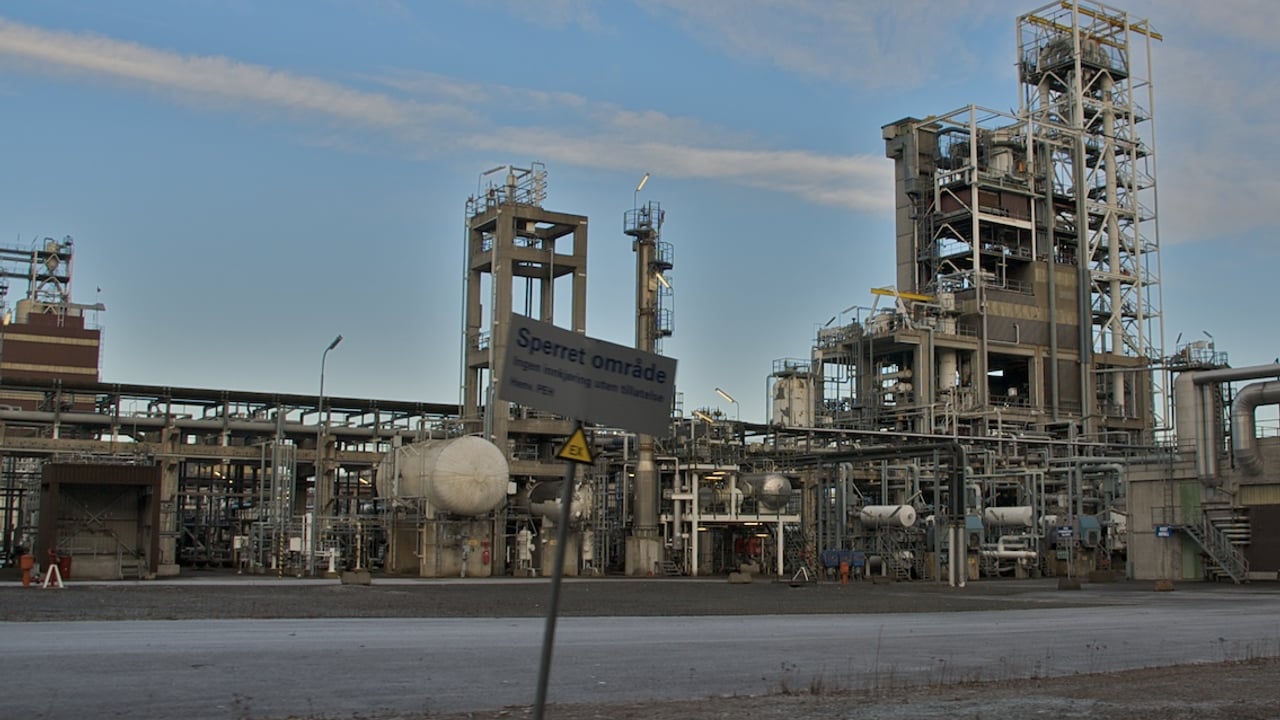
Bitjungle via Wikimedia Commons, CC BY-SA 3.0
The Brief
As China prepares for refined fuel demand to peak amid the rapid adoption of electric vehicles, the Ningbo petrochemical base—boasting 50 million metric tons of annual refining capacity—is accelerating its transition from fuel refining to high-end chemical materials. Key breakthroughs by Sinopec Zhenhai Refining & Chemical Company include domestic food-grade bottle cap resins used by brands like Wahaha and 4-methyl-1-pentene (4M1P), a critical precursor for synthetic polymers used in ECMO artificial lung membranes. Backed by joint municipal and corporate research platforms, the hub exemplifies the nationwide push toward high-value, green manufacturing.
Why it matters
China's mega-refineries face an urgent restructuring imperative as transport electrification curtails the long-term growth of gasoline and diesel consumption. Ningbo's strategy highlights a pragmatic path forward: capturing downstream margins in high-barrier materials that have traditionally depended on imports, while consolidating circular industrial practices within existing industrial parks.
China context
Under national carbon targets and industrial self-reliance mandates, Chinese state-owned refiners are executing a policy known as 'reducing fuel, increasing chemicals' (降油增化). Ningbo has leveraged close public-private integration, placing research laboratories directly adjacent to commercial plants to compress commercialization timelines for advanced polymers and strategic specialty chemicals.
Editor's View
EDITOR'S VIEW — Analysis and inference, not factual reporting.
The Ningbo hub's shift demonstrates how China's traditional heavy industry seeks to insulate itself from structural energy demand destruction. Rather than merely retiring distillation capacity, leading state-owned refiners are moving down the value chain into niche technical polymers—ranging from food contact packaging to biomedical components. The long-term commercial success of these efforts will depend on whether domestic downstream manufacturers adopt these specialized resins at scale without sacrificing margin.
What to watch
- Commercial scaling and clinical validation timelines for domestic polymethylpentene (PMP) membranes derived from Ningbo's 4M1P output
- Adoption rates of homegrown specialty polyethylene and polyester grades across major Chinese consumer packaging and textile manufacturers
- Policy targets and quota shifts governing the 'fuel-to-chemicals' transition in the upcoming 15th Five-Year Plan
Key Takeaways
- 1Ningbo's petrochemical base has an aggregate annual refining capacity of 50 million metric tons and is reallocating feedstocks from fuel to specialty chemicals.
- 2Refiners anticipate domestic refined oil demand will peak during the 15th Five-Year Plan period due to rising electric vehicle adoption.
- 3Sinopec Zhenhai Refining developed the ZH5050 polyethylene bottle cap resin, replacing imported materials and supplying domestic beverage brands such as Wahaha.
- 4The plant achieved qualified production of 4M1P, the key monomer for polymethylpentene (PMP) membranes used in ECMO medical equipment.
- 5The Sinopec Ningbo New Materials Research Institute, co-founded by Sinopec and the Ningbo municipal government, directly interfaces with manufacturing lines to accelerate commercialization.
China's petrochemical sector is accelerating its structural pivot away from traditional transport fuels toward advanced materials as domestic demand for refined oil nears its peak, according to state media outlet People's Daily. In Ningbo, home to an aggregate refining capacity of 50 million metric tons per year, major refining complexes are overhauling product slates to address intensifying competition in conventional refining and align with national decarbonization goals.
Driving the transformation is the rapid penetration of new energy vehicles, which industry planners anticipate will cause refined oil consumption to crest and decline during the 15th Five-Year Plan period. Huang Aibin, deputy manager of the science and technology department at Sinopec Zhenhai Refining & Chemical Company, noted that the industry's supply-demand framework has shifted fundamentally, requiring refiners to build entirely new product architectures under an operational mandate known across China as 'reducing fuel, increasing chemicals.'
To bridge the gap between basic petrochemicals and specialized end-use resins, local authorities and China Petrochemical Corporation (Sinopec Group) co-established the Sinopec Ningbo New Materials Research Institute, managed by Zhenhai Refining. Positioned adjacent to operating production units, the institute facilitates rapid transfer from laboratory synthesis to full-scale manufacturing.
This setup has recently yielded multiple technical milestones. In food-grade polymers, Zhenhai Refining commercialized its ZH5050 polyethylene bottle cap resin, ending a historical reliance on imported materials for beverage closures. According to Lin Huajie, deputy head of the institute, the food-contact material underwent rigorous testing for environmental stress-crack resistance, torque balance, and organoleptic neutrality—supported by a specialized sensory evaluation team—before securing national food safety certifications and adoption by major beverage producers including Wahaha.
Further up the technical complexity curve, the facility successfully synthesized qualified 4-methyl-1-pentene (4M1P), a critical monomer utilized in producing polymethylpentene (PMP). PMP serves as the core membrane material for extracorporeal membrane oxygenation (ECMO) devices, widely referred to as artificial lungs. Alongside developments by peer manufacturers in the Ningbo Petrochemical Economic and Technological Development Zone—including methionine, advanced polyolefins, and specialized polyesters like PTT—the cluster is systematically expanding its high-end portfolio.
Sources
- 炼油石化基地 向高向绿向智(产经视野·做强做优做大实体经济) --经济·科技--人民网 — People's Daily · 9/1/2026