
Business & IndustryAnalysis
PetroChina Starts Up Country's Largest Associated Gas Processing Station
A newly added 1.5-million-cubic-meter unit at Xinjiang Oilfield expands total daily capacity to 3.9 million cubic meters.
Share
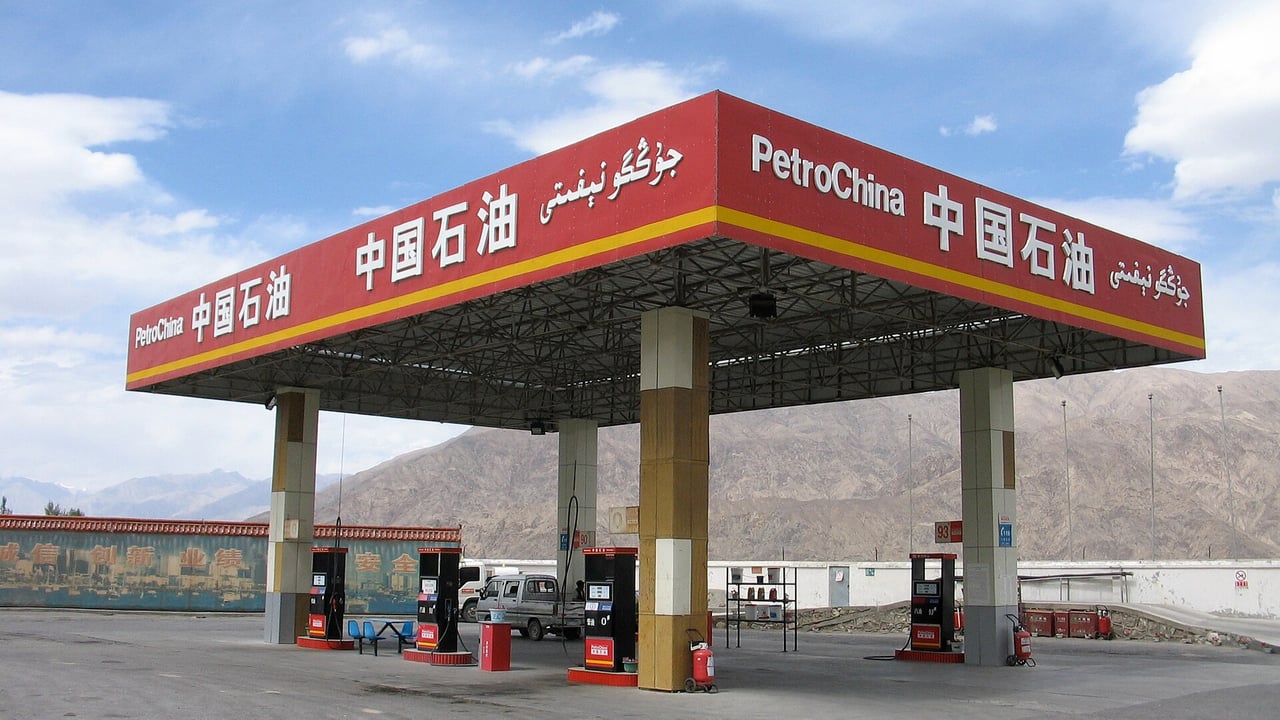
Otebig at English Wikipedia via Wikimedia Commons, Public domain
The Brief
PetroChina's Xinjiang Oilfield has commissioned a new shallow-cooling unit with a daily processing capacity of 1.5 million cubic meters at its No. 81 Natural Gas Processing Station. The expansion brings the station's total daily handling capacity for oilfield associated gas to 3.9 million cubic meters, making it the largest processing facility of its kind in China. Completed 90 days ahead of schedule, the project aims to turn associated gas—often prone to flaring or waste—into usable clean energy and chemical feedstocks.
Why it matters
Scaling up associated gas processing capacity directly addresses methane emissions and flaring in mature oilfields. By capturing and refining heavy hydrocarbons and sour gas components, operators can reduce environmental footprints while extracting commercial value from byproduct gas streams.
China context
Under China's broader carbon reduction commitments, state-owned energy giants are upgrading mature oil and gas fields to capture byproduct gases that historically faced venting or low-efficiency combustion. Xinjiang Oilfield serves as a primary hub in northwestern China, where efficiency upgrades in legacy extraction zones are central to maintaining domestic energy production targets.
Editor's View
EDITOR'S VIEW — Analysis and inference, not factual reporting.
The accelerated 270-day construction timeline highlights an increasing reliance on modular engineering and rolling inspections across China's upstream infrastructure projects. As legacy basins mature and associated gas output rises relative to crude, rapid station expansions will be critical to preventing midstream bottlenecks without inflating capital expenditures.
What to watch
- Long-term operational stability and utilization rates of the expanded No. 81 Natural Gas Processing Station
- Potential adoption of modular inspection and construction practices across other oil production plants in Xinjiang
- Commercial output volumes of extracted liquid hydrocarbons and purified light gas
Key Takeaways
- 1The No. 81 Natural Gas Processing Station in Xinjiang Oilfield reached a daily capacity of 3.9 million cubic meters following a 1.5-million-cubic-meter unit addition.
- 2The facility is now the largest associated gas processing station in China.
- 3The project utilizes solid adsorption desulfurization, molecular sieve dehydration, and propane refrigeration.
- 4A modular, rolling inspection process allowed the project to finish in 270 working days, 90 days ahead of schedule.
PetroChina has commenced operations on a newly built shallow-cooling unit at the No. 81 Natural Gas Processing Station in Xinjiang Oilfield, lifting the facility's daily associated gas processing capacity to 3.9 million cubic meters, according to a report by People's Daily. The commissioning makes the station the largest single oilfield associated gas processing facility in China.
The project was undertaken by the Second Oil Production Plant of PetroChina Xinjiang Oilfield. Associated gas is natural gas produced alongside crude oil extraction. Without adequate recovery and processing equipment, such gas can pose environmental hazards and lead to resource waste. In recent years, expanding output at the Second Oil Production Plant had outpaced legacy processing infrastructure, prompting the capacity expansion.
The newly built unit adds a daily treatment capacity of 1.5 million cubic meters. It functions primarily through a shallow-cooling refrigeration process that separates heavier, higher-value hydrocarbon liquids by lowering gas temperatures while purifying lighter natural gas streams for distribution. The technical flowsheet integrates solid adsorption desulfurization, molecular sieve dehydration, and propane refrigeration for hydrocarbon dew-point control.
Construction began in September 2025. Project managers utilized a modular construction and inspection approach, allowing engineering modules to undergo inspection and rectification in parallel with ongoing assembly. This method enabled the project to reach commissioning within 270 effective working days, beating the original construction schedule by 90 days and curbing project expenditure.
Listed as a key operational efficiency project for Xinjiang Oilfield in 2026, the facility serves as a standardized reference model for subsequent brownfield expansion and retrofitting projects across the basin.
Sources
- 国内最大油田伴生气处理站投产--经济·科技--人民网 — People's Daily · 8/11/2026