
Defense & StrategyAnalysis
Chinese Military Overhauls Field Training Evaluations Toward Realistic Combat Scenarios
Units move away from static metrics toward dynamic, whole-process assessments and randomized opposing-force roles.
Share
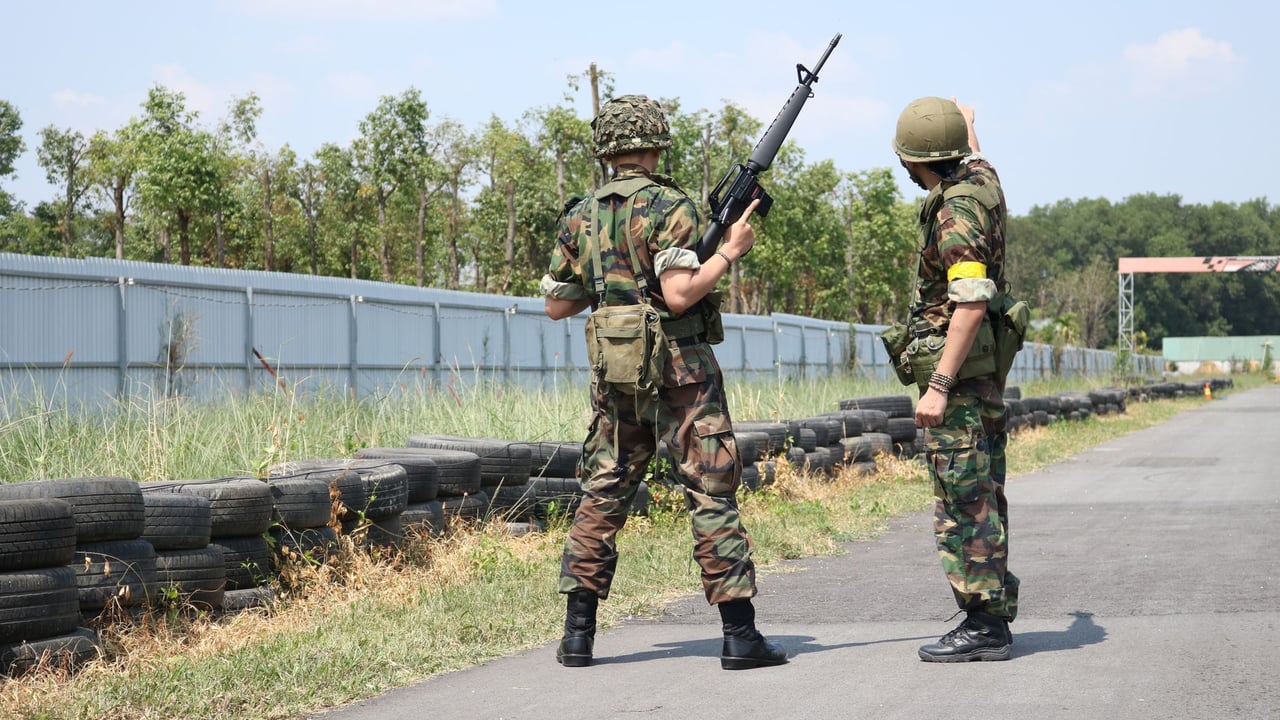
Photo by Thang Cao on Pexels
The Brief
The People's Liberation Army is overhauling its field training assessments, shifting away from rigid, single-metric testing toward dynamic, system-oriented evaluations. According to a report by the PLA Daily, units across the ground forces and the Rocket Force are introducing ad-hoc battlefield contingencies, randomizing offensive and defensive roles, and embedding assessments throughout exercises. The reform aims to expose tactical coordination shortfalls and align grassroots training directly with modern joint operational demands.
Why it matters
Assessment criteria serve as the primary steering mechanism for military training. By moving away from predictable performance drills to non-scripted, continuously monitored combat simulations, the PLA is pressuring tactical commanders to adapt to chaotic battlefield conditions, reduce artificial training scores, and cultivate genuine joint combat interoperability.
China context
The drive reflects the Central Military Commission's enduring directive to train troops as wars are actually fought. Historically criticized for 'peace disease' and formulaic testing focused narrowly on speed, range, and target rings, Chinese military leadership is using revised assessment metrics as an enforcement mechanism to root out performative drills and elevate cross-domain systemic readiness.
Editor's View
EDITOR'S VIEW — Analysis and inference, not factual reporting.
The transition from scripted exercises to unannounced, systemic appraisals addresses a longstanding vulnerability in PLA readiness: localized tactical competence that fractures under dynamic conditions. By rotating red and blue opposing forces randomly and evaluating continuous combat operations rather than isolated subject tests, commanders are systematically deprived of the ability to rehearse assessments. However, the true efficacy of this push depends on whether military leadership tolerates the inevitable dips in unit passing rates and whether the infrastructure for objective, data-driven after-action review is uniformly deployed across all theater commands.
What to watch
- Whether embedded continuous evaluations and randomized red-blue role reversals are standardized across all theater commands.
- The institutionalization of quantitative after-action review tools and supporting software during routine field deployments.
- Potential organizational friction as baseline pass rates decline under stricter, unannounced contingency scoring.
Key Takeaways
- 1The PLA is shifting field evaluations from single-metric scoring to systemic, combat-realistic assessments.
- 2A 71st Group Army brigade drill exposed tactical coordination gaps after evaluators introduced unannounced contingencies.
- 3The 82nd Group Army introduced randomized lottery assignments for red-and-blue opposing forces to eliminate scripted roles.
- 4A Rocket Force unit combined annual evaluations with field deployments to assess performance along continuous combat timelines.
- 5Assessors are embedding within units throughout exercises rather than conducting isolated end-of-exercise evaluations.
The People’s Liberation Army is accelerating an overhaul of its field training evaluation regime, moving away from rigid point scoring toward continuous, system-wide evaluations designed to simulate realistic combat conditions, according to official military media.
A report published by the PLA Daily highlighted several adjustments across multiple field training grounds. Rather than assessing troops on isolated performance parameters—traditionally dubbed 'meters, seconds, and target rings'—evaluators are subjecting tactical units to unscripted battlefield conditions and dynamic operational stress.
In one recent exercise involving a brigade from the 71st Group Army, evaluation teams introduced unannounced multi-scenario contingencies during live operations. After several phases of engagement, a company commander identified as Captain Pan noted that while his unit faced coordination breakdowns and received suboptimal scores, the realistic format exposed critical operational vulnerabilities that traditional static drills had masked.
The reform emphasizes three main pillars: systemic assessment, whole-process embedding, and precise capability profiling. As part of this transition, units are being tested on overarching systemic synergy rather than fragmented single-subject qualifications. For example, a Rocket Force unit merged its annual evaluations with routine field training, carrying out continuous assessments structured around actual combat flow and specific operational missions rather than disconnected testing modules.
Tactical unpredictability has also been introduced into ground maneuvers. A brigade under the 82nd Group Army abandoned the practice of preassigned opposing roles, instead using randomized lottery drawings to assign attacking and defending postures. According to state media, this unpredictability forces commanders and soldiers to view battlefield terrain from differing perspectives and develop adaptable tactical maneuvers.
Furthermore, supervisory teams are shifting from retrospective, final-day scorecards to embedded evaluations throughout every phase of deployment. This transition aims to prevent units from treating field training as a scripted test with predictable sequences, reinforcing the broader push by Chinese defense leadership to align routine training with modern integrated joint warfare.
Sources
- 我军野外驻训考核评估加速向实战化体系化转型 — China Military Online · 9/7/2026