
Policy & RegulationAnalysis
Qianhai Deepens Shenzhen-Hong Kong Regulatory Ties as Economic Output Expands
Five years after zone expansion, Qianhai advances cross-border legal alignment, professional accreditation, and university tech platforms.
Share
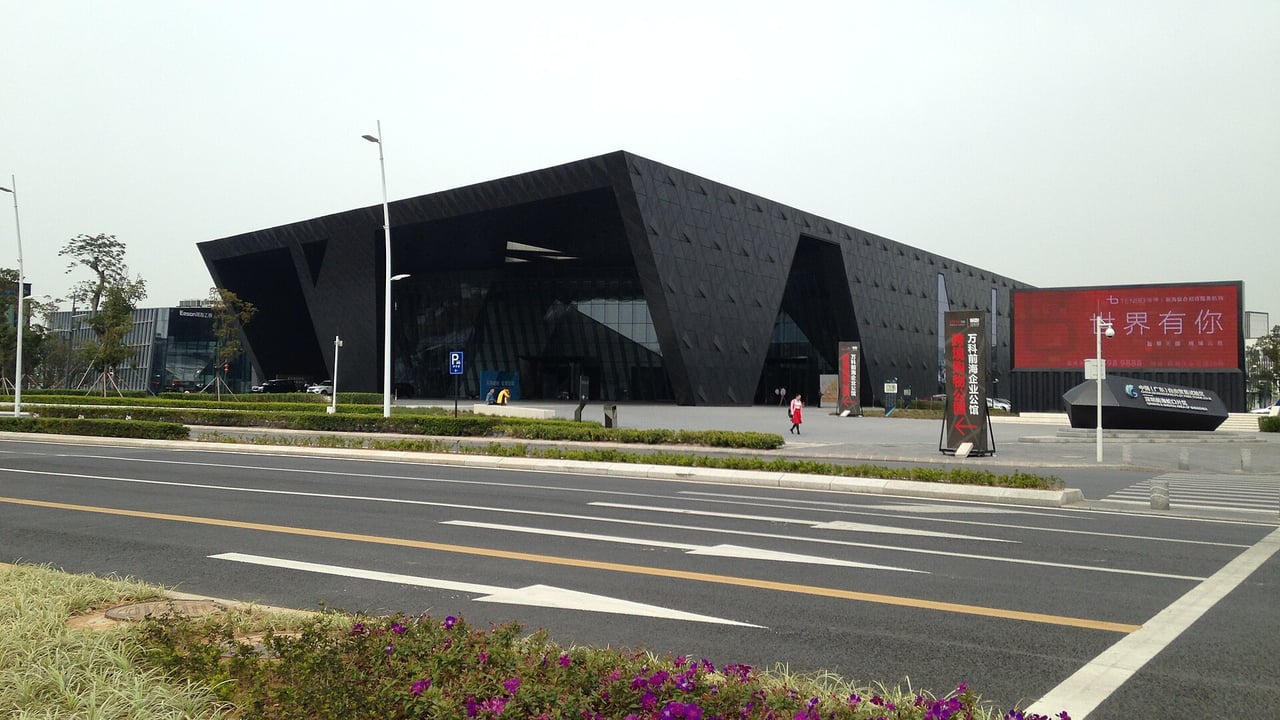
そらみみ via Wikimedia Commons, CC BY-SA 4.0
The Brief
Shenzhen's Qianhai Modern Service Industry Cooperation Zone has expanded institutional and economic integration with Hong Kong, supported by regulatory harmonization and targeted business incentives. According to official data reported by People's Daily, Qianhai's gross domestic product reached 331.81 billion yuan in 2025, nearly doubling its 2021 level following a state-level expansion plan. More than 11,000 Hong Kong-funded enterprises and 13,000 Hong Kong residents now operate in the zone, bolstered by mutual qualification recognition across 27 professional sectors, cross-border legal mechanisms, and five dedicated research commercialization centers established by Hong Kong universities.
Why it matters
Qianhai acts as a primary testing ground for institutional openness between mainland China and Hong Kong. Policy mechanisms implemented here—such as cross-border legal options and streamlined professional recognition—serve as benchmarks for broader Greater Bay Area integration and mainland China's cross-border regulatory experimentation.
China context
First approved by the State Council in 2010 and substantially expanded under a central government blueprint in September 2021, Qianhai is central to Beijing's Greater Bay Area strategy. The zone is tasked with facilitating the flow of capital, talent, and professional services while anchoring Hong Kong's integration into national economic development.
Editor's View
EDITOR'S VIEW — Analysis and inference, not factual reporting.
Qianhai's growth metrics reflect concentrated policy support, but the platform's broader impact depends on whether institutional innovations can move beyond designated pilot zones. The adoption of 'Hong Kong law for Hong Kong enterprises' and mutual standard-setting in healthcare and green construction provide tangible blueprints, yet converting academic research from Hong Kong universities into viable commercial products within mainland supply chains remains the critical test.
What to watch
- Further expansion of mutual qualification recognition for Hong Kong professionals beyond the existing 27 sectors.
- Commercialization rates and private capital attraction from the five Hong Kong university tech transfer centers.
- Cross-border logistics efficiency gains from customs facilitation programs such as the Shenzhen-Hong Kong car express initiative.
Key Takeaways
- 1Qianhai's regional GDP grew from 175.57 billion yuan in 2021 to 331.81 billion yuan in 2025 following its territorial expansion.
- 2Over 11,000 Hong Kong-invested enterprises and 13,000 Hong Kong residents currently operate within the cooperation zone.
- 3Twenty-seven categories of Hong Kong professionals can now practice in Qianhai without mainland examinations, most recently including veterinarians.
- 4Legal and regulatory mechanisms permit Hong Kong-funded firms to apply Hong Kong law and arbitration to commercial transactions.
- 5Five major Hong Kong universities have established operational tech transfer platforms in Qianhai, which has incubated 1,180 Hong Kong teams.
Sixteen years after its initial establishment and five years after an official territorial expansion, the Qianhai Shenzhen-Hong Kong Modern Service Industry Cooperation Zone has reported substantial increases in economic activity and cross-border institutional coordination, according to People's Daily.
Approved initially by the State Council in August 2010 and enlarged under a central reform plan in September 2021, the zone saw its gross domestic product rise from 175.57 billion yuan in 2021 to 331.81 billion yuan in 2025. In the first half of the current operating year, regional GDP reached 167.74 billion yuan, representing a 7.8 percent year-on-year increase. Foreign trade volume reached 564.85 billion yuan, up 57.2 percent, while actual utilized foreign investment stood at 25.01 billion yuan, marking a 102.9 percent year-on-year expansion.
Institutional linkages have accelerated alongside commercial indicators. More than 13,000 Hong Kong residents live or work in Qianhai, and Hong Kong-funded enterprises in the district now exceed 11,000, according to Huang Ziqian, chief Hong Kong and Macao liaison expert at the Qianhai Authority. Professional qualification barriers have been lowered, allowing 27 categories of Hong Kong professionals to practice in Qianhai through a registration-only system without additional mainland examinations, with veterinary medicine being the most recent sector included.
To bridge differing legal and regulatory frameworks, Qianhai established joint working mechanisms with Hong Kong authorities, issuing coordinated policies covering intellectual property and venture capital. The cooperation zone piloted provisions enabling Hong Kong-invested firms to select Hong Kong legal statutes and arbitration forums for contract disputes, an arrangement now expanding to other mainland cities in the Guangdong-Hong Kong-Macao Greater Bay Area. The zone has also overseen the rollout of cross-border standards in green building evaluation and hospital accreditation, as well as customs facilitation measures such as the Shenzhen-Hong Kong car express program in the comprehensive bonded zone.
Academic commercialization has increasingly centered around the Qianhai Shenzhen-Hong Kong Youth Innovation and Entrepreneur Hub. Since September 2024, five research transfer centers founded by Hong Kong institutions—including the University of Hong Kong, the Chinese University of Hong Kong, Hong Kong University of Science and Technology, Hong Kong Polytechnic University, and Hong Kong Baptist University—have entered operational phases. The hub has cumulatively incubated 1,180 Hong Kong teams, supported by preferential policies that provide subsidized workspaces, seed funding, and incubation space.
Sources
- 前海,给企业勇闯国际市场的底气--经济·科技--人民网 — People's Daily · 9/6/2026