
Business & IndustryAnalysis
Shanghai Changxing Island Targets 120 Billion Yuan Shipbuilding Sector by 2027
The maritime manufacturing hub expands high-value vessel output as Hudong-Zhonghua holds LNG orders through 2031.
Share
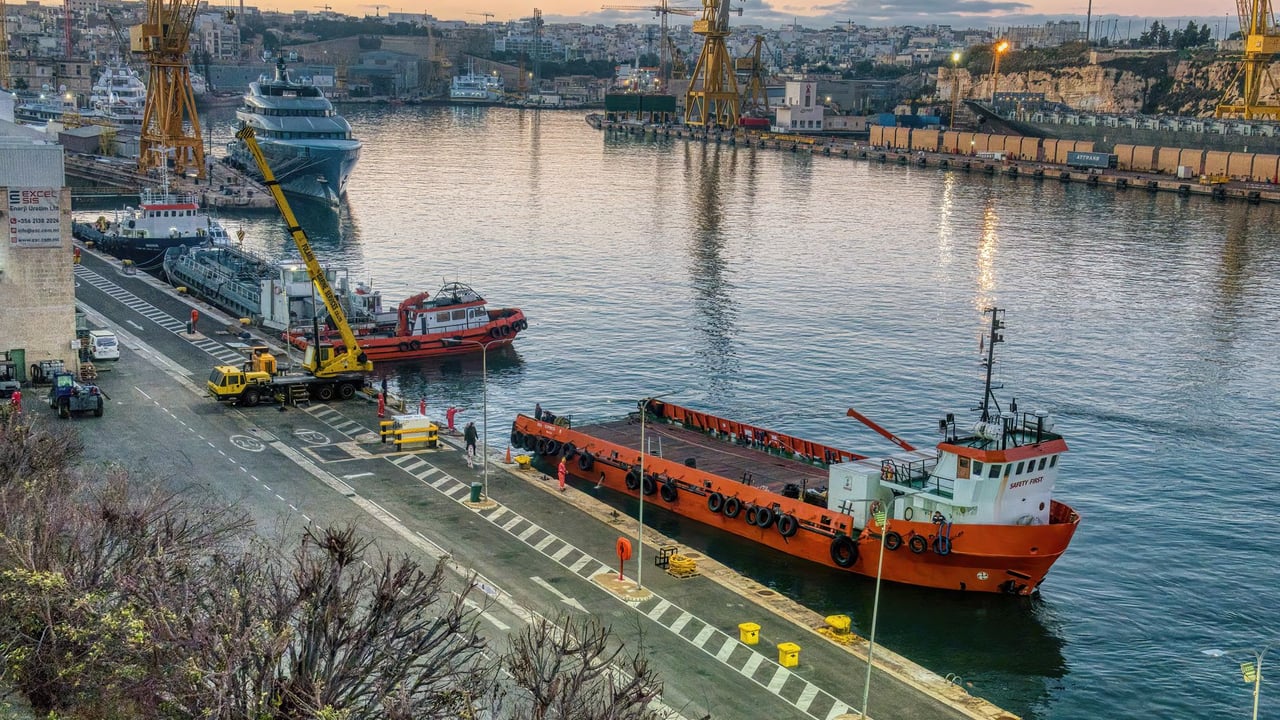
Photo by Tom Fisk on Pexels
The Brief
Shanghai's Changxing Island is accelerating its push into high-end maritime manufacturing, aiming for an industrial scale exceeding 120 billion yuan by 2027, state media reported. The base currently accounts for 70% of global ship-to-shore container crane production and one in five large liquefied natural gas (LNG) carriers under construction worldwide. Local shipbuilder Hudong-Zhonghua holds orders for nearly 60 LNG carriers, with delivery schedules extending past 2031, while port machinery giant ZPMC continues to dominate global port equipment supply.
Why it matters
Changxing Island's manufacturing concentration highlights China's entrenched position in high-value maritime supply chains. The island's production capacity for LNG carriers and automated port cranes directly underpins global energy transport logistics and maritime trade infrastructure.
China context
Under national strategies to develop a strong maritime economy and upgrade the Yangtze River Economic Belt, Chinese shipbuilding is shifting from low-margin bulk vessels toward complex, low-emission ships. Changxing Island serves as the primary testbed for this industrial transition.
Editor's View
EDITOR'S VIEW — Analysis and inference, not factual reporting.
The heavy concentration of advanced ship construction on Changxing Island reflects how Chinese state-backed industrial clusters have successfully moved up the value chain from basic commercial vessels to technically demanding gas carriers. However, sustaining this momentum will depend on global trade volume stability, international decarbonization mandates, and the resilience of critical component supply chains as geopolitical scrutiny over maritime infrastructure persists.
What to watch
- Progress toward the 2027 target of producing 18 ultra-large LNG carriers annually on Changxing Island.
- Commercial uptake and order volumes for alternative-fuel designs, including very large ammonia carriers and dual-fuel container vessels.
- Global market reactions to ZPMC's transition from an equipment supplier to an integrated port solutions provider.
Key Takeaways
- 1Changxing Island targets a marine equipment industry scale exceeding 120 billion yuan by 2027, with high-tech vessels comprising 80% of production.
- 2Hudong-Zhonghua holds orders for nearly 60 LNG carriers, with production scheduled beyond 2031.
- 3Changxing Island accounts for 70% of global ship-to-shore container crane production and 20% of large LNG carriers under construction globally.
- 4Recent deliveries include a 93,000-cubic-meter very large ammonia carrier and two 174,000-cubic-meter LNG carriers in June.
Shanghai's Changxing Island, located at the mouth of the Yangtze River, is cementing its position as a central hub for high-end maritime manufacturing, with plans to expand its shipbuilding and marine engineering sector beyond 120 billion yuan by 2027, according to state-run China News Service.
Under development targets, high-tech vessel types—such as liquefied natural gas (LNG) carriers and dual-fuel container ships—are slated to comprise 80% of the island's output by 2027. The development plan also establishes an annual production capacity target of 18 ultra-large LNG carriers.
The manufacturing base already represents a substantial share of global commercial maritime output. According to reported figures, seven out of every ten quayside container cranes worldwide are manufactured on Changxing Island, while one out of every five large LNG carriers currently under construction globally originates there.
Hudong-Zhonghua Shipbuilding, one of the major state-owned shipyards based on the island, currently holds an order backlog of nearly 60 LNG carriers, with production schedules booked past 2031. Deliveries have maintained a steady pace in recent months; on June 10, the shipyard delivered a self-developed 93,000-cubic-meter very large ammonia carrier (VLAC), followed on June 30 by the simultaneous delivery of two 174,000-cubic-meter LNG carriers.
Alongside vessel construction, port equipment manufacturer Shanghai Zhenhua Heavy Industries (ZPMC) maintains an over 70% global market share in ship-to-shore container cranes, holding the top position in the port machinery sector for more than two decades. The enterprise is increasingly shifting from standalone equipment sales toward providing integrated port logistics solutions while supporting domestic supply chain partners in international markets.
The cluster's expanding order books reflect broader structural shifts in Chinese heavy industry, where policy support and shipyard modernization are increasingly directed toward green propulsion technologies, complex cryogenic containment systems, and integrated port automation systems.
Sources
- (长江十年行)长江入海处,中国制造从这里驶向深蓝-中新网视频 — China News Service · 8/24/2026
- (长江十年行)长江入海处,中国制造从这里驶向深蓝 — China News Service · 8/24/2026