
Defense & StrategyAnalysis
Wang Yi Urges South Korea Toward Strategic Autonomy in Seoul Talks
Beijing calls on Seoul to balance relations between major powers and addresses Korean Peninsula and regional security concerns.
Share
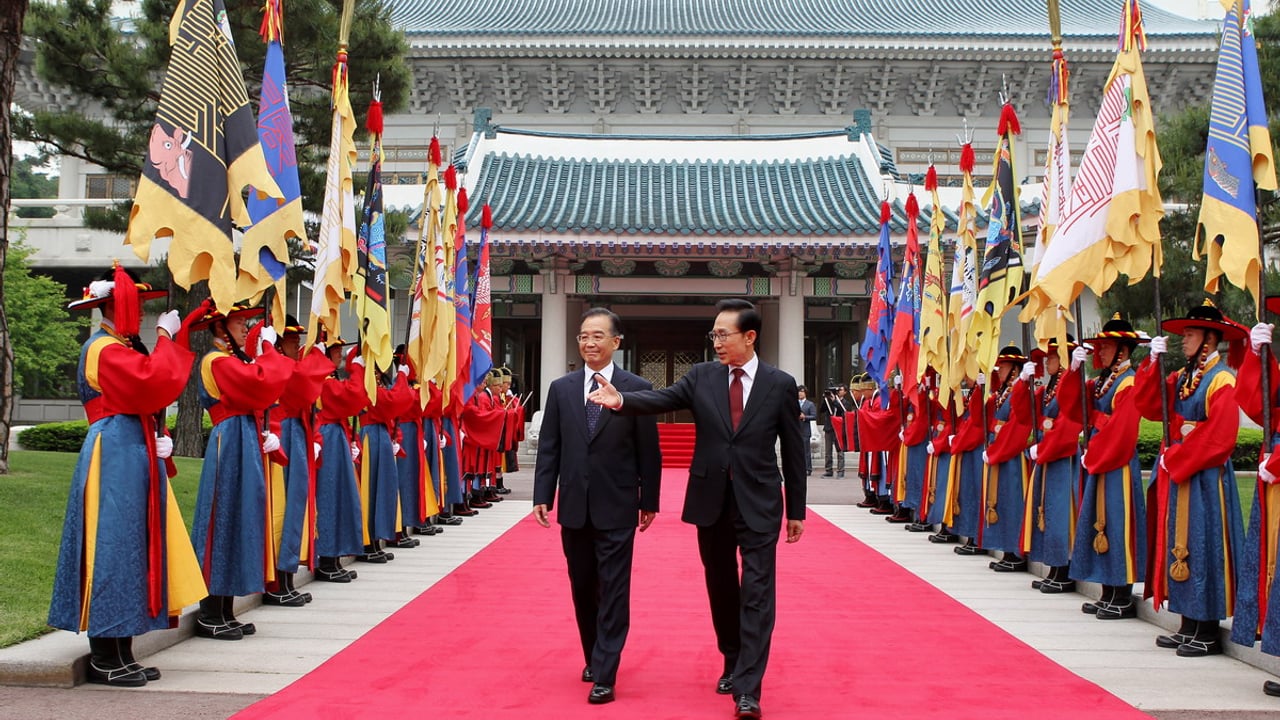
Korea.net / Korean Culture and Information Service via Wikimedia Commons, CC BY-SA 2.0
The Brief
Chinese Foreign Minister Wang Yi held strategic talks in Seoul with South Korean National Security Adviser Wi Sung-lac, emphasizing Beijing's commitment to stable bilateral ties following reciprocal head-of-state visits. During the meeting, Wang encouraged South Korea to maintain genuine strategic autonomy without joining bloc confrontations or taking sides between major powers. The dialogue also covered regional security, with Beijing urging the United States to drop hostile policies toward North Korea and warning against historical revisionism among Japan's right-wing factions.
Why it matters
The strategic dialogue highlights an ongoing effort by Beijing and Seoul to restore regular diplomatic and security channels after years of heightened regional friction. As competition between Washington and Beijing intensifies across East Asia, South Korea's diplomatic positioning directly shapes supply chain stability, deterrence dynamics on the Korean Peninsula, and multilateral diplomacy in Northeast Asia. Beijing's public appeal for strategic autonomy demonstrates its desire to prevent Seoul from integrating too deeply into exclusive U.S.-led regional security frameworks.
China context
Beijing considers South Korea a vital partner in its neighborhood diplomacy and has moved quickly to rebuild ties under South Korean President Lee Jae-myung. Chinese leadership views South Korea as a potential bridge rather than an adversary, aiming to dissuade Seoul from aligning fully with trilateral containment structures involving Washington and Tokyo. Wang's explicit warnings regarding Japanese militarism and U.S. hostility toward Pyongyang underscore China's push to position itself as a constructive arbiter of regional stability while setting clear security boundaries.
Editor's View
EDITOR'S VIEW — Analysis and inference, not factual reporting.
Wang Yi's direct appeal for South Korea to avoid bloc alignment reflects Beijing's broader regional strategy: offering economic cooperation and stable diplomatic channels to neighboring states in exchange for strategic restraint toward U.S. containment initiatives. South Korea's willingness to engage in parallel diplomacy indicates an appetite in Seoul to balance its traditional security ties with pragmatic relations with its largest neighbor, though navigating Washington's defense expectations and escalating peninsula tensions will test how far this autonomy can extend in practice.
What to watch
- Official readouts and detailed policy statements from the South Korean Presidential Office and National Security Office regarding the dialogue.
- Subsequent working-level meetings on bilateral trade, supply chain coordination, and security dialogues between Beijing and Seoul.
- Diplomatic responses from Washington and Tokyo concerning Beijing's remarks on strategic autonomy, Japanese right-wing politics, and U.S. policy toward North Korea.
Key Takeaways
- 1Chinese Foreign Minister Wang Yi and South Korean National Security Adviser Wi Sung-lac convened for strategic dialogue in Seoul.
- 2Wang urged South Korea to pursue true strategic autonomy and avoid taking sides or participating in bloc confrontation.
- 3Wi affirmed South Korea's commitment to parallel foreign relations and implementing bilateral consensus reached during recent head-of-state visits.
- 4Wang identified the U.S. hostile policy toward North Korea as a root cause of peninsula tensions and cautioned against Japanese right-wing revisionism.
Top Chinese diplomat Wang Yi held strategic talks in Seoul with South Korean National Security Adviser Wi Sung-lac, marking another step in stabilizing high-level bilateral relations following reciprocal summit visits between the two nations' leaders, according to reporting by Xinhua and People's Daily.
Wang, who serves as Director of the Office of the Central Foreign Affairs Commission and Minister of Foreign Affairs, emphasized that China has maintained consistency and stability in its South Korea policy, prioritizing Seoul within its neighborhood diplomacy. Reflecting on the exchange of state visits between Chinese President Xi Jinping and South Korean President Lee Jae-myung, Wang noted that bilateral ties have entered a renewed phase of development, moving back onto the track of a strategic cooperative partnership.
During the discussions, Wang urged South Korea to exercise genuine strategic autonomy, avoid bloc confrontation, and refrain from taking sides, advocating instead for the simultaneous and harmonious development of relations with both China and the United States. Wang reiterated that China acts as a constructive force for peace that does not initiate or participate in wars, calling for enhanced mutual trust and broader strategic cooperation across political, economic, and security spheres.
Wi Sung-lac affirmed that South Korea and China are close neighbors with deep historical ties. He stated that the successful head-of-state visits consolidated the momentum of fully normalized relations, expressing Seoul's willingness to implement leadership consensus and deliver tangible benefits to both populations. Wi added that South Korea remains committed to the parallel development of its external relations and seeks close strategic dialogue with Beijing to foster regional peace and stability.
The two officials also exchanged views on regional security dynamics. Wang articulated Beijing's core stance on the Korean Peninsula, stating that addressing root tensions requires removing fundamental drivers, specifically calling on the United States to abandon its hostile policy toward North Korea. He expressed Beijing's support for renewed dialogue, mutual trust, and eventual peaceful coexistence between North and South Korea, aiming for a formal transition from the armistice mechanism to a durable peace regime. Wang also cautioned against right-wing revisionism in Japan, warning that the revival of militarism must not be permitted.
Sources
- 王毅与韩国国家安保室长魏圣洛举行战略对话--时政--人民网 — People's Daily · 8/20/2026