
Defense & StrategyAnalysis
Xi Jinping Urges Focus on AI Integration and Oversight in PLA Strategy
Ahead of Army Day, China's Politburo outlines defense modernization goals for the 15th Five-Year Plan, prioritizing unmanned technology and project oversight.
Share
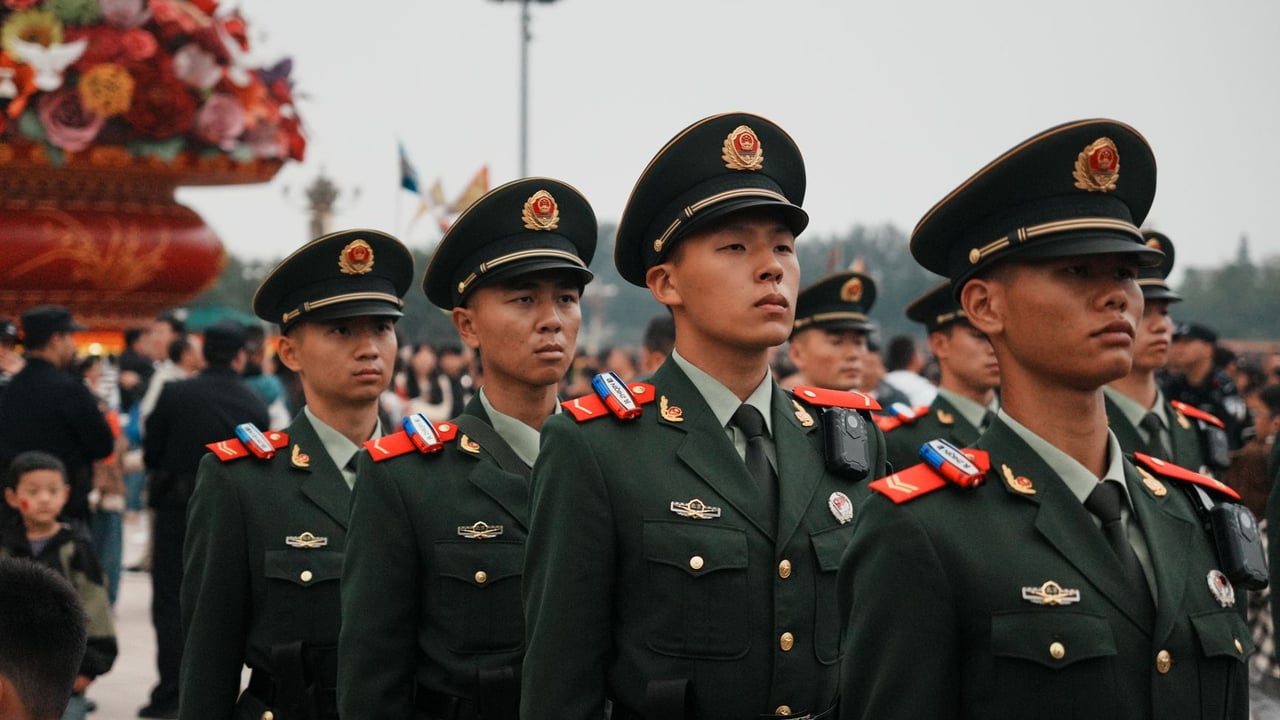
Photo by Da Na on Pexels
The Brief
On July 30, General Secretary Xi Jinping presided over a Politburo collective study session focused on high-quality national defense and military modernization ahead of Army Day. Addressing top leadership, Xi outlined strategic priorities for the upcoming 15th Five-Year Plan period, emphasizing Communist Party leadership, deep anti-corruption measures, and oversight of major defense projects. He also called for accelerating the military application of unmanned intelligent technologies and network-information systems to build an intelligentized force structure, while strengthening cross-military-civilian coordination and combat-readiness evaluations.
Why it matters
The Politburo session signals Beijing's policy direction for defense planning entering the 15th Five-Year Plan period. By explicitly pairing technical modernization—specifically autonomous systems and network integration—with enhanced anti-corruption mechanisms and major project supervision, Chinese leadership is seeking to ensure that expanding defense investments yield verified combat power without being compromised by procurement inefficiencies or governance failures.
China context
China is approaching key milestones in its long-term military development plan, including the 2027 centenary goal for the People's Liberation Army. As structural military reforms transition into capability consolidation, top leadership is placing equal weight on technological development and institutional discipline. The emphasis on unmanned systems and cross-military-civilian cooperation highlights Beijing's push to leverage civilian technological advances while enforcing tighter regulatory controls over defense contracting and budget execution.
Editor's View
EDITOR'S VIEW — Analysis and inference, not factual reporting.
Xi's remarks illustrate an evolving strategic emphasis: driving rapid technological adoption while simultaneously tightening institutional governance over the defense apparatus. The explicit mandate to integrate unmanned intelligent systems and network-information platforms reflects the PLA's commitment to intelligentized warfare. Concurrently, elevating major project oversight indicates continuing concern within top leadership regarding capital efficiency, quality control, and integrity in defense procurement. For international observers, this combined focus indicates that China's military agenda aims to pair advanced hardware deployment with institutional oversight to support long-term capability growth.
What to watch
- Specific targets and project allocations for defense technology in the upcoming 15th Five-Year Plan outlines.
- The publication of regulatory guidelines or institutional frameworks targeting military procurement and major defense infrastructure projects.
- Reported exercises or operational deployments involving PLA unmanned autonomous units and integrated network-information platforms.
Key Takeaways
- 1The CCP Politburo held a collective study session on July 30 to outline defense modernization priorities for the 15th Five-Year Plan period.
- 2Sun Zheng from the Central Military Commission Strategic Planning Office presented policy recommendations to senior leaders.
- 3Xi Jinping called for expanding the military application of unmanned intelligent technologies and network-information systems.
- 4The leadership stressed intensifying anti-corruption efforts and establishing strict oversight systems for major defense projects.
- 5Xi emphasized cross-military-civilian reforms and civil-military coordination to support national strategic capabilities.
On July 30, the Politburo of the Chinese Communist Party held its 27th collective study session focused on advancing the high-quality modernization of national defense and the People's Liberation Army (PLA), state media reported. Presiding over the meeting ahead of China's August 1 Army Day, General Secretary Xi Jinping outlined strategic guidance for defense development during the upcoming 15th Five-Year Plan period.
According to reports published by Xinhua, Sun Zheng of the Central Military Commission Strategic Planning Office delivered a presentation and provided recommendations during the session to political leadership.
In his address, Xi emphasized that high-quality defense development remains an integral component of broader national modernization. Setting expectations for the 15th Five-Year Plan timeframe, he called for maintaining absolute party leadership over the military, deepening political training, and expanding anti-corruption efforts. Xi specifically instructed officials to build robust oversight systems for major defense projects to guarantee baseline standards for construction quality, operational capacity, and institutional integrity.
Operational capability was highlighted as the central benchmark for evaluating modernization efforts. Xi called for accelerating the military application of unmanned intelligent technologies, advancing the deployment of network-information systems, and progressively constructing an intelligentized military architecture. He also stressed the importance of capability integration across forces alongside realistic scenario-based testing and combat readiness.
Additionally, Xi highlighted the requirement to consolidate an integrated national strategic system and capabilities. Addressing civil-military coordination, he urged the execution of cross-military-civilian reform tasks to optimize governance structures, refine policy frameworks, and ensure coordinated execution across central government agencies, local authorities, and the armed forces.
Sources
- 习近平在中共中央政治局第二十七次集体学习时强调 强化政治引领 深化创新发展 高质量推进国防和军队现代化 — Securities Times · 7/31/2026
- 习近平在中共中央政治局第二十七次集体学习时强调 强化政治引领 深化创新发展 高质量推进国防和军队现代化 — State Council of China · 7/31/2026
- 习近平在中共中央政治局第二十七次集体学习时强调 强化政治引领 深化创新发展 高质量推进国防和军队现代化 - 中国军网 — China Military Online · 7/31/2026