
Technology & AIAnalysis
XPeng Group Releases TuringViT Efficient Vision Encoder
The Chinese smart electric vehicle maker introduces a proprietary vision encoder, signaling deeper investment in core AI perception algorithms.
Share
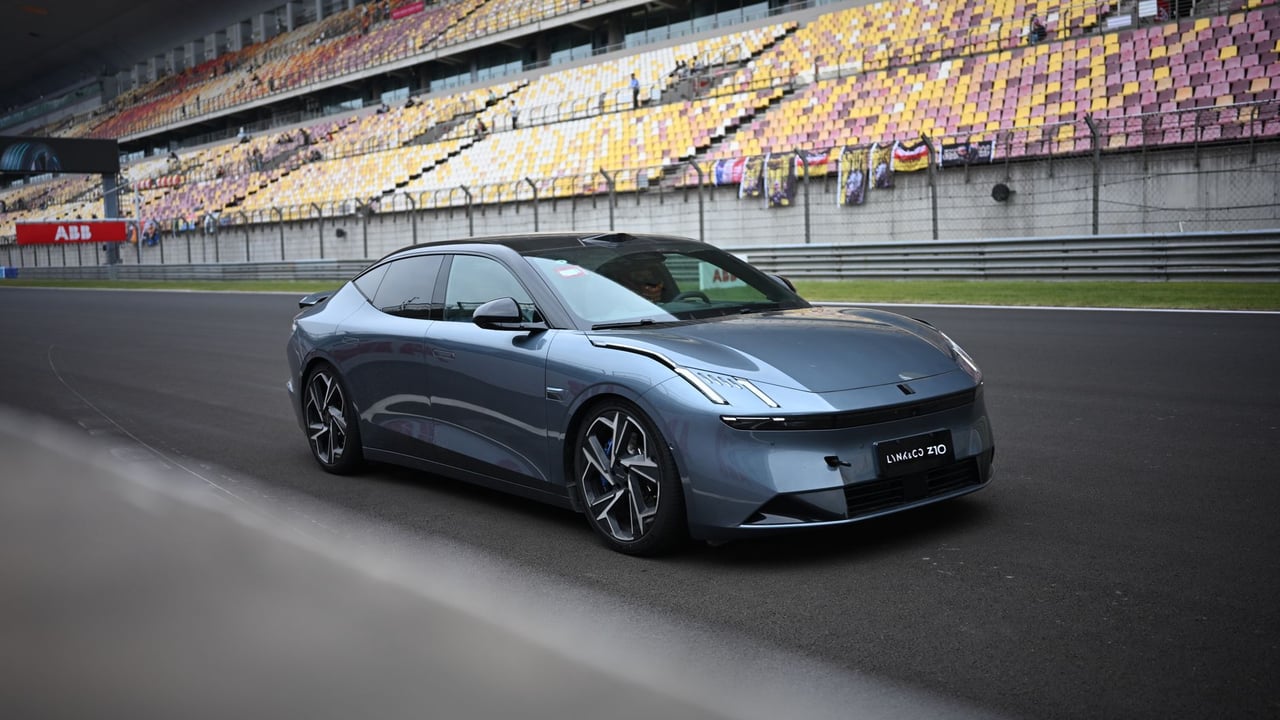
Photo by Zhengyang TIAN on Pexels
The Brief
XPeng Group has officially released TuringViT, a proprietary, highly efficient vision encoder. Vision encoders serve as critical components in perception systems for autonomous driving and embodied AI. The release of TuringViT highlights XPeng's ongoing efforts to develop underlying AI algorithms in-house, potentially improving the perception efficiency and response times of its smart hardware.
Why it matters
Vision encoders are the core of perception systems for autonomous driving and embodied AI. XPeng Group's release of its self-developed TuringViT marks its further exploration into underlying AI vision perception algorithms, which may help improve the perception efficiency and response speed of its intelligent hardware.
China context
Against the backdrop of rapid development in China's smart vehicle and robotics industries, leading manufacturers are accelerating the self-development of core AI algorithms. This shift aims to reduce reliance on external general-purpose models and enhance the efficiency of hardware-software synergy.
Editor's View
EDITOR'S VIEW — Analysis and inference, not factual reporting.
XPeng's move to develop its own vision encoder reflects a broader trend among Chinese EV and robotics firms seeking vertical integration in AI. By optimizing the vision encoder—a computationally expensive part of the perception pipeline—XPeng aims to squeeze more performance out of its onboard chips. This could give it a competitive edge in both autonomous driving and its emerging humanoid robotics initiatives, provided the hardware-software integration delivers on its theoretical promise.
What to watch
- Whether XPeng Group will release a technical white paper or open-source code for TuringViT in the future.
- The actual deployment and performance feedback of this technology on the XPeng IRON humanoid robot or next-generation vehicle models.
Key Takeaways
- 1XPeng Group has released TuringViT, a self-developed, efficient vision encoder.
- 2Vision encoders are crucial for processing visual data in autonomous driving and embodied AI systems.
- 3The development reflects a trend among Chinese tech firms to build proprietary AI algorithms to improve hardware-software synergy.
- 4TuringViT could potentially be deployed in XPeng's smart vehicles and its humanoid robot, XPeng IRON.
XPeng Group has officially announced the release of TuringViT, a proprietary and highly efficient vision encoder designed to enhance perception capabilities. The development represents a significant step in the company's efforts to build out its underlying artificial intelligence stack, particularly for applications requiring real-time visual processing.
Vision encoders are fundamental building blocks in modern computer vision, serving as the primary mechanism for translating raw visual data into representations that downstream AI models can interpret. In the context of smart mobility and robotics, these encoders are critical for tasks such as object detection, lane tracking, and spatial awareness. By introducing TuringViT, XPeng aims to optimize this critical pipeline, potentially leading to faster processing speeds and lower computational overhead on edge devices.
The release comes as Chinese smart electric vehicle (EV) manufacturers and robotics developers increasingly prioritize in-house algorithm development. Relying on generic, off-the-shelf vision models often introduces latency and integration challenges when deployed on specialized hardware. Developing proprietary solutions like TuringViT allows companies to tightly couple their software algorithms with their specific hardware configurations, maximizing efficiency and reducing dependence on external AI providers.
While XPeng has not yet detailed the full technical specifications or benchmark performance of TuringViT, the encoder is expected to play a key role in the company's broader ecosystem. This includes its advanced driver-assistance systems (ADAS) and its ongoing development of embodied AI, such as the XPeng IRON humanoid robot. Observers will be watching closely to see if XPeng shares further technical documentation or open-sources the model to the broader developer community.
Sources
- 小鹏集团发布TuringViT高效视觉编码器 — NetEase · 7/21/2026
- News18a — News18a
- Arxiv — Arxiv
- South China Morning Post — South China Morning Post