
Technology & AIAnalysis
Young Chinese Workers Turn to AI Chatbots for Workplace Emotional Support
Exhausted by workplace social dynamics, young professionals increasingly use chatbots as nonjudgmental sounding boards, prompting psychological debate.
Share
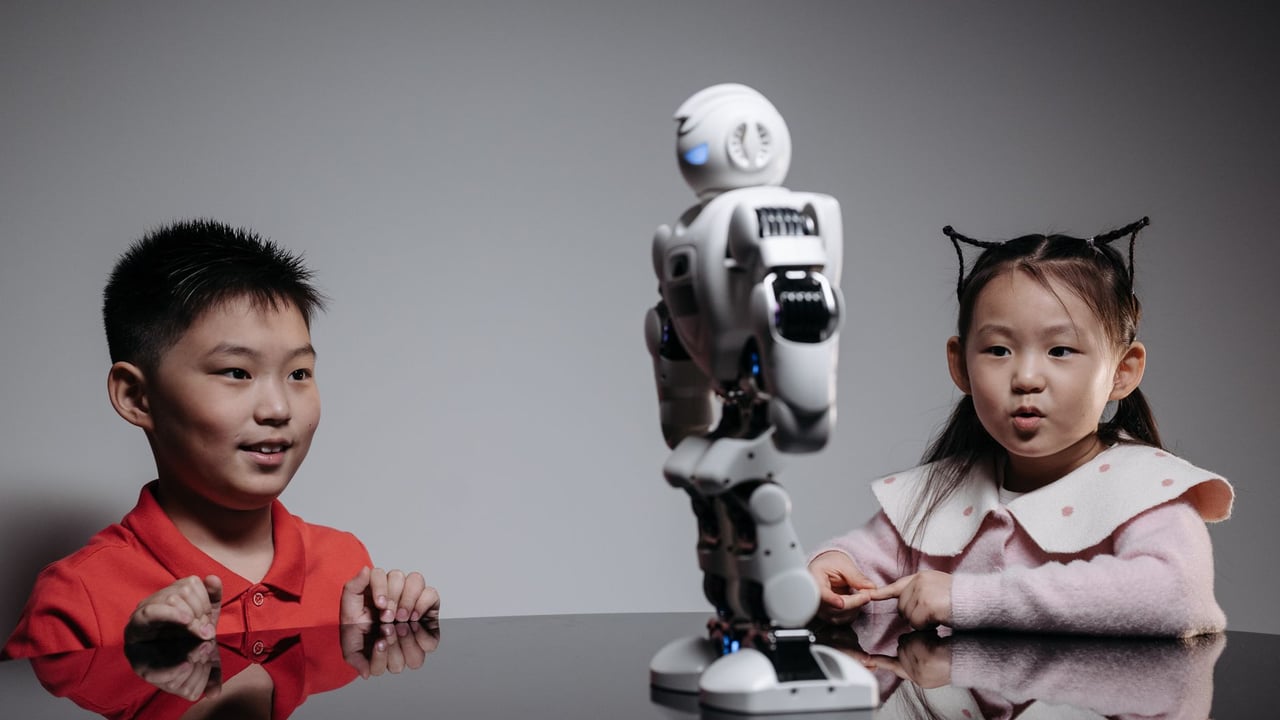
Photo by Pavel Danilyuk on Pexels
The Brief
Young professionals in China are increasingly turning to generative AI chatbots as low-friction emotional companions to process workplace stress and interpersonal friction, according to reports by People's Daily and Workers' Daily. While users praise AI for offering confidential, immediate, and judgment-free validation, psychological experts caution that reliance on algorithmic empathy risks diminishing social patience and tolerance in human relationships. Clinicians recommend treating conversational AI as a reflective journaling or analytical tool rather than a substitute for genuine interpersonal connection.
Why it matters
The migration of emotional labor and confidant relationships to algorithmic systems marks a significant shift in how modern professionals handle workplace mental health. While providing immediate coping mechanisms in high-pressure environments, heavy reliance on artificial empathy raises questions about social tolerance, emotional resilience, and the degradation of interpersonal communication skills in everyday life.
China context
In China's high-intensity work culture, young employees across both private enterprise and the public sector often encounter intense competition, subtle workplace hierarchies, and prolonged emotional exhaustion. Discussing sensitive professional dilemmas with colleagues carries political and career risks, while friends and family are often similarly constrained by demanding schedules. In response, AI chatbots have emerged as an accessible, cost-effective substitute, reflecting broader shifts in digital socialization and workplace coping strategies among young urban Chinese.
Editor's View
EDITOR'S VIEW — Analysis and inference, not factual reporting.
The rise of AI as an emotional confidant is less an endorsement of synthetic intimacy than a symptom of systemic social exhaustion. Chatbots do not demand reciprocal care, navigate divergent opinions, or risk professional blowback. However, treating unconditional algorithmic affirmation as a model for empathy could create an unsustainable expectation gap when individuals return to human interactions, which are inherently unpredictable, unscripted, and occasionally uncomfortable.
What to watch
- Whether clinical psychology organizations develop formal guidance on the boundaries of using generative AI for emotional and mental health management.
- Potential integration of AI-assisted support into corporate employee assistance programs (EAPs) alongside licensed therapists.
- Long-term research evaluating whether habitual use of empathetic chatbots correlates with declines in social tolerance and interpersonal friction handling.
Key Takeaways
- 1Young Chinese professionals are increasingly using AI chatbots to vent workplace frustrations and seek interpersonal advice.
- 2Users highlight immediate response times, confidentiality, and lack of judgment as the primary advantages over discussing sensitive issues with colleagues or friends.
- 3Chinese psychological experts note that heavy daily emotional labor in the workplace leaves professionals with little surplus energy to sustain demanding human relationships.
- 4Mental health specialists warn that habituation to seamless algorithmic validation may erode social patience and interpersonal adaptability in real life.
Facing workplace stress and complex interpersonal dynamics, a growing number of young Chinese professionals are adopting artificial intelligence chatbots as their primary sounding boards and emotional companions, state media outlets People's Daily and Workers' Daily reported.
For many young workers, conversational AI offers an outlet free from the social exposure and reputational risk inherent in office discussions. In Xinjiang, secondary school teacher Zhang Xinyu found herself torn between the stability of public-sector employment and fears of career stagnation. Hesitant to speak with colleagues or overburden friends, she entrusted her anxieties to an AI system. The chatbot suggested balancing her core duties while exploring auxiliary interests, helping clarify her thoughts without escalating her anxiety, according to the report.
Similarly, Tan Yingying, an employee at an internet technology firm, routinely consults AI to navigate professional disagreements. After an argument with a coworker, she pasted the chat record into an AI prompt, receiving reassuring feedback validating her actions. Tan noted that adult friends face demanding personal and professional schedules, leaving little time or objectivity for routine workplace vent sessions, making AI an accessible and reliable alternative.
Psychological researchers point out that the phenomenon stems directly from the exhausting emotional labor required in contemporary workplaces. Shen Jiahong, a registered supervisor with the Chinese Psychological Society, explained that employees must constantly maintain professional composure, stability, and sociability during office hours. After work, they often lack the emotional energy required to manage relationships that involve waiting, explanations, testing boundaries, or emotional risks. AI fills that void by offering constant availability, confidentiality, and an entirely user-centered demeanor.
Xie Tian, a council member of the Chinese Social Psychology Society and associate professor at Wuhan University's School of Journalism and Communication, compared AI to a modern convenience store that delivers standardized, predictable service at any hour, contrasting with human friendships that carry unpredictability and relational friction. By reducing the temporal, financial, and emotional costs of communication, algorithmic companions become an easy recourse for fatigued employees.
However, clinical observers warn that over-reliance on artificial empathy carries unintended consequences. Zhang noted that after extended interactions with AI, she experienced diminishing patience during real-world conversations, feeling frustrated when peers could not understand her points as rapidly as the software. Mental health specialists advise users to frame AI as an external thinking tool, an electronic journal, or an information organizer, rather than an irreplaceable confidant.
Sources
- AI何以成为年轻职场人的“情绪搭子”? — China News Service · 9/19/2026
- AI何以成为年轻职场人的“情绪搭子”?--经济·科技--人民网 — People's Daily · 9/19/2026