
# AI%20Chips
Latest news and articles about AI%20Chips
Total: 68 articles found
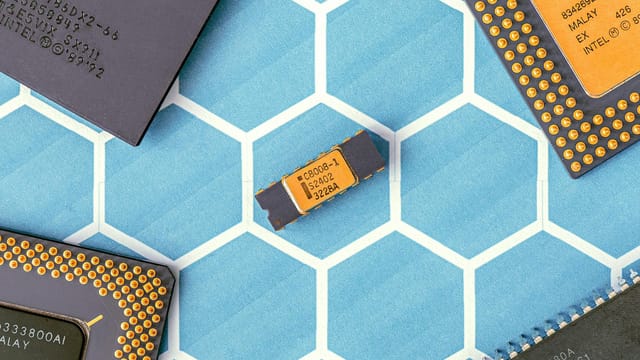
The Silicon Heartland: How State Capitalism Is Minting Billionaires in China’s Memory Chip Sector
China's two primary memory chip manufacturers, CXMT and YMTC, are heading toward IPOs after years of massive state-backed investment. Their success marks a shift in the global semiconductor landscape and highlights the effectiveness of the 'Hefei Model' in fostering strategic high-tech industries through local government support.

The Concentration Trap: Why Success Is Forcing Global Funds to Dump Korea’s Chip Giants
Record-breaking stock rallies for Samsung and SK Hynix have hit the 10% individual holding limit for many global funds, triggering a massive wave of forced selling. This technical rebalancing has led to the largest monthly outflow of capital from the South Korean market in over 25 years, despite strong industry fundamentals.
Diamonds Are a GPU's Best Friend: China's Synthetic Gem Makers Pivot to AI
China's synthetic diamond manufacturers are pivoting from the collapsing jewelry market to the AI sector, as their products become essential for cooling high-power GPUs. With Nvidia adopting diamond-composite cooling solutions and China controlling 63% of global capacity, the industry is seeing a massive valuation surge.

Musk’s Massive 'Terafab' Ambition Finds a Crucial Catalyst in MediaTek
Elon Musk’s $20 billion 'Terafab' project is reportedly partnering with MediaTek to secure the engineering expertise needed to produce 200 billion chips annually by 2028. The alliance aims to leverage MediaTek’s experience with Intel’s advanced manufacturing nodes to overcome extreme design timelines and labor shortages.
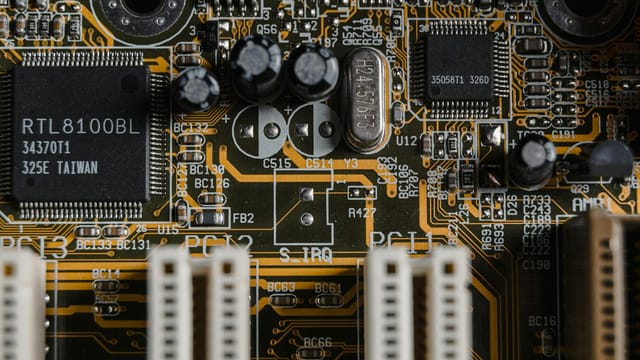
Huawei’s ‘Tao Law’ Strategy: Redefining the Semiconductor Ruler to Bypass the Lithography Wall
Huawei has introduced the 'τ (Tao) Law' as a successor to Moore's Law, pivoting the semiconductor industry from transistor shrinking to system-wide latency reduction. Through 'Logic Folding' and 3D integration, the company aims to achieve cutting-edge performance on mature manufacturing nodes, effectively bypassing Western lithography constraints.
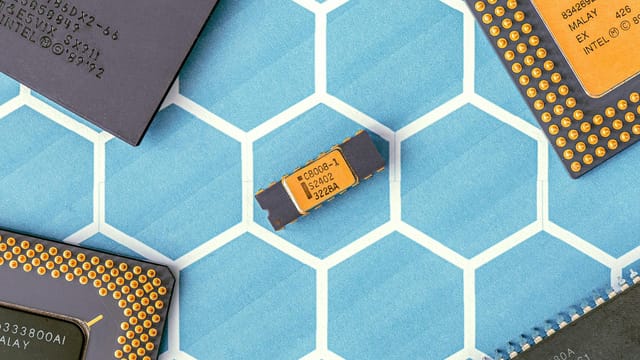
Huawei’s ‘Tao’ Gambit: Chasing Time to Outrun Semiconductor Sanctions
Huawei is pivoting away from traditional Moore's Law scaling in favor of the 'Tao (τ) Law,' a strategy focused on reducing signal latency through 3D stacking and architecture rather than shrinking transistors. This approach aims to achieve 1.4nm-equivalent performance by 2031 using mature lithography nodes, bypassing current Western export restrictions.

The Tao of Silicon: Huawei’s Strategic Pivot to Rewrite the Rules of Computing
Huawei has introduced 'Tao Law,' a new semiconductor principle that prioritizes signal transmission speed over transistor density. This strategic shift aims to bypass U.S. chip sanctions by optimizing architectural efficiency and data transport, potentially redefining performance metrics for the AI era.
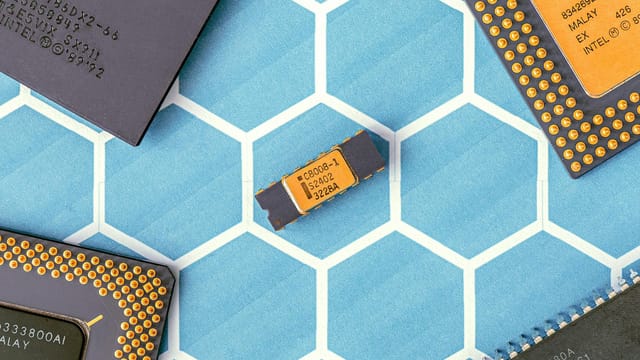
Latency Over Lithography: Huawei’s 'Tau Law' Seeks to Redefine the Semiconductor Frontier
Huawei has introduced the 'Tau Law' as a new benchmark for semiconductor progress, prioritizing signal transmission speed over transistor density. This strategic pivot allows the company to maintain a competitive edge in AI hardware despite being cut off from the world's most advanced chip-making tools.
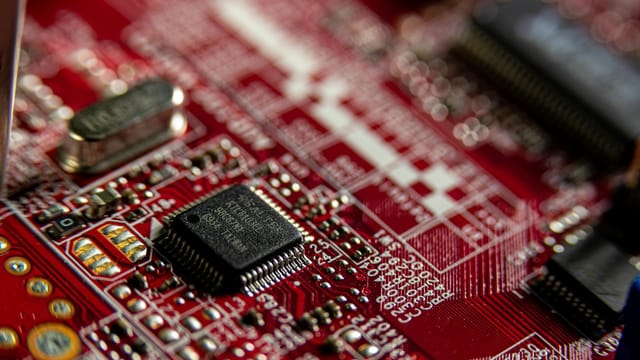
Silicon Sovereignty: SMIC Surges to Record High as China Doubles Down on Chip Independence
SMIC's share price hit a 20% ceiling, pushing its total valuation to a record 730 billion RMB amid a surge in China's semiconductor sector. This rally highlights the massive capital flows into firms essential for China's technological self-reliance and AI infrastructure goals.
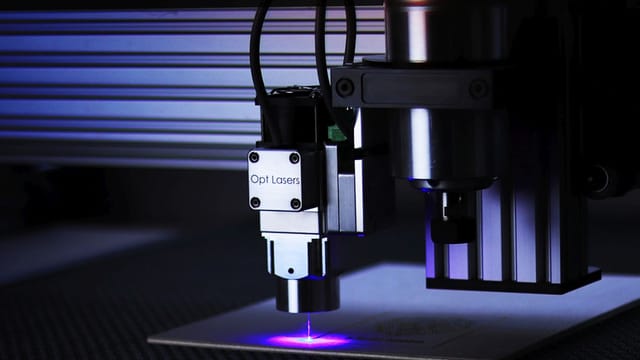
Shattering the Silicon Ceiling: DR Laser Hits Milestone in Glass Substrate Packaging
Chinese equipment maker DR Laser has shipped its first panel-level Through Glass Via (TGV) laser systems, signaling a major breakthrough in glass substrate packaging for AI and semiconductor chips. The company now offers comprehensive laser solutions for both wafer-level and panel-level high-performance packaging.
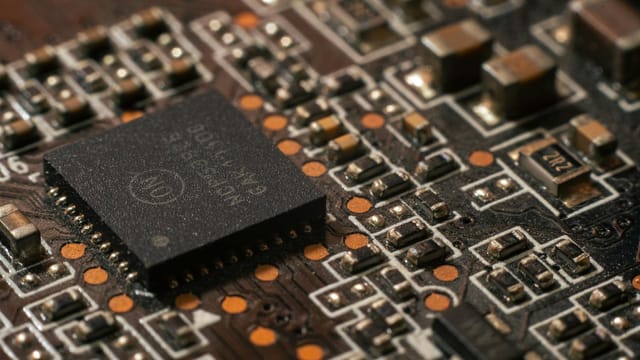
The Compute Cross-Over: Anthropic Eyes Microsoft’s Silicon to Fuel AI Growth
AI startup Anthropic is in talks to lease Microsoft’s custom-designed AI server chips to meet its burgeoning computational needs. This potential deal marks a rare cross-pollination between rival AI ecosystems, as Anthropic seeks to diversify its infrastructure beyond its primary backers, Google and Amazon.

Silicon Realignment: Anthropic Eyes Microsoft’s Custom Chips in a Bid for Compute Diversification
Anthropic is in discussions with Microsoft to utilize servers powered by Microsoft's custom-designed AI chips. The move reflects a broader industry shift toward proprietary silicon and hardware diversification to manage soaring compute costs and reduce dependency on Nvidia.