
# AI%20chips
Latest news and articles about AI%20chips
Total: 41 articles found
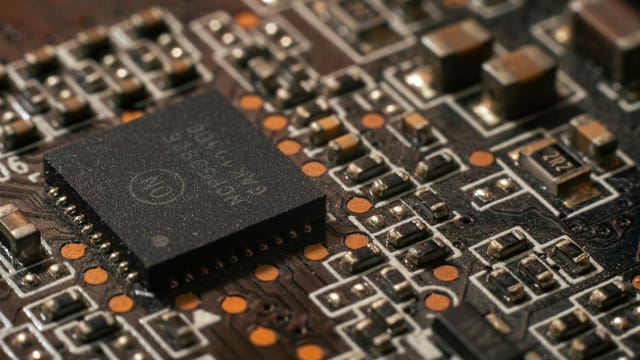
Cambricon Returns to Profit as AI-Compute Boom Sends Revenue Soaring
Cambricon posted revenue of RMB 6.497 billion and net profit of RMB 2.059 billion for 2025, reversing last year’s loss after revenue surged 453% as AI compute demand climbed. The result highlights the commercialization of China’s AI chip industry but leaves questions about sustainability, customer concentration and supply‑chain risks.
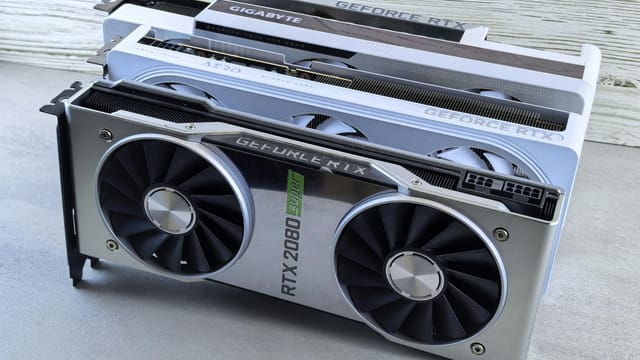
Chinese GPU Maker Sees Shipments Surge but Posts 2025 Loss of ¥781m
MuXi reported ¥1.644 billion in 2025 revenue, up 121% year‑on‑year, driven by a notable rise in GPU shipments, but still posted a ¥781 million net loss. The results signal strong market acceptance of the company's GPUs while underscoring the persistent profitability and cash‑burn challenges facing China’s emerging AI‑chip vendors.

Broadcom's 3.5D Gamble: Stacked 2nm SoCs and a Push for a Million AI Chips by 2027
Broadcom has started shipping a custom 2nm compute SoC built on a hybrid 3.5D stacking platform and aims to sell at least one million stacked chips by 2027. The XDSiP approach combines 2.5D interposers with face‑to‑face 3D bonding to boost bandwidth and energy efficiency, offering customers an alternative to monolithic node scaling.

Nvidia’s Jensen Huang Teases “Never‑Seen” Chips at GTC — A Shot Across the AI Infrastructure Bow
Nvidia CEO Jensen Huang announced that GTC 2026 will unveil “never‑seen” chips, signalling an aggressive push in AI infrastructure. The declaration underlines Nvidia’s central role in the AI compute market and raises questions about technological novelty, supply‑chain constraints and geopolitical implications.

Chinese AI Chipmaker Taichu Adapts GLM‑5.0 and Qwen3.5 to Its Homegrown T100 Accelerator
Taichu (Wuxi) Electronics has completed deep adaptation of GLM‑5.0, Alibaba’s Qwen3.5 and DeepSeek‑OCR‑2 to its in‑house T100 accelerator, enabling these open models to run efficiently on domestic hardware. The work advances China’s effort to build a full AI software‑hardware stack and reduce reliance on foreign GPUs, though performance parity with global leaders remains an open question.
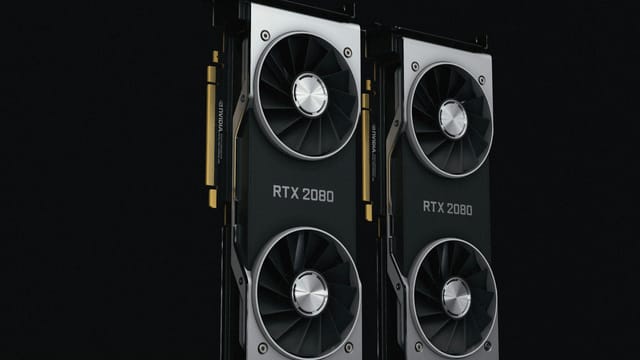
Nvidia and Meta Forge Multi‑Year AI Partnership as Meta Orders Millions of Chips
Nvidia and Meta have signed a multi‑year partnership that will see Meta deploy millions of Nvidia chips across on‑premises and cloud infrastructure. The deal secures compute supply for Meta's AI ambitions while reinforcing Nvidia's dominant position in AI hardware, with wide implications for competitors, cloud providers and energy use.

China’s Chip Capital Rush: ¥83.5bn Pours into AI, Memory and Advanced Nodes as Investors Chase Self‑Reliance
From January 2025 to early February 2026, China disclosed ¥835 billion in financing for its integrated circuit industry across 1,197 deals, with capital concentrating in AI chips, high‑end memory and advanced process nodes. Large rounds, state‑linked investors and strategic bets on upstream materials and equipment indicate a coordinated push to accelerate semiconductor self‑reliance.

China’s Mianbi AI Unveils SALA and a 9B Model That Promises Million‑Token Contexts and Faster Long‑Context Inference
Mianbi Intelligence has released SALA, a hybrid sparse‑linear attention architecture, and a 9B model called MiniCPM‑SALA that claims large inference speed gains and support for up to one million token contexts. If independently validated, the design could make very long‑context applications feasible on mid‑sized models and a range of inference hardware.

China Stocks Open Lower as AI-Chip and Palm Oil Plays Lead a Broad Pullback
China’s main stock indexes opened lower on 11 February, dragged by declines in crude palm oil–linked stocks and semiconductor firms tied to AI compute and high‑bandwidth memory. The swing reflects a combination of profit‑taking, holiday‑thin liquidity and a reassessment of near‑term AI hardware deployment rather than a decisive change in long‑term demand trends.
From a $100bn Promise to a $20bn Reality: Why Nvidia and OpenAI Are Choosing Caution Over Romance
Nvidia and OpenAI have publicly reaffirmed their partnership after reports that a previously announced $100 billion‑scale LOI had stalled. Sources now say Nvidia is likely to commit about $20 billion in the current financing round, signalling a shift from aspirational headlines to staged, pragmatic investments amid a tight AI hardware supply environment.

Moore Threads Unveils Homegrown AI Coding Service as China Pushes for Software Sovereignty
Moore Threads has introduced a domestically hosted intelligent programming service intended as an onshore alternative to foreign AI coding assistants. The launch reflects China's push for an indigenous AI stack, and its success will hinge on technical reliability, enterprise integrations, and handling of IP and data-compliance issues.

China’s Premier AI Chipmaker Sees Shares Plummet as Company Blames Rumours and Market Sentiment
Cambricon’s shares tumbled up to 14% intraday on 3 February, reducing its market value to about RMB 450 billion. The company said it did not know the precise cause, dismissed many market rumours as false, and attributed the move to secondary-market fund flows and sentiment. The episode highlights the fragility of AI-related valuations in China and the importance of timely corporate communication to prevent rumor-driven volatility.