
# Defense%20Policy
Latest news and articles about Defense%20Policy
Total: 42 articles found

A $300 Billion Gamble: The Fragile Architecture of the U.S.-Iran Grand Bargain
U.S. Defense Secretary Hegseth has tied the release of $24 billion in frozen Iranian assets to strict verification of a new 14-point memorandum. The deal proposes a massive $300 billion reconstruction plan and nuclear dismantling in exchange for lifting sanctions and ending maritime blockades, though it notably excludes Iran's missile program.

Seoul’s Sovereignty Standoff: The High-Stakes Timeline to Reclaiming Military Command
South Korea aims to establish a definitive timeline for the return of wartime operational control (OPCON) from the U.S. by late 2026. Despite political pressure from Seoul for a 2027 transfer, technical disagreements with Washington regarding military readiness persist.
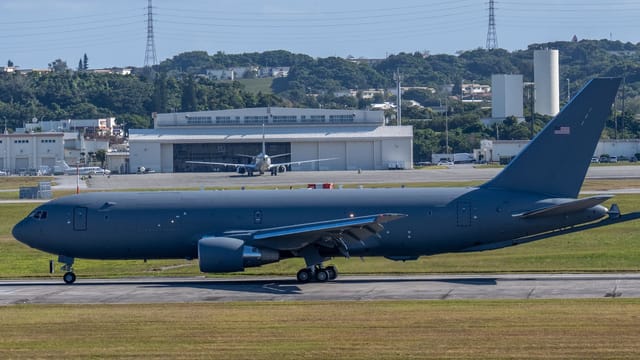
Beyond the Blue: Japan Rebrands Military to Secure the High Ground of Space
Japan plans to rename its Air Self-Defense Force to the Air and Space Self-Defense Force by 2026 to address emerging orbital threats. This move involves a significant expansion of specialized personnel and reflects a broader shift toward proactive defense amid regional tensions.

The Island Fortress Fallacy: Debating Taiwan’s Shift to Asymmetric Warfare
Taiwan's military is facing internal and external skepticism over its 'asymmetric warfare' strategy, which draws inspiration from recent Middle Eastern and European conflicts. Critics argue that Taiwan’s unique island geography and lack of strategic depth make these military comparisons irrelevant and the 'porcupine' strategy potentially disastrous.

Unmasking Tokyo: Beijing’s Rhetorical Offensive Against Japan’s Defense Pivot
China has sharply criticized Japan's recent defense policy shifts, with Foreign Ministry spokesperson Lin Jian claiming Tokyo has 'removed the mask' of being a peaceful nation. The critique focuses on Japan's increased military spending, missile deployment, and easing of arms export rules.

A Fragile De-escalation: Netanyahu Signals Tactical Pause in Israel-Iran Confrontation
Prime Minister Netanyahu has announced a conditional halt to Israeli strikes on Iran, citing a pause in Iranian aggression while maintaining a hardline stance against Hezbollah. The move signals a strategic shift in regional management rather than a long-term resolution.

Beijing’s Alarm: The Ghost of Militarism and Japan’s ‘New Role’ in the Indo-Pacific
China has issued a sharp rebuke of Japan's evolving defense posture, characterizing Tokyo's 'new role' in regional security as a dangerous revival of militarism. Beijing argues that Japan is using the 'Free and Open Indo-Pacific' framework to bypass post-war constitutional restrictions and foster bloc-based confrontation in Asia.

Tokyo’s Hard Power Pivot: Japan’s New Indo-Pacific Ambition Faces Regional Skepticism
Japanese Defense Minister Shinjiro Koizumi outlined a new, more proactive defense role for Japan at the Shangri-La Dialogue, drawing sharp criticism from China and raising historical anxieties among Southeast Asian nations. The move signals Japan's continued departure from post-war pacifism through increased defense spending and regional security partnerships.

Beijing Sounds the Alarm on Japan’s Strategic Reorientation
China's Ministry of Foreign Affairs has issued a stern warning against Japan’s recent diplomatic and military shifts, urging global vigilance. The move highlights deepening tensions over regional security, Taiwan, and Japan's evolving defense posture within the US alliance framework.

Red Lines and Rhetoric: Beijing’s Strategic Rebuff at the Shangri-La Dialogue
At the 2026 Shangri-La Dialogue, the Chinese delegation responded to U.S. defense policy by emphasizing the necessity of respecting 'red lines' to avoid military conflict. The exchange highlights the widening gap between Washington’s alliance-building strategy and Beijing’s insistence on sovereign non-interference.

Japan’s Defense Pivot: The Resurrection of a Military-Industrial Complex
Japan is rapidly expanding its domestic defense industry and weapon exports, marking a historic departure from its post-war pacifism. Domestic critics warn that the burgeoning military-industrial complex may prioritize corporate profits over regional peace, fundamentally altering the nation's strategic identity.

Japan’s Defense Transformation: Takaichi’s Gamble Against Pacifism and the Trump Factor
Japan's ruling LDP has approved a draft to overhaul its core security documents, signaling an accelerated shift toward military modernization and increased spending. The move aims to strengthen the U.S. alliance amid geopolitical uncertainty while navigating significant domestic economic and social headwinds.