
# Kirin Chip
Latest news and articles about Kirin Chip
Total: 5 articles found

Beyond the Nanometer: Huawei’s Radical Pivot to Transcend Moore’s Law
Huawei is shifting its semiconductor strategy away from traditional transistor miniaturization toward 'Logic Folding' and system-level efficiency. This new framework, dubbed 'Tao’s Law,' aims to achieve 1.4nm-equivalent performance by 2031 using existing manufacturing capabilities to bypass current physical and geopolitical constraints.
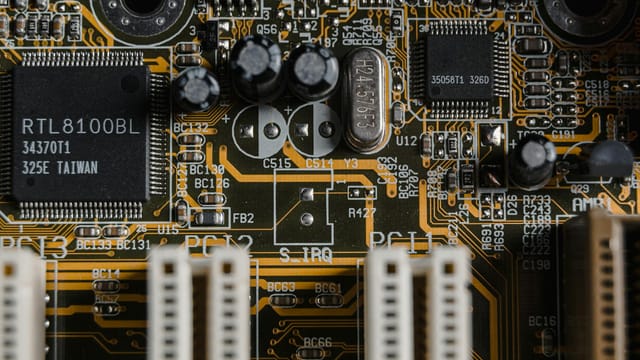
Beyond Nanometers: Huawei Unveils ‘τ Law’ in Bold Bid to Outrun Moore’s Law and US Sanctions
Huawei has introduced 'Tao’s Law' (τ Law), a semiconductor strategy that replaces traditional transistor shrinking with 'logic folding' to reduce signal latency. By focusing on time scaling rather than geometric size, Huawei aims to reach 1.4nm-equivalent performance by 2031, effectively bypassing Western lithography restrictions.
China’s Tech Titans Power A-Share Surge as Huawei Teases New Chip Breakthrough
China's tech-heavy indices saw a historic surge, with the STAR 50 rising nearly 6% and trading volume exceeding 3.2 trillion RMB. The rally was driven by Huawei's announcement of a new 'logic folding' chip technology and breakthroughs in high-performance materials for AI computing.

Beyond Moore’s Law: Huawei Proposes ‘Tau Law’ as a Strategic Pivot in the Semiconductor War
Huawei has introduced the 'Tau Law' to replace Moore’s Law, focusing on time-based scaling and logic folding rather than physical miniaturization. This strategic pivot aims to achieve 1.4nm-equivalent performance by 2031, effectively bypassing current restrictions on advanced semiconductor manufacturing equipment.
Beyond the Nanometer: Huawei’s “Tao Law” and the New Frontier of Silicon Sovereignty
Huawei has introduced the 'Tao (τ) Law,' a new semiconductor development principle that prioritizes reducing signal latency through 'logic folding' over traditional physical miniaturization. This strategy aims to achieve high-end performance parity with 1.4nm chips by 2031, effectively creating a workaround for current lithography restrictions.