
# NVIDIA
Latest news and articles about NVIDIA
Total: 63 articles found
The Silicon Cold Shoulder: Why NVIDIA’s Jensen Huang Bypassed Japan
NVIDIA CEO Jensen Huang’s recent tour of China, Taiwan, and South Korea notably excluded Japan, signaling a shift in the global AI hierarchy. While Japan remains a supplier of materials, it lacks the 'AI-native' partners and scale necessary to engage in NVIDIA's high-level strategic ecosystem.

Silicon Siege: Why Washington is Moving to Block China’s Humanoid Robot Giant
The U.S. Congress has introduced a bill to ban Unitree Robotics following its deal with NVIDIA, highlighting a strategic move to curb China's 85% market share in humanoid robots. The tension is forcing Chinese manufacturers to pivot toward domestic semiconductor solutions to ensure long-term survival.

Silicon Meets Steel: NVIDIA and Doosan’s Alliance Signals the Rise of the ‘Physical AI’ Factory
NVIDIA and South Korea’s Doosan Group are expanding their partnership to develop 'Physical AI' and AI factory infrastructure, integrating advanced robotics with specialized power solutions and semiconductor materials. This collaboration aims to transform industrial automation by combining NVIDIA’s computing platforms with Doosan’s energy and manufacturing expertise.

Jensen Huang in Seoul: NVIDIA’s High-Stakes Bet on Gaming as the Laboratory for Physical AI
NVIDIA CEO Jensen Huang’s visit to South Korea highlights a strategic pivot toward 'embodied AI,' using high-fidelity gaming simulations to train future robotics. By partnering with local giants like Krafton and NCSOFT while securing ties with Hyundai and SK, Huang is positioning the gaming industry as the essential sandbox for the next phase of physical-world artificial intelligence.
From BBQ to Blackwell: Jensen Huang’s Charm Offensive in South Korea
NVIDIA CEO Jensen Huang’s high-profile visit to South Korea combined cultural diplomacy with strategic business negotiations, focusing on HBM supply chains and future collaborations in robotics. By meeting with the chairmen of SK and LG and interacting with esports legend Faker, Huang solidified NVIDIA's essential role in Korea's industrial and cultural landscape.
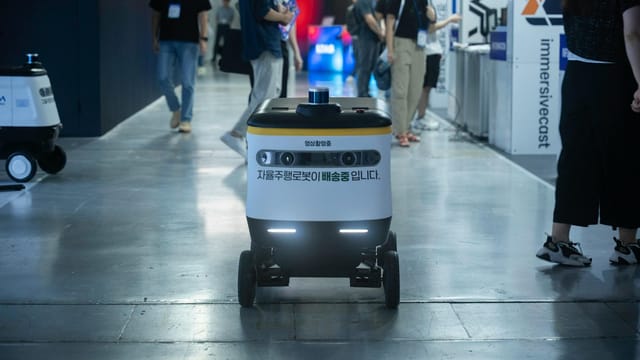
From Chatbots to Digital Workers: The Infrastructure Boom Fueling the AI Agent Era
AI is transitioning from generative chatbots to autonomous 'agents,' sparking a massive infrastructure surge for hardware giants like Dell and Lenovo. While order backlogs are at record highs, the industry faces a critical challenge in proving the economic return on investment for these complex digital workers.

Beyond the Speed Trap: Why 6G is Trading Raw Velocity for Pervasive AI
As China begins 6G trials in the 6GHz band, the industry is pivoting away from raw speed toward AI-native networking. The next generation of connectivity will focus on serving 'intelligent agents' and providing uniform coverage, with peak speed gains projected to be much lower than in previous generational shifts.
The Fermented Milk of Human Kindness: Jensen Huang on Remote Work and the 'Douzhi' Litmus Test
NVIDIA CEO Jensen Huang recently used his experience tasting Beijing's fermented 'douzhi' to advocate for the importance of facial expressions in professional communication. Despite his preference for visual interaction, Huang reaffirmed NVIDIA’s commitment to flexible remote work policies.
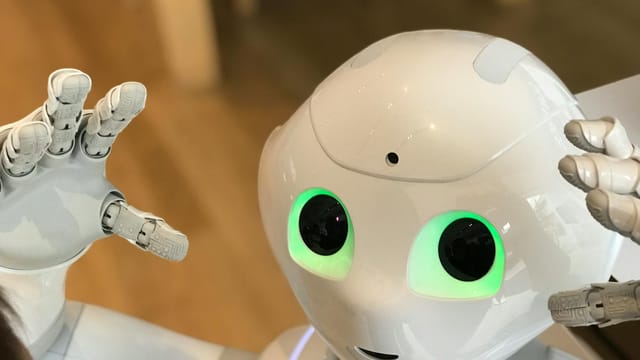
The Agentic Alliance: NVIDIA and Microsoft Forge a Unified Path for Autonomous AI
NVIDIA and Microsoft have partnered to launch a unified technology stack for 'Agentic AI,' allowing autonomous agents to be deployed across Windows, cloud, and edge environments. This collaboration seeks to standardize AI development and solidify both companies' dominance in the shift from conversational AI to task-oriented autonomous systems.

The HBM Squeeze: Why AI’s Insatiable Thirst for Memory is Redefining Semiconductor Economics
Surging demand for AI-specific memory is projected to drive HBM contract prices significantly higher by 2027 as suppliers gain immense pricing power. The shift toward NVIDIA's Rubin architecture and custom AI ASICs will see HBM consume nearly a third of global DRAM wafer capacity, creating a ripple effect across the entire computing industry.
China’s GPU Speculation: A Warning from the Frontlines of the Compute Race
A senior state-owned enterprise leader warns of a speculative bubble in China's computing market, where GPUs are treated like real estate. To survive, regional hubs like Wuhu are shifting toward asset-light orchestration and domestic ecosystem building to bypass bottlenecks in high-end chip supply.
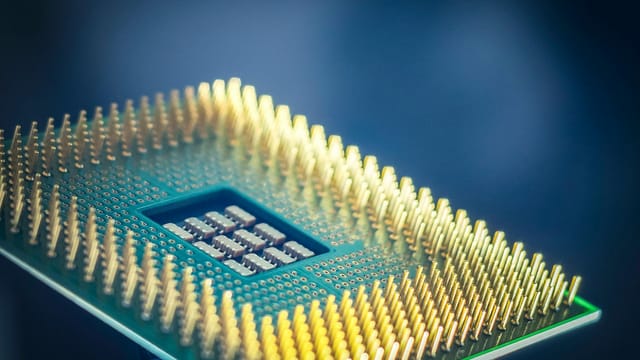
NVIDIA’s Strategic Coup: Jensen Huang Takes the Fight to Intel’s CPU Stronghold
NVIDIA has officially entered the CPU market with its Vera and RTX Spark chips, aiming to disrupt the long-standing Intel-Microsoft dominance by focusing on AI agents and ARM-based architectures. The move transitions NVIDIA from a GPU provider to a full-stack compute company, encompassing everything from personal AI-workstations to humanoid robotics.