
# National%20Bureau%20of%20Statistics
Latest news and articles about National%20Bureau%20of%20Statistics
Total: 68 articles found

China’s Property Glaciers Thaw: First-Tier Cities Lead a Tentative Housing Recovery
China's first-tier cities recorded their first monthly rise in new home prices since 2025, signaling a potential bottoming out of the property crisis. While secondary market volumes in Shanghai and Beijing hit multi-year highs and national inventory began to clear, a sharp divergence remains between top-tier hubs and struggling smaller cities.

The Credit Engine: China’s Financial Sector Leads Q1 Recovery Amid Persistent Property Headwinds
China’s economy grew 5.0% in Q1 2026, bolstered by a 6.5% surge in the financial sector that helped offset a deep 11.2% contraction in real estate investment. While tier-1 city home prices are beginning to stabilize, the data highlights a widening gap between a resilient service-and-export economy and a struggling construction sector.

Stability Above All: China’s Energy Mix Tilts Back to Thermal and Hydro as Renewables Slump
China's industrial power generation grew 1.4% in March 2026, driven by a resurgence in coal-fired thermal power and hydropower. Despite the ongoing green transition, wind and nuclear output faced sharp declines, highlighting Beijing's continued reliance on traditional energy sources to maintain grid stability and industrial momentum.

A Fragile Thaw: China’s Tier-1 Cities Lead a Selective Property Recovery
Recent data from China's National Bureau of Statistics shows a month-on-month rise in home prices across Tier-1 cities, ending a nine-month slump. While the 'Small Spring' phenomenon suggests a stabilization in core markets like Shanghai and Beijing, the broader national recovery remains uneven and year-on-year figures continue to show significant declines.
China’s 5% Growth: High-Tech Industrial Surge Masks Persistent Domestic Frigidity
China reported 5.0% GDP growth for Q1 2026, driven by a 12.5% jump in high-tech manufacturing, yet retail sales and property investment remain weak. The data underscores a structural imbalance as Beijing prioritizes industrial output over boosting household consumption.
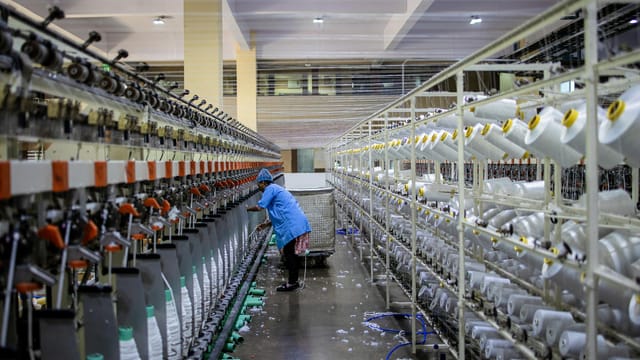
China’s Industrial Engine Revs on High-Tech While Property Drag Persists
China's industrial output rose 6.1% in Q1 2026, driven by double-digit growth in high-tech sectors like aerospace and electronics. However, a 21% collapse in cement production and a lag in private sector growth highlight the ongoing drag from the property crisis and weak domestic demand.

China’s Retail Engine Sputters as Automotive Drag and Cautious Spending Weigh on Growth
China's retail sales growth slowed to 1.7% in March 2026, hampered by a sluggish automotive market and a shift away from department stores. While online sales of essentials like food remained strong, the data suggests a broader trend of consumer caution and a pivot toward value-based spending.
China’s Investment Growth Stalls as Private Capital and Foreign Investors Retreat
China's fixed-asset investment grew by a marginal 1.7% in Q1 2026, driven almost entirely by state-led infrastructure. A 2.2% contraction in private investment and a 6.3% drop in foreign capital highlight a deepening confidence crisis among non-state actors.

Green Shoots in the Concrete Jungle: China’s Tier-1 Property Prices Pivot to Growth
China's Tier-1 cities saw a month-on-month increase in residential property prices in March 2026, signaling a potential stabilization in the country's most valuable markets. Despite these localized gains, year-on-year data shows a continued structural decline across the broader national property sector.

China’s Uneven Expansion: Industrial Power Buffers a Persistent Property Crisis
China's GDP grew by 5.0% in Q1 2026, driven by a 6.1% surge in industrial output despite a continued 11.2% collapse in property investment. The data highlights a growing imbalance between strong state-led production and weak domestic consumption, which rose only 2.4%.

China’s Factory Prices End 41-Month Slump, Signalling a Structural Shift in Industrial Momentum
China’s Producer Price Index turned positive in March 2026 after 41 months of decline, signaling an end to a long deflationary cycle in the industrial sector. While consumer inflation moderated to 1.0% due to seasonal post-holiday effects, the surge in PPI highlights a recovery driven by global commodities and domestic high-tech sectors like AI and green energy.

China’s Industrial Engine Finds New Gears as High-Tech Surge Offsets Automotive Woes
China's industrial profits grew 15.2% in the first two months of 2026, led by a massive 58.7% surge in high-tech manufacturing and a recovery in the private sector. While the overall outlook is positive, the data reveals a sharp divide between booming tech industries and a struggling automotive sector.