
# OpenClaw
Latest news and articles about OpenClaw
Total: 91 articles found

The Price of Autonomy: China Issues Urgent Red Alert Over 'OpenClaw' AI Agents
Chinese authorities have issued an urgent security guide for the popular AI agent tool OpenClaw after discovering over 220,000 instances exposed on the public internet. The government warns that the tool's high privilege requirements and weak default settings pose a severe risk to corporate and personal data security.
The Lobster Revolution: China Formalizes AI Agent Safety as WeChat Triggers the OpenClaw Era
China has issued comprehensive safety guidelines for OpenClaw AI agents following their mass integration into WeChat. This move attempts to balance the rapid shift toward autonomous 'Agent-as-a-Service' models with the urgent need for security after high-profile global system failures.

Xiaomi Reveals MiMo V2 Suite — A Cheaper, Device‑Level Push for Native AI Agents
Xiaomi has launched three MiMo V2 models—MiMo‑V2‑Pro, MiMo‑V2‑Omni and MiMo‑V2‑TTS—positioned for agent workflows, multimodal understanding and expressive speech. By coupling high capability with aggressive pricing and ecosystem integration, Xiaomi aims to accelerate real‑world agent use while pressuring cloud providers and raising governance questions.

From Clever Vacuums to Autonomous Kitchens: How AI Is Sparking a New Wave of Consumer Robotics in China
At AWE 2026 in Shanghai Chinese appliance and robotics firms showcased a shift from conceptual demos to deployable, wheel-based home robots, edge AI devices and agent-driven software that enables continuous task execution. The convergence of embodied AI, open agent frameworks and China’s manufacturing scale is accelerating a global push of smarter consumer robotics, though challenges remain in software sophistication, regulatory differences and market fragmentation.

Tencent’s QClaw Turns WeChat into a Remote for Office PCs — a Quiet Grab for AI’s Distribution Layer
Tencent’s QClaw, launched into public testing on March 18, 2026, uses the open OpenClaw stack and WeChat to let users remotely control office PCs from their phones. The tool prioritises distribution and usability over proprietary modelling, creating strategic leverage for Tencent while raising security, privacy and labour‑market questions.

Tencent Pushes Desktop AI into WeChat: QClaw Adds Mini‑Program, Prebuilt Skills and Mass Rollout
Tencent upgraded its QClaw AI assistant to connect directly to WeChat via a mini‑program, enabling desktop file transfers, scheduled tasks, and prebuilt skills. The update lowers technical barriers to agent use and signals a move from limited testing to broader availability, while raising security and regulatory questions.

Alibaba’s ‘Wukong’ Aims to Turn DingTalk into a Corporate AI Engine — Safe, Embedded and Built for B2B
Alibaba has launched Wukong, an enterprise‑native AI platform embedded into DingTalk, designed to automate workflows while enforcing strict data access and audit controls. The initiative, placed under a new Alibaba Token Hub led by CEO Wu Yongming, signals a strategic pivot toward B2B AI where safety, permissions and skills integration become the primary commercial levers.
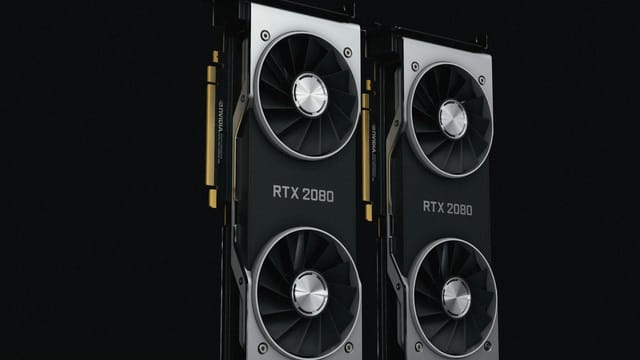
Huang’s GTC Playbook: NVIDIA Repackages AI as Token Factories — Hardware, Agents and a $1tn Inference Bet
At GTC Huang declared a structural shift from training to inference, unveiling a hardware and software roadmap — Vera Rubin systems, Groq LPU integration, Kyber racks, and OpenClaw/NemoClaw agent frameworks — he says could create at least $1 trillion in revenue by 2027. The announcements reframe AI as a token‑generation business that will reshape data centre design, software stacks and corporate IT strategy.

From Demos to Devices: Why 2026 Could Be the Breakout Year for Consumer Edge AI
At AWE 2026 Chinese chipmaker Lingsi unveiled AISoC families aimed at running large, multimodal AI models on consumer devices, reflecting a wider industry shift from cloud-first demonstrations to sustained on-device intelligence. Driven by agent-style workloads that demand higher inference frequency and by cost, latency and privacy pressures, edge AI is poised to accelerate in 2026 though technical and ecosystem challenges remain.

Nvidia Pushes ‘One‑Line’ Agent Deployment with NemoClaw to Cement GPU‑centric AI Ecosystem
At GTC, Nvidia introduced NemoClaw, a two‑command deployment toolchain optimized for the open‑source agent framework OpenClaw, aiming to bind GPU servers tightly to agent runtimes. The move continues Nvidia’s strategy of using software to drive hardware adoption and raises questions about portability, vendor lock‑in and standards in the rapidly growing agent ecosystem.

Banks in China Cool on the 'OpenClaw' Fad as Autonomous AI Collides with Compliance
OpenClaw, an open‑source autonomous AI agent, has surged in popularity in China but has faced regulatory warnings and a cautious banking sector response because of its system‑level permissions and security vulnerabilities. Chinese banks are exploring agent technologies in controlled, private environments while insisting on strict access controls, human review, and regulatory coordination before scaling to core financial functions.

Tencent Cloud Opens Its Doors to OpenClaw Agents — A Sign of China's Fast-Moving AI Ecosystem
Tencent Cloud has enabled the integration of OpenClaw agents into its Yuanbaopai environment, allowing third‑party agents to join Tencent-hosted interaction spaces as bots. The move reduces integration friction for developers and signals Tencent's intent to embrace interoperable agent frameworks, while raising compliance and moderation questions as regulators watch the fast‑moving AI sector.