
Latest news and articles about WeChat
Total: 40 articles found

Tencent’s QClaw Turns WeChat into a Remote for Office PCs — a Quiet Grab for AI’s Distribution Layer
Tencent’s QClaw, launched into public testing on March 18, 2026, uses the open OpenClaw stack and WeChat to let users remotely control office PCs from their phones. The tool prioritises distribution and usability over proprietary modelling, creating strategic leverage for Tencent while raising security, privacy and labour‑market questions.

Tencent Tops Estimates as Cloud Business Reaches Scaled Profitability, Buoyed by Enterprise AI Demand
Tencent beat fourth-quarter expectations with net profit of RMB 58.26 billion and revenue of RMB 194.37 billion, and said its cloud business has reached scaled profitability thanks to rising enterprise AI demand and stronger PaaS/SaaS uptake. While gaming and value-added services outperformed estimates, fintech and enterprise services slightly missed forecasts; the company proposed a final dividend of HKD 5.30 per share.

Tencent Pushes Desktop AI into WeChat: QClaw Adds Mini‑Program, Prebuilt Skills and Mass Rollout
Tencent upgraded its QClaw AI assistant to connect directly to WeChat via a mini‑program, enabling desktop file transfers, scheduled tasks, and prebuilt skills. The update lowers technical barriers to agent use and signals a move from limited testing to broader availability, while raising security and regulatory questions.

Inside China’s Private‑Domain Sales Machine: Cheap Medicines Repackaged and Sold at Five‑Fold Markups to the Elderly
A 3·15 investigation exposed a private‑domain marketing industry in China that repackages low‑cost medicines and supplements into expensive, persuasive video lectures sold to elderly consumers. The scam hinges on fabricated expert authority and intimate social‑platform channels, yielding markups of up to five times the purchase price and prompting renewed regulatory scrutiny.

Tencent’s Five-Pronged Push into AI Agents: Building an entrance to WeChat and the cloud
Tencent launched five AI agents across desktop, social and cloud products as part of a push to capture developers and users for its AI infrastructure. The rapid roll‑out seeks to monetise compute and embed agents into WeChat’s mini‑program economy, but faces security, cost and scaling challenges that will determine whether the strategy pays off.

Tencent’s Secret WeChat AI Agent: Preparing Autonomous Assistants for 1.4 Billion Users — and a Cloud‑Compute Bonanza
Tencent is developing a secret AI agent for WeChat meant to autonomously use mini‑programs to handle tasks for users, with limited trials planned for mid‑2026 and a possible full rollout by Q3. The project mixes in‑house and third‑party models, seeks to monetise heavy cloud usage generated by autonomous agents, and confronts significant privacy, security and regulatory hurdles.

From Watches to Robots: How China’s Spring Festival Gala Became a Four‑Decade Mirror of Economic Change
China’s Spring Festival Gala has tracked the nation’s economic evolution for more than forty years. What began as barter deals for watches has evolved into multi‑hundred‑million yuan interactive partnerships and showcases of AI and robotics, making the Gala a concise barometer of consumer trends, corporate strategy and industrial policy.

WeChat Goes Gold for Lunar New Year: AI Songs, Golden Moments and Red‑Envelope Gamification
Tencent has introduced a suite of WeChat features for the Lunar New Year—golden Moments that can drop red envelopes when liked, AI‑generated New Year songs, and customizable red‑packet covers. The updates are designed to boost engagement, encourage payments, and create shareable seasonal content, while raising questions about data use and regulatory attention.

Tencent Turns WeChat ‘Golden Moments’ into a Spring‑Festival Traffic Play — Yuanbao Adds Extra 10k Red‑Packet Prizes
Tencent has enabled a gold‑coloured New Year Moments effect in WeChat that activates when users publish a Yuanbao‑made greeting, and Yuanbao has added extra high‑value red packets as part of a RMB 10 billion Spring Festival campaign. The move highlights an escalating competition among Chinese tech firms to lock users into AI and payments ecosystems through festive incentives, while also exposing how WeChat’s sharing restrictions serve as a gatekeeper for third‑party promotions.

China’s Tech Giants Wage an AI-Powered Red-Envelope War to Win Spring Festival Attention
During the Lunar New Year, Tencent, ByteDance and other Chinese tech firms launched a wave of AI‑branded giveaways and UI changes to drive engagement. From gold‑coloured WeChat Moments and ten‑thousand‑yuan vouchers to hourly red‑packet rains and gala‑tie‑in prizes, companies are using festive incentives to rebuild user habits and showcase AI features.
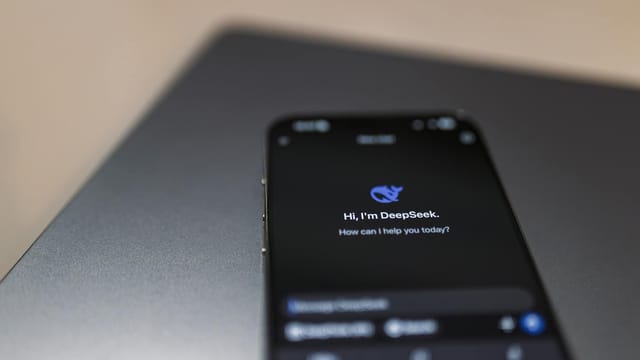
Free Milk Tea and Crashed Servers: China’s AI Giants Spend Billions to Buy Users — But Will They Keep Them?
China’s largest tech firms turned the Lunar New Year into a costly marketing contest, using red packets and free-order campaigns to drive downloads for their AI assistants. The promotions produced massive short-term engagement but exposed operational and product weaknesses, and highlighted that long-term success will hinge on embedding AI into daily services rather than on discount-driven spikes.

Tencent’s Yuanbao Restores Red‑Packet Sharing to WeChat as App Update Reopens Copying of Codes
Tencent updated its Yuanbao app on February 7 to allow sharing red‑packet links into Yuanbao Pai and restored WeChat’s ability to copy Yuanbao red‑packet passcodes after a brief period when such codes were non‑copyable. The move reverses a constraint introduced on February 6 that had curbed how third‑party services distribute viral red‑packet promotions through WeChat.