
# automation
Latest news and articles about automation
Total: 29 articles found

China’s Yushu CEO Says the ‘ChatGPT Moment’ for Embodied Robots Is Near — But Not Here Yet
At the Yabuli forum Yushu Technology CEO Wang Xingxing defined a practical threshold for an embodied-AI “ChatGPT moment” and said it may take two to three years to achieve. He emphasized that improved motion capabilities are the essential prerequisite for robots to perform real-world tasks and that progress will come through parallel advances in hardware and software.
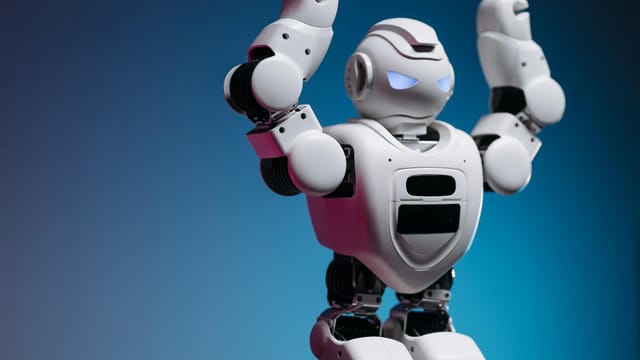
Chinese Robotics Founder Predicts Robots Will Soon Outrun Humans — and Urges Patience for Bigger Breakthroughs
Yushu Technology founder Wang Xingxing predicted that legged robots could run faster than elite human sprinters within a year, while cautioning that a full ‘‘ChatGPT’’ moment for embodied intelligence may take two to three years. The claim highlights rapid technical gains in locomotion but underscores the remaining challenges of robustness, autonomy and data for real‑world deployment.

Alibaba Unveils 'Wukong' — A Production-Grade Agent Platform for Enterprises
Alibaba has launched Wukong, an enterprise-grade Agent platform designed to coordinate large language models with business systems to automate multi-step tasks. The move deepens Alibaba’s push to sell higher-margin, production-ready AI orchestration to enterprises but raises questions about reliability, governance and cross-border compliance.

Software CEO Warns AI Agents Could Push New Graduate Unemployment Past 30%
ServiceNow CEO Bill McDermott warned that the spread of AI agents in firms could push unemployment among new university graduates above 30 percent. The claim highlights a broader shift in which AI tools are beginning to replace routine white‑collar roles, forcing employers, educators and policymakers to confront rapid labour‑market changes.

Musk Unveils 'Digital Optimus': AI Agents to Simulate an Entire Software Company
Elon Musk announced Digital Optimus, a Tesla–xAI project that pairs xAI’s Grok language model with Tesla-built AI agents able to view computer screens and perform keyboard and mouse actions to replicate software-company workflows. The system promises to automate coding, testing and content creation, potentially disrupting service-driven software vendors while raising technical, legal and labour challenges.
Meituan’s Wang Xing Says Autonomous AI ‘Agents’ Will Disrupt More Than ChatGPT — and Pushes to Flatten Company Culture
Meituan CEO Wang Xing warned that autonomous AI agents — systems that plan and act across multiple steps — will be more disruptive than chatbots like ChatGPT, and urged staff to flatten internal hierarchies by dropping formal honorifics. The remarks signal a strategic pivot toward agent-driven automation that could reshape Meituan’s logistics and service models while raising regulatory and labour risks.

Gree’s Dong Mingzhu Plays Down Fears of an AI Job Apocalypse, Urges Focus on Product Differentiation
Dong Mingzhu, chair of appliance giant Gree, argued that AI is a tool that can boost efficiency but cannot entirely replace human workers. Her remarks stress product differentiation and workforce adaptation, reflecting concerns about social stability and industrial competitiveness in China.

China’s ‘Lobster’ Craze: OpenClaw Agents Promise New Productivity — and New Risks
OpenClaw agents, nicknamed “lobsters,” are spurring a wave of desktop automation in China that promises increased productivity and new business models but also raises steep costs and security concerns. A NetEase salon on March 13 convened industry leaders to share deployment guides, case studies and safety practices as the technology moves from hobby to enterprise adoption.

The High Cost of “Keeping a Dragon‑Lobster”: Why OpenClaw’s Hype Collides With Time, Money and Security
OpenClaw, a popular orchestration platform for personal AI agents in China, has attracted huge user interest but also revealed a hard truth: time, expense and security risks often outweigh potential earnings for ordinary users. Startups and technically skilled operators can monetise deployments, but non‑technical users face maintenance burdens, electricity and token costs, and vulnerabilities from unvetted plugins and exposed instances.

The Digital 'Lobster' Craze: OpenClaw’s Promise of Passive Income Collides with Bills, Bugs and Security Risks
OpenClaw, an agent platform dubbed the “dragon‑lobster,” has sparked frenzied interest in China but the economics and risks greatly limit who can profit from running instances. Startups and technically proficient individuals can monetize deployments, but ordinary users face non‑trivial time, electricity, token fees and security exposures that often outweigh modest earnings. The situation points to a coming consolidation toward managed, vetted services and clearer regulatory guardrails.

How a Google Product Manager Built a Six‑Person AI 'Dream Team' for Under $400 a Month
A Google product manager has shown how to assemble a six‑agent AI team using OpenClaw, a single Mac Mini and a mix of models for under $400 per month. The approach emphasises specialised agents, file‑based coordination, iterative memory and simple governance, offering a low‑cost blueprint for persistent automation with important implications for productivity and risk management.

China Debates a National Early‑Warning System as AI Upends Jobs
China is shifting from anecdotal fear about AI to systemic policy proposals. Legislators and experts are advocating a national AI employment risk monitoring and early‑warning system, complemented by retraining and social protection, while some scholars call for legally defined limits on AI use to protect jobs and stability.