
# generative%20AI
Latest news and articles about generative%20AI
Total: 26 articles found

Nvidia’s GTC 2026: Huang’s $1 trillion Bet and the Push to Own AI’s Foundation
At GTC 2026 Nvidia announced a sweeping hardware and software stack aimed at turning AI inference into highly optimised “token factories,” and projected $1 trillion in revenue by 2027. The company unveiled specialised inference racks, a new CPU, optical interconnects, an enterprise agent platform and a space compute module, signalling a bid to control the full AI infrastructure stack.
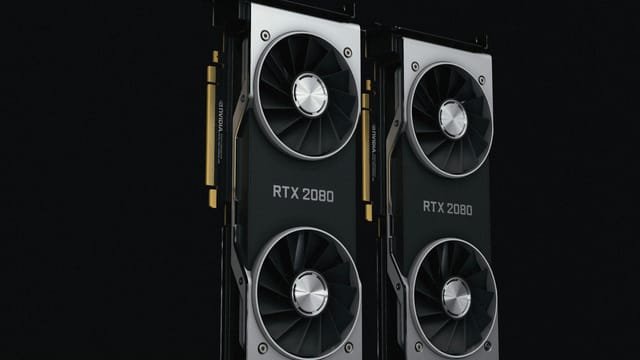
Nvidia’s DLSS 5 Promises a ‘GPT Moment’ for Graphics — Generative AI Fills the Gaps to Deliver Film‑Grade Game Worlds
Nvidia unveiled DLSS 5 at GTC, a generative‑AI driven graphics system that combines structured 3D data with probabilistic models to produce photo‑real lighting and materials in real time up to 4K. Jensen Huang called it the graphics industry’s “GPT moment,” and major publishers including Bethesda, Capcom, NetEase, Tencent, Ubisoft and Warner Bros. Games plan to adopt it, with a rollout expected this fall.

Nvidia’s DLSS 5 Promises a ‘GPT Moment’ for Real‑Time Graphics — But the Race Is Only Beginning
Nvidia introduced DLSS 5, a real‑time neural rendering system that synthesises photoreal lighting and material properties per pixel. Jensen Huang called it a “GPT moment” for graphics, underlining the company’s intent to couple generative AI with traditional rendering and deepen its hardware‑software advantage.

How the AI Boom Has Cornered the Games Industry: Memory Shortages, Mass Layoffs and a Crisis of Quality
The AI boom is straining the videogame industry on two fronts: a global memory shortage driven by hyperscale AI data centres is raising hardware prices and delaying new consoles, while studios are axing junior roles and deploying generative tools, provoking rebellions from developers and players. The outcome hinges on whether platform holders, chipmakers and consumers push back against radical automation or accept a lower‑quality, more automated future.

Meta Accelerates Own AI Silicon Push with Four New MTIA Chips, Betting on in‑House Efficiency
Meta announced four new AI chips under its MTIA programme, with MTIA 300 already in production and three further models slated through 2027. The chips aim to accelerate both training and inference for generative features and ranking systems, reflecting a broader industry move toward custom silicon to cut costs and control performance.

Meta Accelerates Push for Custom AI Chips to Power Generative Models and Wean Off Nvidia
Meta revealed plans to roll out four in‑house MTIA chips through 2027, with MTIA 300 already in production and later chips slated for inference-heavy generative AI workloads. The move signals a deliberate strategy to diversify suppliers, lower operating costs, and pair continued purchases of Nvidia/AMD hardware with bespoke silicon aimed at Meta’s unique demands.

Xiaohongshu Moves to Stamp Out AI‑Managed Influencer Accounts — A Reset for China’s Creator Economy
Xiaohongshu announced a policy to strictly target accounts managed by AI or third‑party management services, citing concerns about content quality and user trust. The move aligns with broader Chinese regulatory trends on AI and content provenance and will affect creators, marketers and the technical fight against deceptive engagement.

China NPC Deputy Urges 'Source‑Level' Controls on Generative AI After Viral Fake Notices
A Chinese NPC deputy, Li Anrui, warned that generative AI has made fabricated content harder to spot and proposed source‑level measures: a government verification platform, mandatory AI labelling for official‑style documents, and stronger platform responsibilities. His recommendations align with Beijing’s recent policy signals to strengthen AI governance, but implementing them raises technical challenges and trade‑offs around enforcement and free expression.

OpenAI Unveils GPT‑5.4 with Million‑Token Context — A New Tool for Long, Complex Workflows
OpenAI's GPT‑5.4 and GPT‑5.4 Pro introduce a one‑million‑token context window and a "Thinking" mode that preserves long‑running context and allows mid‑response intervention. The update targets complex, tool‑driven workflows and promises stronger capabilities for coding, research, and enterprise automation, while raising operational costs and safety challenges.

Chinese Report Says Only ‘Native’ AI Platforms Can Cure Finance’s Hallucination Crisis
NewTimeSpace’s 2026 assessment introduces CMM‑GEO, a maturity model for AI search in finance, and finds most suppliers remain at inadequate L1/L2 tiers. Only L3 platforms that embed financial knowledge graphs, front‑loaded compliance and API‑first distribution can produce high‑volume, auditable outputs and convert AI exposures into business outcomes.

Seedance 2.0 Turns AI Video into a One‑Yuan‑Per‑Second Product — Cheap, Fast and Fraught
ByteDance’s Volcano Engine has published pricing for Seedance 2.0 that equates to roughly 1 CNY per second for a 15‑second AI‑generated video under the higher tariff, with a cheaper rate when users supply source video for editing. The rates formalise per‑token billing for video, lowering barriers to production while raising questions about infrastructure strain, content moderation and copyright.

How China's Fund Managers Are Rewiring Marketing for the Age of Generative AI
Generative AI is upending how mutual funds communicate with investors by favouring model-generated answers over link-based search. Chinese asset managers are building Generative Engine Optimization (GEO) stacks—combining structured knowledge graphs, real‑time data feeds and compliance gates—to ensure official investment logic is the first source LLMs draw from.