
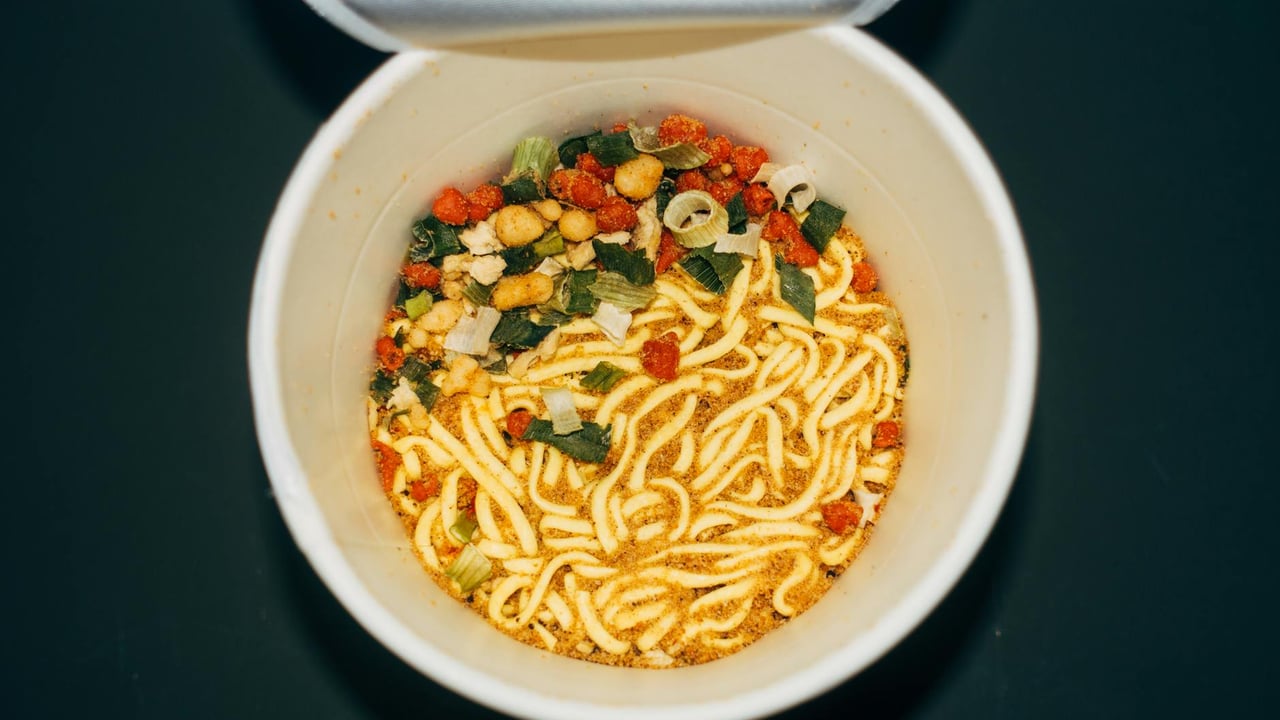

For decades, the instant noodle was the undisputed fuel of China’s rapid urbanization, offering a cheap and reliable meal for millions. However, as the market reaches a point of saturation and decline, the desperate battle for differentiation has led some industry giants into legally and ethically murky waters. Jinmailang, long a staple of the budget-friendly segment, recently found itself at the center of a consumer firestorm over its 'Hand-made' (Shouda) line of dried noodles.
The controversy erupted when a consumer in Nanjing discovered that the noodles he purchased for their artisanal 'hand-made' quality were actually mass-produced on a factory assembly line. Jinmailang’s defense—that 'Hand-made' was merely a registered trademark and not a description of the production process—only fueled public anger. By placing the trademark registration symbol in microscopic font next to the prominent 'Hand-made' label, the company was accused of using technical legalities to mask blatant consumer deception.
Legal experts suggest that Jinmailang’s strategy likely violates China's Trademark and Advertising Laws, which prohibit marks that are inherently deceptive or likely to mislead the public regarding a product's quality or origin. While the company’s chairman, Fan Xianguo, has since apologized and pledged to cease production of the branded line, the damage to the brand's reputation may be lasting. This incident reflects a broader trend in Chinese retail where legacy brands are struggling to maintain 'authenticity' in an increasingly skeptical digital marketplace.
The marketing gimmick appears to be a symptom of deeper corporate malaise. Once the third-largest player in China’s instant noodle market, Jinmailang has seen its revenue plummet from 24.1 billion RMB in 2021 to just 16.5 billion RMB in 2023. During this period, it was overtaken by its rival Baixiang, which has successfully captured the cultural zeitgeist with more transparent and patriotic branding strategies.
Furthermore, the entire industry is grappling with a 'systemic anxiety' as consumption patterns shift. World Instant Noodle Association data reveals that China’s total consumption has dropped by approximately 4 billion packs since its 2020 peak. As health-conscious consumers pivot toward premium 'non-fried' options and fresh meal kits, legacy brands like Jinmailang are finding that their traditional low-price, high-volume model is no longer a guaranteed path to survival.
Jinmailang’s inability to launch a successful IPO after eight years of attempts has further constrained its ability to fund genuine research and development. When product innovation fails to move the needle, companies often retreat into 'marketing concepts' to maintain shelf presence. This 'Hand-made' scandal serves as a cautionary tale for Chinese FMCG companies: in an era of slowing growth, word games are a poor substitute for authentic product evolution.