
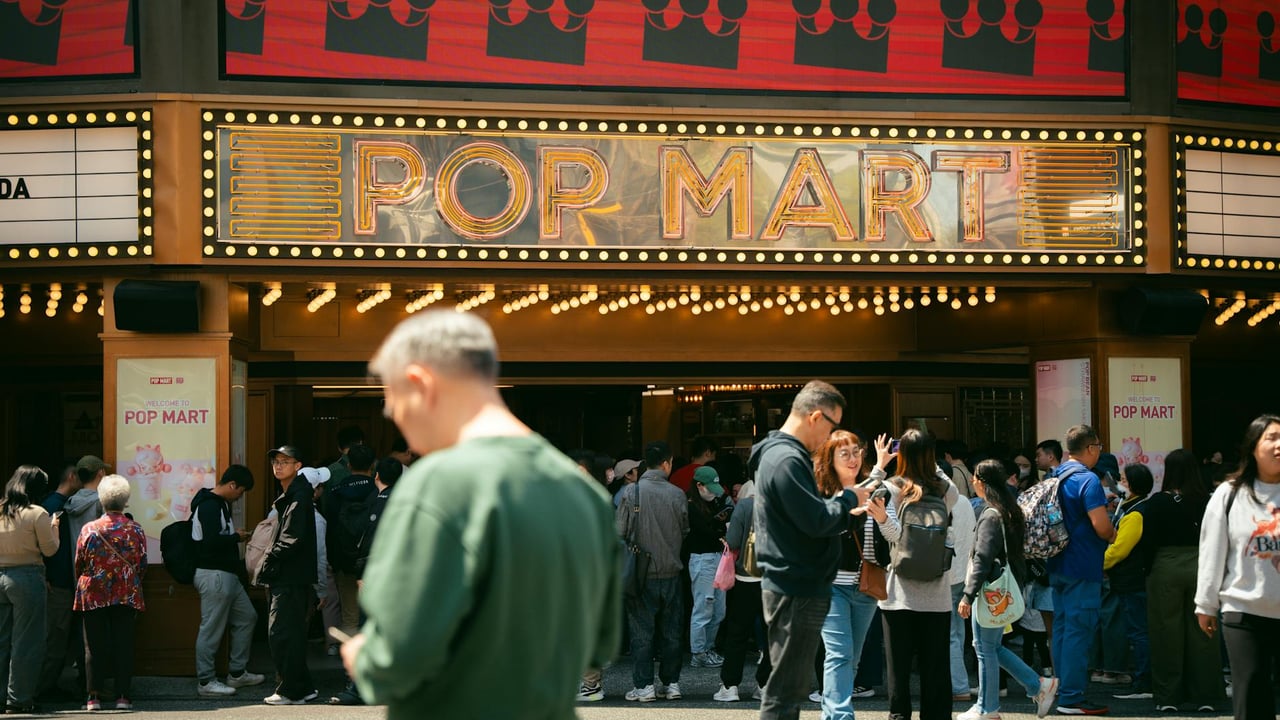

In a move that has sent ripples through the Chinese investment community, Duan Yongping—the reclusive but immensely influential founder of the BBK electronics empire—has officially become the second-largest shareholder of Pop Mart. According to recent filings, Duan and his investment vehicle, H&H International Investment, increased their collective stake in the designer toy leader to 5.69%. This maneuver marks a significant escalation from a position of deep skepticism just a year ago, when Duan publicly questioned the longevity of the 'blind box' craze.
To fund this aggressive entry, Duan reportedly liquidated his entire position in China Shenhua, the nation’s premier coal mining giant. This pivot from a stable, dividend-heavy 'old economy' stalwart to a high-growth, IP-driven 'new consumption' player illustrates a profound shift in market sentiment. For a man who built his reputation on the 'value investing' principles of Warren Buffett and Charlie Munger, the decision to dump coal for collectibles suggests that the designer toy industry has finally achieved a sustainable competitive 'moat.'
Central to Duan’s conviction is his assessment of Pop Mart’s founder, Wang Ning. In a series of candid communications with his followers, Duan compared Wang to Apple’s Steve Jobs, noting that Wang’s understanding of commercial logic may even surpass that of the tech icon in certain respects. Duan emphasized that Wang is a 'clockmaker'—someone who builds a self-sustaining system—rather than just a 'time-teller.' At only 39, Wang’s long career runway provides a frightening potential for compound returns, according to Duan.
Financial performance has provided the numerical backbone for this optimism. In 2025, Pop Mart reported a staggering revenue increase of 184.7%, reaching 37.12 billion RMB. Much of this growth was fueled by the global explosion of the 'LABUBU' IP, which alone generated over 14 billion RMB. Despite these blockbuster results, the company's stock had retreated significantly from its highs, allowing Duan to deploy the 'Right Business, Right People, Right Price' framework he famously champions.
However, the investment is not without its critics. Market analysts point to a cooling growth rate in early 2026 and a concerning dependency on a handful of top-tier IPs like LABUBU and Molly. While Duan argues that the company has built an impenetrable ecosystem of artist contracts and global retail footprints, the 'fad risk' inherent in pop culture remains. For now, the market is watching closely to see if Duan’s latest bet will replicate the legendary success of his early-2000s investment in NetEase.