
Health News
Latest health news and updates
Total: 91

Painless Patch for Immune Cells: Microneedle Device Promises Non‑Invasive Immune Monitoring
A collaboration between The Jackson Laboratory and MIT has produced a microneedle patch that non‑invasively samples immune cells from humans, enabling painless, repeatable collection for laboratory analysis. Published in Nature Biomedical Engineering, the device could reshape immune monitoring in clinical trials, vaccine development and personalised medicine, though validation, regulatory approval and ethical safeguards are still required.

Zhong Nanshan–Led Team Proposes Digital Fix to Cut Antibiotic Overuse in China’s Clinics
An international team led by Zhong Nanshan has published a Nature Medicine paper describing a digital antimicrobial stewardship package for primary-care clinics; clinical trial results indicate it reduces antibiotic prescriptions for acute respiratory infections without increasing patient-safety risks. The trial suggests digitally enabled stewardship could be a scalable tool against antimicrobial resistance, but implementation and governance challenges remain.

Chinese Researchers Publish 'Explainable' AI That Boosts First‑Pass Rare‑Disease Diagnosis — A Tool for Hospitals Without Genetic Testing
Researchers at Shanghai Jiao Tong University published DeepRare in Nature, an AI system that diagnoses rare diseases with a traceable reasoning process. It achieved 57.18% first‑pass accuracy using only clinical symptoms and exceeds 70% when genetic data are included, promising improved triage in hospitals without routine genetic testing.
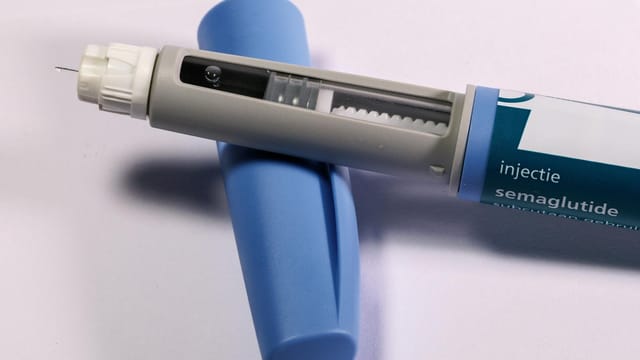
Chinese Drugmaker Wins FDA Green Light to Test Next‑Generation Obesity Peptide in the US
Shiyao Group has won FDA permission to begin US clinical trials of a long‑acting peptide that acts on both GLP‑1 and GIP receptors for weight management in people with obesity or overweight plus comorbidities. The clearance permits investigational trials but falls short of marketing approval; success would boost China’s ambitions to compete in the lucrative obesity‑drug market dominated by Western firms.

China Produces High‑Purity “Artificial‑Lung” Monomer at Pilot Scale, Easing Dependence on Imports
A Dalian University–Sinopec team has produced 4‑methyl‑1‑pentene (4M1P) at 99.3% purity in a hundred‑ton pilot run, a milestone for domestic manufacture of poly(4‑methyl‑1‑pentene) used in ECMO membranes. The result could reduce reliance on imports for a critical medical‑device input, though commercial scale‑up and regulatory steps remain.
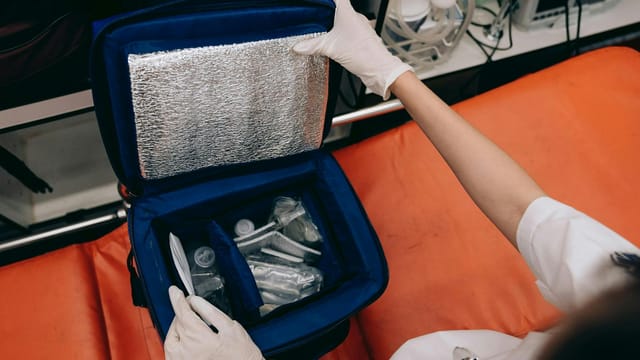
Street Rescue: Ex‑Soldier Uses Military First‑Aid to Calm a Panicked Girl
A retired serviceman used an improvised rebreathing technique with a plastic bag to calm a hyperventilating young woman on a late‑night street. The intervention relieved her symptoms within minutes, underscoring both the value of basic first‑aid training and the need for public guidance on safe emergency practices.

Facing Down ALS: The Last Campaign of China’s Patient-Driven Researcher Cai Lei
Cai Lei, an ALS patient and research organiser in China, remains a central figure in nationwide efforts to push amyotrophic lateral sclerosis research forward despite being in the terminal stage of his illness. Through patient registries, international collaborations, and a high‑profile push for post‑mortem tissue donation, he is building infrastructure that could materially accelerate domestic ALS science even if he does not live to see a cure.

First Inhaled Gene Therapy for Lung Cancer Wins FDA Fast‑Track Nod, Raising Hopes — and Questions
An inhaled gene therapy targeting lung cancer has shown promising early clinical efficacy and received FDA RMAT designation and fast‑track status. The move accelerates regulatory review but leaves open critical questions about safety, durability, manufacturing and who will ultimately benefit.

PLA Hospital’s Surgical Team Cracks Tough Hernia and Reflux Cases, Building a New Center of Excellence
A specialist hernia and reflux surgery team at the PLA General Hospital Seventh Medical Center has developed standardized, minimally invasive and hybrid surgical solutions for very high‑risk elderly hernia patients, large recurrent incisional hernias, and refractory GERD with hiatal hernia. Rapid multidisciplinary coordination and enhanced recovery protocols have produced quick postoperative recoveries and promising short‑term outcomes, while the centre formalises a full clinical pathway from outpatient assessment to long‑term follow‑up.

Hengrui’s Oral GLP‑1/GIP Candidate Shows Promising 26‑Week Weight Loss in China — A Potential Game‑Changer for Obesity Care
Hengrui Medicine and Kailera Therapeutics reported positive top‑line results from a 166‑participant Phase II trial of ripubopetide, an oral GLP‑1/GIP dual agonist, showing up to 12.1% mean weight loss at 26 weeks and manageable vomiting rates. Hengrui will pursue Phase III studies in China while Kailera plans a global Phase II in 2026, though larger, longer trials are needed to confirm efficacy and safety.

Foreign Patients Flock to China’s Hospitals: Low Cost, High Speed and an Emerging Medical Export
China is seeing a marked rise in foreign patients attracted by faster service, advanced procedures and much lower prices. While numbers and success stories are growing, scaling inbound medical care into a robust export sector requires better branding, clearer regulation and safeguards to protect both international reputations and domestic health priorities.

China’s Aier Empire Exposed: Psychiatric Hospital Fraud Lifts the Veil on a Hidden Medical Network
Allegations of systematic medical‑insurance fraud at several psychiatric hospitals in Hubei have revealed links to Aier Medical Investment, the non‑listed vehicle controlled by Chen Bang, founder of listed Aier Eye. The case spotlights how opaque ownership layers can shield high‑risk healthcare businesses and raises the prospect of intensified regulatory and market scrutiny across China’s private medical sector.