
Science News
Latest science news and updates
Total: 154

Scaling the Third Pole: Beijing’s Archaeological Outreach Links Prehistoric Resilience to National Identity
Academician Chen Fahu delivered a landmark public lecture at the Chinese Archaeological Museum regarding prehistoric human settlement on the Tibetan Plateau. This event signifies a growing push by Chinese state institutions to connect high-level scientific research with national identity through the 'Tracing the Origins of Chinese Civilization' project.
Tiny Claws, Massive Force: Chinese Researchers Unveil Fiber-Integrated 3D Micro-Tweezers
Chinese scientists have developed a groundbreaking 3D fiber-integrated micro-tweezer that is 100,000 times more powerful than traditional models. Published in Nature, the technology allows for high-precision, programmable manipulation of microscopic objects, potentially revolutionizing nanomedicine and micro-manufacturing.

Hushing the Universe: How Quantum Innovation is Unmasking the Cosmos’s Greatest Mysteries
Researchers have developed a novel quantum sensor capable of eliminating background noise to detect ultra-weak signals from gravitational waves and dark matter. This breakthrough, featured in Nature, provides a critical new tool for solving mysteries surrounding supermassive black holes and the invisible composition of the universe.

The Genetic Switch: Chinese Scientists Unlock the Secret to Climate-Resilient, Low-Emission Rice
Chinese scientists have discovered the CHPO gene in rice, which acts as a molecular switch to simultaneously improve cold resistance and nitrogen use efficiency. This breakthrough, published in Nature, offers a pathway to maintain high crop yields during climate-driven cold snaps while significantly reducing the need for harmful nitrogen fertilizers.
The Phantom Citations: China’s Struggle with an Escalating Biomedical Integrity Crisis
Biomedical research is facing a crisis of credibility as citation fraud has increased twelve-fold in just three years, driven by academic pressure and paper mills. This surge in fabricated references threatens to undermine the integrity of global scientific literature and clinical development.
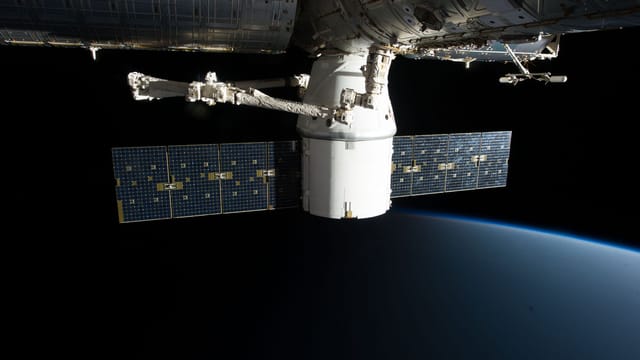
Scientific Spoils from Orbit: SpaceX Dragon Departs the ISS for California Splashdown
A SpaceX cargo Dragon capsule has left the International Space Station and is heading for a splashdown off the California coast. It is carrying critical scientific samples, highlighting the unique return-capacity of the SpaceX fleet and its vital role in NASA's orbital logistics strategy.

Data and Disclosures: The Pentagon’s Third Wave of Unidentified Aerial Phenomenon Files
The U.S. Department of Defense has released a third series of files regarding Unidentified Anomalous Phenomena (UAPs), detailing incidents that defy conventional explanation. Featuring testimony from intelligence officers and academic analysis, the disclosure highlights the ongoing challenge of identifying advanced or anomalous craft in restricted airspace.
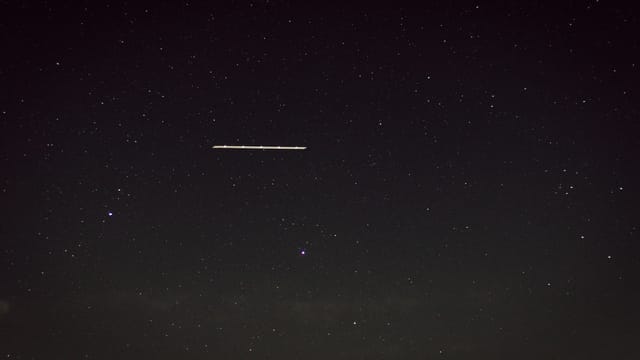
Beyond the Saucer: What the Pentagon’s ‘Potato-Shaped’ UFOs Reveal About Modern Aerial Surveillance
The U.S. Department of Defense has released a third tranche of declassified UAP documents, detailing bizarre encounters including textured, irregular objects and multi-part aerial anomalies. These disclosures highlight an evolving military posture that prioritizes data-sharing and transparency in an era of increasingly congested and contested airspace.

Disclosure in the Digital Age: The Pentagon’s Growing Archive of the Unexplained
The U.S. Department of Defense has released its third batch of UAP files, featuring dozens of documents and multimedia recordings from the CIA, FBI, and NASA. The archive highlights specific sightings of plasma-like objects and details historical efforts by intelligence agencies to manage the strategic risks of public panic and sensor interference.
The Strategic Geometer: Gu Chaohao and the Rise of Chinese Scientific Sovereignty
Marking the centennial of mathematician Gu Chaohao, this retrospective explores how his 'strategic' approach to science bridged the gap between theoretical geometry and national defense. From his underground revolutionary roots to his groundbreaking collaboration with C.N. Yang, Gu’s legacy continues to shape China’s mathematical and aerospace ambitions.
Calculations of State: The Strategic Legacy of Gu Chaohao’s Mathematical Century
The centenary of mathematician Gu Chaohao highlights his pivotal role as a 'strategic scientist' who aligned advanced mathematics with China's national development. From solving complex gauge theory problems with C.N. Yang to building world-class research institutions, Gu’s legacy continues to shape China’s scientific and technological self-reliance.

The Pulse of Plastic: Breakthrough in Organic Electronics Simulates Human Heart Muscle
Researchers at Linköping University have developed artificial heart muscle cells using conductive plastics that can simulate the ionic signaling of real human tissue. This breakthrough in organic electronics paves the way for highly biocompatible heart implants and advanced bio-sensing devices.