
Technology News
Latest technology news and updates
Total: 2621

China Industry Voice Urges Fast-Track Autonomous-vehicle Law to Open Roads to High‑Level Self‑Driving Cars
Zhang Xinghai, a CPPCC standing committee member and Seres chairman, urged the rapid passage of a dedicated autonomous‑vehicle law to clear the way for high‑level self‑driving cars in China. He argued a special legal and standards framework would remove barriers to scaling, improve safety foundations and accelerate domestic technological progress.

Xiaomi Ex‑Wearables Chief Founding Solar Startup to Work on Vehicle‑Integrated Photovoltaics
Li Chuangqi, formerly Xiaomi's wearables chief, has quietly founded a startup focused on vehicle‑integrated photovoltaics and is expected to cooperate with Xiaomi. The move reflects both a tactical avoidance of non‑compete limits and a strategic bet that integrated solar can become a valuable, hard‑to‑replicate component of future electric vehicles.

Chinese Firm Pushes Indigenous AI Compute: A Bid to Build a Homegrown Foundation for the Digital Economy
Pinggao, together with Jiangyuan Technology, has launched a full-stack domestic AI compute system aiming to reduce reliance on foreign accelerators. The company urges policy measures during China’s 15th Five‑Year Plan to support chip R&D, talent, and ecosystem development, reflecting a broader strategic push to secure indigenous AI compute capabilities.

China’s Qianwen launches G1 AI glasses in stock — domestic subsidy pushes price under ¥2,000
Qianwen’s G1 AI glasses went on sale in China on March 8, offering dual flagship chips, a dual operating system and 64GB storage, with subsidised pricing starting at ¥1,997. The launch highlights Beijing‑friendly subsidy dynamics and a domestic push to field affordable AI wearables that rely less on foreign components and more on local ecosystems.

AI Agents Won’t Kill SaaS, Says Yonyou — They’ll Change Its Shape
Yonyou’s CEO Wang Wenjing argued that AI agents will not render enterprise software obsolete but will transform it into a hybrid stack driven by data and models. Deterministic, process‑oriented systems will continue to provide stability and data, while AI decisioning and agents add predictive and autonomous capabilities, creating a dual‑mode architecture for future enterprise IT.
How China’s Marketplaces Turned an Open‑Source AI Agent into a Mini Industry
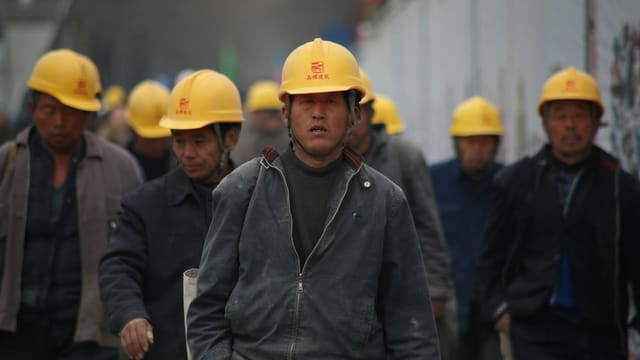
OpenClaw’s burst of popularity on GitHub spawned a fast‑moving consumer market in China, where platforms like Xianyu and Xiaohongshu have become hubs for paid installation services, courses and bespoke integrations. The trend exposes how information asymmetry and FOMO convert freely available open‑source tools into paid commodities, often obscuring ongoing costs such as API fees and maintenance.

Stargate Stumbles: Oracle and OpenAI Abandon Texas Expansion as Meta Eyes the Site
Oracle and OpenAI have abandoned a planned expansion of a flagship AI data‑centre near Abilene, Texas — part of the broader Stargate programme — after financing stalled and OpenAI’s capacity needs changed. Meta is exploring leasing the stalled expansion, with Nvidia facilitating talks, highlighting chipmakers’ growing influence over where AI compute is built.

When a Drone Strike Took Down the Cloud: How a Middle East Attack Exposed AI’s Strategic Fragility
A drone strike on an AWS data centre in the UAE triggered a chain of outages that highlighted the strategic fragility of cloud-dependent AI. Cheap Gulf electricity has encouraged large AI data-centre investments, but attacks and geopolitical ties are forcing a re-evaluation of where and how critical compute is hosted.
China Tests 40,740 km Laser Link — A New Edge for Real‑Time Naval Targeting
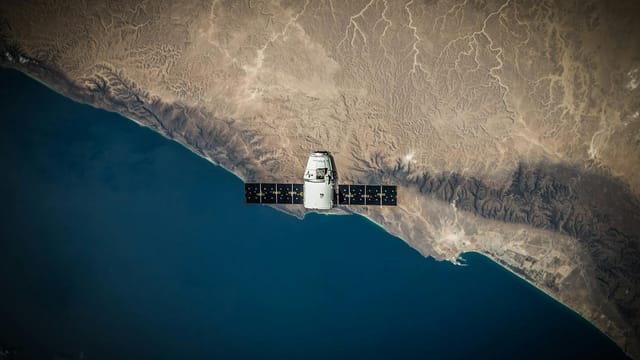
Chinese researchers report a successful laser communications test linking a ground station to a geostationary satellite 40,740 km away at 1 Gbps with a four‑second acquisition time. If scaled and integrated with reconnaissance satellites and weapons, such links could enable near‑real‑time targeting updates for long‑range anti‑ship strikes while posing new operational and strategic challenges for naval defence and space stability.

Beijing Warns The Hague: If Dutch Moves Trigger a Chip Supply Crisis, Netherlands Will Be Held Accountable
China’s Commerce Ministry warned the Netherlands it will be held fully responsible if Dutch actions again trigger a global semiconductor supply-chain crisis, after reports that the Dutch arm of Nexperia restricted office software access for its Chinese employees. The statement underscores the geopolitical sensitivity of chip supply chains and signals possible regulatory or diplomatic responses from Beijing that could further fragment global technology networks.
China’s Push for a ‘Smart Economy’: Why Robots, Toys and 6G Matter More Than You Think
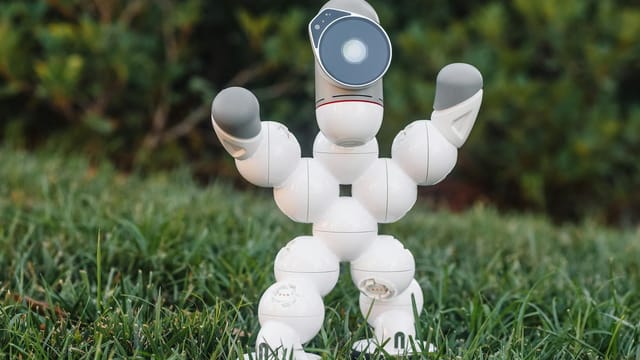
China has enshrined a “smart economy” in its 2026 policy agenda, signalling a push to industrialise AI across production, services and consumer markets. Li Meng, a former vice minister, argues that specialised embodied agents — notably companionship robots and smart toys — are likeliest to reach commercial scale first, while technical progress hinges on richer physical world models and hardware advances. She warns policymakers to manage distributional risks and ensure inclusive, human‑centric deployment.
China Boosts Its Space Communications Arsenal with ‘Communication Technology Experiment Satellite-23’ Launch
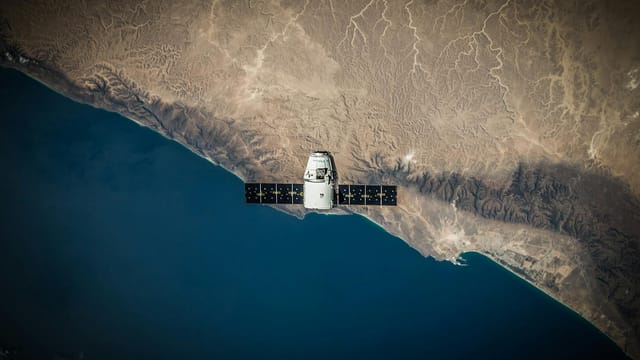
China on March 7, 2026, launched the Communication Technology Experiment Satellite-23, continuing a steady program of experimental communications satellites. The mission underlines Beijing’s push to mature a full commercial-and-strategic space ecosystem, with implications for global telecom markets, military communications, and orbital sustainability.