
Technology News
Latest technology news and updates
Total: 2561

The Central Bank of AI: China Mobile’s Play to Standardize the Token Economy
China Mobile has launched a state-led 'Token Operations Ecosystem' alongside tech giants like Huawei and Alibaba to standardize AI resource consumption. The initiative treats AI tokens as a 'universal currency' to integrate computing power, models, and applications across China's digital economy.
Friction at the Frontier: Apple-OpenAI Tensions and China’s Structural AI Pivot
Tensions are rising in the Apple-OpenAI partnership due to limited integration, while Chinese tech leaders Baidu and Honor are restructuring and innovating to lead the next phase of 'Physical AI' and specialized hardware.
The Utility of Intelligence: Shanghai Telecom Turns AI Tokens into a Commodity
Shanghai Telecom has launched China's first telecom-integrated AI token packages, allowing users to buy 250,000 tokens for one yuan via their mobile bills. This move transforms AI computing power into a standard consumer utility, significantly lowering the barrier for AI adoption in the world's second-largest economy.
Shanghai’s New AI Marketplace: China Telecom Bridges the Gap Between Big Tech and Industrial Scale
Shanghai Telecom has launched the Zhiyun Shanghai AI Store, a centralized service portal designed to scale AI adoption across 2,000 enterprises by year-end. The initiative bridges state infrastructure with private sector innovation from Alibaba and ByteDance to foster a collaborative industrial ecosystem.
Beijing’s AI Diplomacy: Positioning as the Voice of the Global South
China is advocating for an inclusive and open approach to global AI governance, positioning itself as a champion for the Global South against Western-led tech restrictions. This diplomatic push seeks to frame AI access as a universal right rather than a strategic weapon controlled by a few nations.

From Chatbot to CFO: OpenAI’s Financial Advice Play via Plaid
OpenAI has partnered with Plaid to provide personalized financial advice within ChatGPT, allowing the AI to analyze user spending and debt. While the current access is read-only and lacks a total view of home equity, it marks a major step toward AI-driven wealth management.

Cracks in the Core: Inside the Bitter Fallout Between OpenAI and Apple
The high-profile partnership between OpenAI and Apple is nearing collapse as OpenAI prepares legal action over failed revenue targets and poor software integration. Tensions have reached a breaking point due to OpenAI's entry into the hardware market and Apple's decision to integrate rival models like Google Gemini and Anthropic's Claude.

The Great Displacement: AI Begins Its Quiet Erosion of the American Labor Market
Recent U.S. labor data reveals a growing divide as AI-vulnerable sectors saw a 0.2% decline in employment while the total job market grew by 0.8%. Roles in customer service, administration, and sales are facing the most significant impact, marking the second consecutive year of AI-driven job contraction.

Beijing’s Blueprint: China Navigates the Global AI Governance Divide
China’s Ministry of Foreign Affairs has issued a statement advocating for an inclusive and open global AI governance framework. The move is seen as a strategic attempt to position Beijing as a leader for the Global South in the ongoing tech competition with the United States.

Beyond the Screen: Kuaishou’s AI Gambit to Redefine China’s Local Services Economy
Kuaishou is aggressively expanding its local life services division by deploying generative AI and digital humans to lower operating costs for offline merchants. By focusing on 208 niche sub-sectors and integrating AI-driven marketing with real-time customer service, the platform aims to challenge incumbents like Meituan and Douyin through extreme operational efficiency.
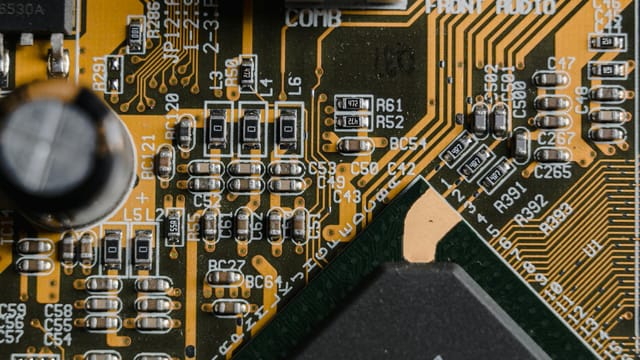
Scaling the Silicon Mountain: Kingluk Electronics Navigates the Long Road to Autonomous AI Mass Production
Kingluk Electronics has reached the verification stage for its automotive AI-box PCBs but warns that mass production is not yet imminent. The company’s 2026 roadmap centers on capturing market share within the high-level autonomous driving sector as hardware validation continues.
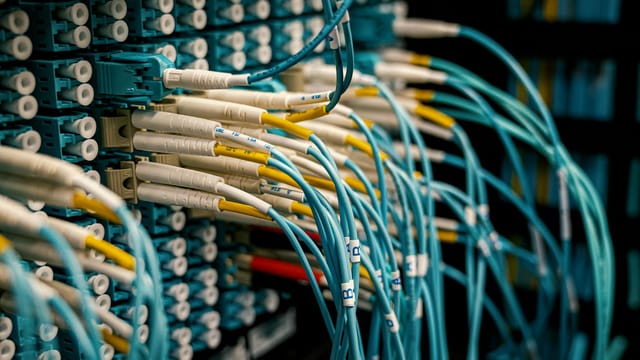
The AI Backbone: Why China’s Optical Fiber Boom is Redrawing the Global Compute Map
China's optical fiber and module industry is experiencing a historic boom driven by the AI revolution, with specialty fiber prices increasing tenfold and order books filled through 2028. With a dominant global market share, Chinese firms are becoming indispensable providers of the high-speed interconnects required for modern AI data centers.