
Technology News
Latest technology news and updates
Total: 2585

Audi’s Software Pivot: E7X to Debut Momenta-Powered Level 3 Autonomy in China
SAIC Audi has partnered with Chinese startup Momenta to equip the Audi E7X with Level 3 autonomous driving technology. This transition from driver assistance to conditional automation reflects a broader trend of Western automakers adopting Chinese software to remain competitive in the local market.

Pragmatism Over Hype: Why China’s AI Video Pioneers are Pivoting to the Factory Floor
ZhiXiang Future (VAST) founder Mei Tao outlines a strategic shift for AI video generation, moving away from consumer entertainment toward high-precision enterprise services and world models. By integrating video synthesis with robotics and adopting a results-oriented business model, the company has secured significant revenue and funding, signaling a new era of industrial AI pragmatism in China.
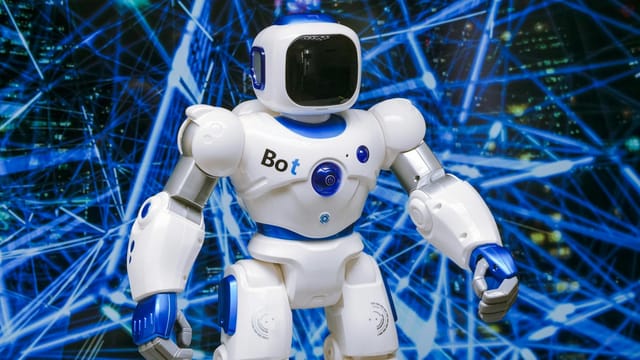
Guangdong’s New Industrial Gambit: The Rise of the AI-Agent-Centric Supply Chain
Guangdong has unveiled a comprehensive plan to place AI Agents at the center of its massive electronics manufacturing sector. This strategy aims to integrate AI across the entire value chain, from chip design to consumer wearables, marking a significant step in China’s bid to lead the next generation of autonomous hardware.
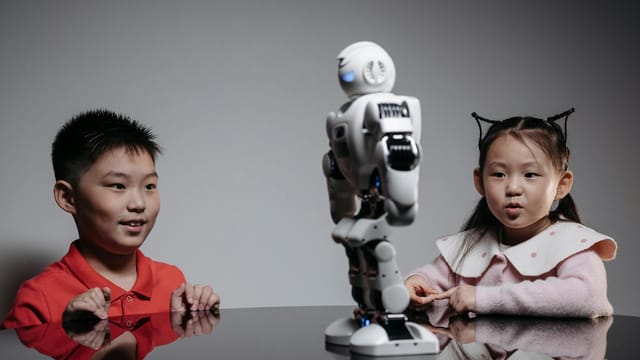
Guangdong’s Humanoid Ambition: China’s Industrial Heartland Moves to Master the ‘Brain and Body’ of AI
Guangdong has launched a strategic policy to integrate generative AI with humanoid robotics, focusing on the synergy between software 'brains' and hardware 'bodies.' The plan includes establishing massive training hubs in Guangzhou and Shenzhen to perfect 'embodied intelligence' for cross-industry applications.

Neural Frontiers: Guangdong Eyes Global Leadership in Brain-Computer Fusion and Embodied AI
Guangdong province has launched a strategic action plan to integrate brain-computer interfaces with embodied intelligence and humanoid robotics. The initiative focuses on developing neuromorphic chips and thought-controlled rehabilitation devices to establish a dominant position in the next frontier of human-machine interaction.
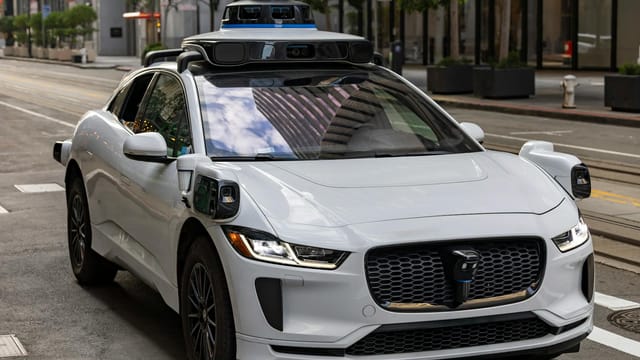
China’s Automotive Heartland Doubles Down on AI: Guangdong’s Push for L3 Autonomous Driving
Guangdong province has launched a comprehensive AI action plan targeting the scaling of L3 autonomous driving and intelligent cockpits. The initiative focuses on leveraging Guangzhou and Shenzhen's industrial clusters to lead commercialization and regional testing standards within the Greater Bay Area.

The Convergence Frontier: Guangdong Unveils Masterplan for Quantum-AI Synergy
Guangdong Province has launched a comprehensive action plan to integrate AI with quantum technology, focusing on breaking hardware bottlenecks and creating a unified 'quantum-classical' computing architecture. The strategy aims to apply these advancements to high-stakes industries like drug discovery and energy to secure a first-mover advantage in the next wave of global tech competition.

The AI Paradox: Why Technological Superiority is Killing Big Tech Valuations
A new market trend has emerged where AI success is causing valuation 'contraction' for tech giants as investors fear the disruption of legacy business models. Despite record profits and technological breakthroughs, incumbents like Microsoft and Tencent are seeing their multiples shrink as the market shifts its favor toward unlisted, pure-play AI firms.
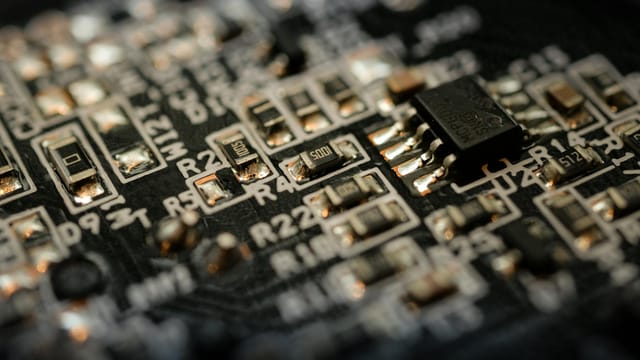
Breaking the Seal: China’s Aisen Stock Secures Orders for Critical AI Chip Material
Aisen Stock has successfully commercialized its self-developed low-temperature PSPI, a critical material for advanced semiconductor packaging used in AI chips. This achievement disrupts a long-standing foreign monopoly and advances China's domestic substitution strategy for high-end electronic chemicals.

From Pixels to Logic: OpenAI’s ChatGPT Images 2.0 and the Dawn of Visual Reasoning
OpenAI has launched ChatGPT Images 2.0, a transformative update that incorporates a reasoning and searching phase into image generation. This shift allows the model to produce consistent multi-image narratives and accurate non-Latin typography, moving AI art from simple generation toward a comprehensive visual reasoning system.
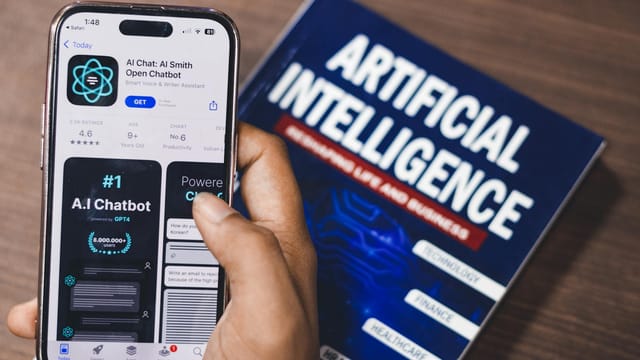
The AI Red Queen: Why the Global Tech Race is Forcing Humanity to Run in Place
The initial promise of AI as a labor-saving tool is being replaced by a 'Red Queen' scenario where workers and firms must use AI relentlessly just to maintain their market position. This structural mandate is driving a second wave of massive demand for computing power as companies integrate AI into their core survival metrics.

Alibaba’s New AI Avatar ‘Xiao Jiu Wo’ Signals the Shift to an All-Encompassing Digital Agent Ecosystem
Alibaba has launched 'Qianwen Xiao Jiu Wo,' a digital human AI assistant capable of performing cross-platform tasks like booking travel and ordering food. This move signals Alibaba's shift toward an integrated 'AI agent' strategy, leveraging its vast ecosystem of apps to outpace competitors in practical AI utility.