
Policy & RegulationAnalysis
Beijing School Branches Expand in Xiong'an to Anchor Capital Relocation
Prestigious campuses replicate Beijing curricula and mentorship models to reassure relocated families in China's newly established hub.
Share
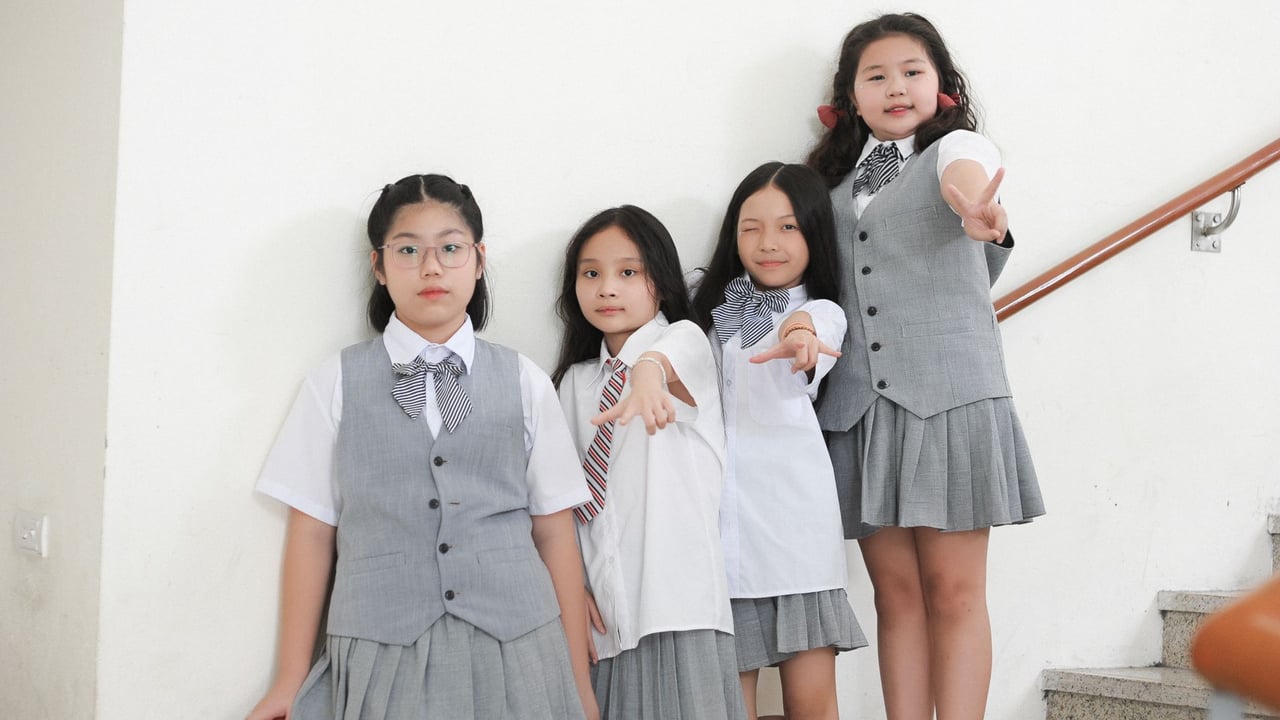
Photo by Thang Nguyen on Pexels
The Brief
Top-tier Beijing educational institutions have established fully operational branches in the Xiong'an New Area under a municipal aid initiative, seeking to reassure relocated families and elevate regional public services. Under the 'turnkey' arrangement formalized between Beijing and Hebei authorities in 2017, the 'three schools and one hospital' project is now in service, featuring branches such as Xiong'an Shijia Hutong Primary School and Beijing No. 4 High School Xiong'an Campus. The institutions utilize standardized mentorship, shared lesson plans, and well-rounded curricula ahead of the scheduled opening of the high school section in autumn 2026.
Why it matters
The success of Xiong'an New Area as a recipient of Beijing's non-capital functions depends heavily on the quality of basic public services. Education has historically been one of the primary anxieties for state enterprise workers and civil servants relocating from Beijing. By directly transplanting the governance, teacher-training structures, and elective courses of elite Beijing institutions, policymakers aim to eliminate the perceived quality gap between the capital and neighboring Hebei province.
China context
In China's regional integration strategies, particularly the Beijing-Tianjin-Hebei coordinated development plan, transferring premium healthcare and education serves as essential soft infrastructure. The 'three schools and one hospital' initiative represents Beijing's direct political and financial commitment to ensure Xiong'an achieves the high-standard benchmarks envisioned under state-level planning, mitigating the traditional disparities between provincial and municipal public goods.
Editor's View
EDITOR'S VIEW — Analysis and inference, not factual reporting.
Replicating top-tier municipal public services across provincial administrative boundaries is one of the most visible indicators of state capacity in regional planning. While pairing local branch educators with senior mentors in Beijing headquarters creates instructional parity on paper, the true test will emerge as student bodies expand. Observers should track whether the dual-track system can sustain high-level quality without draining headquarters resources, and how these elite branch campuses interact with the broader, less-resourced Hebei educational ecosystem.
What to watch
- The formal opening and admission guidelines for Beijing No. 4 High School Xiong'an Campus's senior high division in autumn 2026.
- Potential expansion of further municipal primary and secondary education partnerships in the area.
- Enrollment trends as more state-owned enterprise staff and research institutions complete their physical transfers to Xiong'an.
Key Takeaways
- 1Beijing and Hebei's 2017 'turnkey' agreement for 'three schools and one hospital' is now fully operational in Xiong'an.
- 2Beijing No. 4 High School's Xiong'an junior high division operates with 1-to-1 mentor pairings for teachers at the Beijing headquarters, with its senior high division opening in autumn 2026.
- 3Campuses prioritize well-rounded curricula, incorporating daily sports, extensive electives, and mandatory drama courses.
- 4The localized transfer of elite education models aims to resolve family settlement concerns for workers relocating from the capital.
Elite primary and secondary schools from Beijing have established deep roots in the Xiong'an New Area, deploying identical curricula and structured faculty mentorship to support families moving out of the Chinese capital, according to state media.
The deployment stems from an August 2017 agreement between Beijing and Hebei authorities, which designated Beijing to finance and build high-quality schools and healthcare facilities on a 'turnkey' basis. That initiative, widely referred to as the 'three schools and one hospital' project, is now operational and covers a kindergarten, primary school, secondary school, and a comprehensive hospital.
At the Xiong'an campus of Shijia Hutong Primary School, administrators have instituted student programs centered on sports, arts, and public speaking. According to assistant principal Wang Ying, the campus opens early each morning for voluntary physical training, awarding semester certificates to students who maintain consistent attendance alongside diverse extracurricular activities.
Directly across the street, the junior high section of Beijing No. 4 High School Xiong'an Campus is actively operating, while its senior high division is scheduled to open in the autumn of 2026. The institution relies on a direct transfer model where every local teacher is paired with a designated mentor at the Beijing headquarters to synchronize lesson preparation, instructional delivery, and academic evaluations.
The curriculum at the secondary campus includes drama as a mandatory subject taken twice a week, culminating in whole-class stage performances, alongside daily physical education and a catalog of 47 elective courses. The school has also implemented Beijing No. 4 High School's standardized behavioral and academic framework, known as the '18 Things for Student Growth,' which emphasizes classical reading, continuous writing, and scientific research.
According to campus teachers, documenting incremental personal progress is intended to foster sustained student engagement rather than focusing solely on short-term testing metrics. Relocated parents reported that the provision of familiar educational standards has significantly reduced personal friction, enabling them to focus entirely on their professional assignments in the new area.
Sources
- 雄安娃家门口的“北京名校” --经济·科技--人民网 — People's Daily · 8/27/2026