
Business & IndustryAnalysis
From Skepticism to Scale: How BYD Emerged as Tesla's Chief Global Rival
Years after Elon Musk dismissed its vehicles, the Chinese automaker's vertical integration and R&D spending have rewritten electric vehicle dynamics.
Share
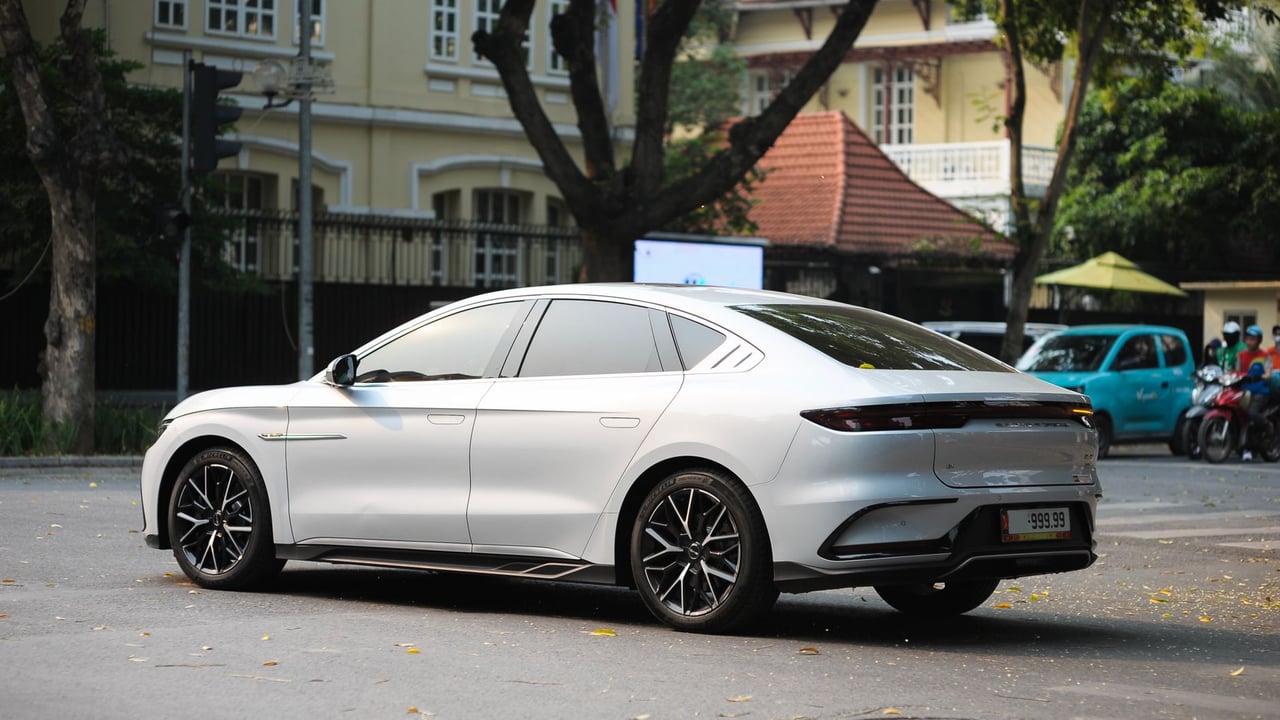
Photo by Thang Nguyen on Pexels
The Brief
Chinese automaker BYD has transformed from an early target of industry skepticism into a dominant force in the global new energy vehicle sector. In 2011, Tesla CEO Elon Musk openly dismissed BYD's cars and technology during a televised interview. However, following years of intensive research and development, vertical integration, and a strategic pivot away from internal combustion engines, BYD surpassed Tesla in total new energy vehicle sales in 2022. Musk himself acknowledged in 2023 that BYD's lineup had become highly competitive, underscoring a broader shift in global automotive manufacturing.
Why it matters
The reversal in BYD's standing illustrates the changing hierarchy of the global automotive sector. Early movers that dominated initial electric vehicle adoption now face intense competition from Chinese manufacturers that combine domestic supply-chain integration, proprietary battery platforms, and rapid iterative development.
China context
BYD's trajectory mirrors the broader development of China's high-tech manufacturing sector, which advanced from lower-tier component production to comprehensive supply-chain control. Backed by extensive domestic battery ecosystems and aggressive industrial scale, Chinese EV makers are increasingly setting the competitive pace across both domestic and overseas markets.
Editor's View
EDITOR'S VIEW — Analysis and inference, not factual reporting.
The long-term contest between BYD and Tesla highlights contrasting strategic philosophies: Tesla's focus on premium software and brand equity versus BYD's relentless emphasis on manufacturing depth, cost leadership, and proprietary hardware. As trade restrictions and tariffs multiply across Western markets, BYD's next test will be translating its domestic manufacturing efficiency into sustainable overseas operations.
What to watch
- Progress on BYD's localized manufacturing facilities in overseas markets such as Thailand and Brazil
- Tesla's product pipeline, including lower-cost models and commercial deployment of autonomous driving features
- Regulatory and tariff developments in North America and Europe targeting Chinese-manufactured new energy vehicles
Key Takeaways
- 1In 2011, Elon Musk openly dismissed BYD's technology and vehicle appeal during a Bloomberg interview.
- 2BYD invested 8.421 billion yuan in R&D in 2019—roughly 5.2 times its net profit that year—establishing proprietary technologies like the Blade Battery.
- 3BYD halted pure internal combustion vehicle production in March 2022, delivering 1.8685 million new energy vehicles that year to lead global NEV sales.
- 4Musk conceded in 2023 that BYD's vehicles had become highly competitive, marking a notable shift in industry perception.
In 2011, when an interviewer for Bloomberg asked Tesla CEO Elon Musk whether he viewed China's BYD as a competitor, Musk chuckled openly, questioning whether the reporter had seen BYD's vehicles and asserting that its products were neither appealing nor technologically capable. At the time, Tesla was pioneering the modern premium electric vehicle market, while BYD was an emerging domestic manufacturer struggling for international recognition.
That dynamic has shifted dramatically. At an extraordinary shareholders' meeting at BYD's Shenzhen headquarters on September 29, 2026, founder Wang Chuanfu recounted the company's precarious journey from a small workshop of dozens of employees to an enterprise employing hundreds of thousands. Wang noted that the firm had faced severe operational crises and nearly folded on several occasions before stabilizing its core manufacturing base, according to reports by Securities Times and People's Daily.
BYD's turnaround began accelerating after years of disciplined spending. In 2019, BYD delivered 461,400 vehicles and generated a net profit attributable to parent shareholders of 1.614 billion yuan—lagging behind domestic rivals like Geely and Great Wall Motor. Yet despite subdued profitability, the company directed 8.421 billion yuan into research and development that year, an amount more than five times its net profit. This engineering push yielded foundational innovations, including the Blade Battery, the DM-i plug-in hybrid architecture, and cell-to-body structural vehicle integration.
The commercial turning point arrived with the May 2020 pre-sale of the Han sedan, which gathered over 15,000 orders within 21 days and positioned BYD directly against the Tesla Model 3. In March 2022, BYD ceased production of pure internal combustion engine vehicles to concentrate entirely on new energy vehicles. That year, BYD sold 1.8685 million NEVs, outpacing Tesla in total new energy vehicle volume for the first time.
Musk's own public posture evolved alongside BYD's growth. In 2023, responding to social media users circulating the 2011 interview clip, Musk acknowledged that the appraisal was outdated and noted that BYD's vehicles had become highly competitive. Wang has maintained that the auto sector offers no shortcuts, framing BYD's growth around proprietary manufacturing engineering rather than speculative market expansion.
Sources
- 超话车|“比亚迪不是特斯拉的竞争对手”应验了吗? — Securities Times · 10/1/2026
- 超话车|“比亚迪不是特斯拉的竞争对手”应验了吗?--经济·科技--人民网 — People's Daily · 10/1/2026