
Business & IndustryAnalysis
China to Inject 35 Billion Yuan into State-Owned China Life Insurance
Capital funded through special treasury bonds aims to bolster the flagship insurer's underwriting capacity and solvency.
Share
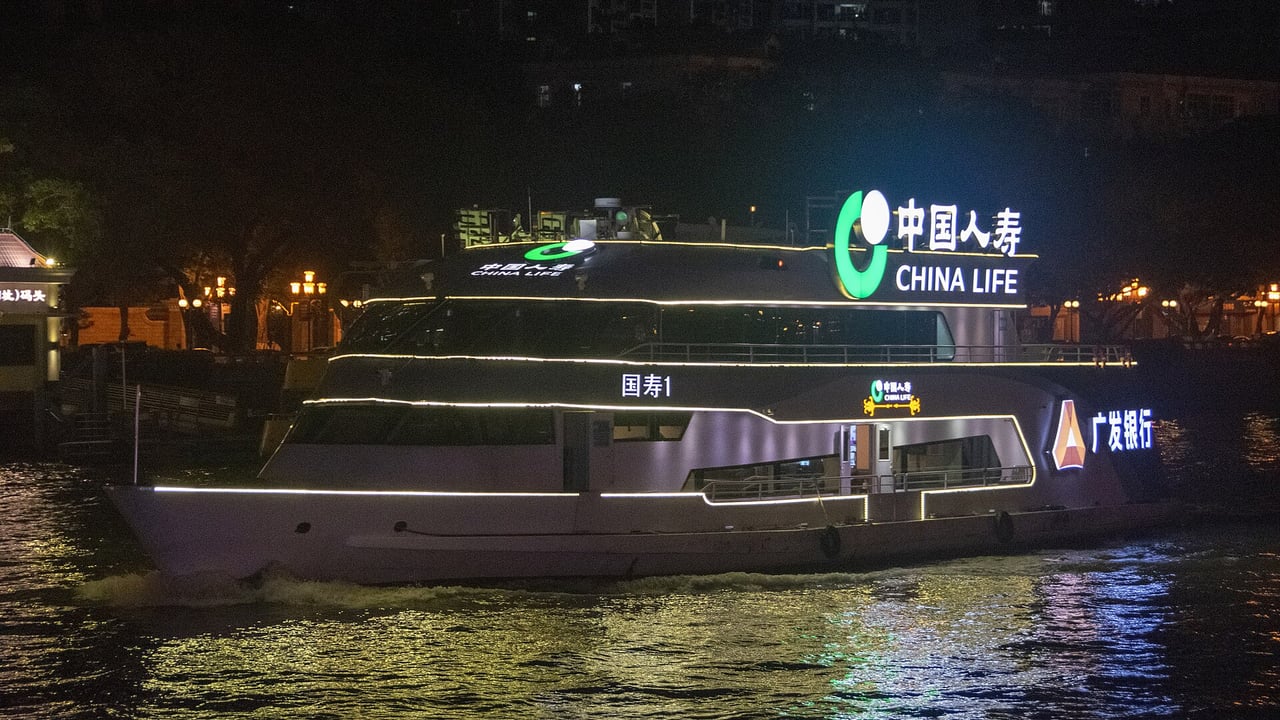
TONY LU via Wikimedia Commons, CC BY-SA 4.0
The Brief
China's Ministry of Finance plans to inject 35 billion yuan ($4.9 billion) into China Life Insurance (Group) Company using proceeds from special treasury bonds. According to company disclosures reported by People's Daily, the capital injection aims to strengthen the state-owned insurer's risk-resistance capabilities and enhance its underwriting capacity. The group reported record first-half 2026 consolidated revenue exceeding 520 billion yuan and net profit topping 130 billion yuan, with over 6 trillion yuan of its assets currently deployed into the domestic real economy.
Why it matters
The capital deployment illustrates Beijing's use of sovereign debt mechanisms to directly reinforce tier-one state financial institutions. By expanding China Life's capital buffer, authorities seek to leverage patient institutional capital to stabilize domestic capital markets, support long-term infrastructure and industrial priorities, and enhance systemic resilience in the insurance sector.
China context
Under Beijing's push to build a 'financial powerhouse' and advance priority areas including elderly care, green finance, and technological innovation, state-owned insurers are tasked with acting as 'economic shock absorbers' and 'social stabilizers.' Deploying special sovereign debt proceeds directly into an insurer underscores the increasing integration of fiscal resources with state-backed institutional balance sheets.
Editor's View
EDITOR'S VIEW — Analysis and inference, not factual reporting.
Using special treasury bonds for equity injections into state financial institutions recalls earlier state recapitalizations of major commercial banks, but extending this approach prominently into the insurance sector highlights Beijing's reliance on non-bank institutional capital. As the domestic property and local government financing sectors evolve, insurers like China Life have become essential buyers of long-duration bonds and equities. This capital injection is designed not merely as a prudential safeguard, but as a deliberate expansion of state underwriting firepower to keep long-term domestic investment stable.
What to watch
- Completion of the formal fund transfer and registration of the revised capital structure with corporate regulators.
- Changes in China Life's comprehensive solvency ratio and core capital metrics following the capital injection.
- Potential announcements of similar special treasury bond allocations targeting other major state-owned financial institutions.
Key Takeaways
- 1The Ministry of Finance will inject 35 billion yuan into China Life Insurance (Group) Company funded via special treasury bonds.
- 2China Life reported first-half 2026 consolidated revenue exceeding 520 billion yuan and net profit above 130 billion yuan under new accounting standards.
- 3The insurer held more than 6 trillion yuan in investments supporting the real economy as of June 2026, including over 1.3 trillion yuan in domestic public market equities.
China's Ministry of Finance is preparing to inject 35 billion yuan into China Life Insurance (Group) Company, utilizing proceeds raised through special treasury bonds, according to a report by People's Daily citing statements on the insurer's official website.
The capital injection is designed to implement national policy directives aimed at improving financial services for the real economy, supporting high-quality development in the insurance industry, and strengthening the group's operational resilience and risk mitigation capacity.
According to China Life, the group achieved record operational performance in the first half of 2026 under new accounting standards. Consolidated operating revenue for the six-month period surpassed 520 billion yuan, while consolidated net profit exceeded 130 billion yuan. During the same timeframe, the insurer provided more than 1,000 trillion yuan in cumulative risk protection coverage and settled 278.6 billion yuan in claims across its various business lines.
A representative for China Life stated that using sovereign special treasury bonds to replenish the capital base of major insurers demonstrates targeted fiscal policy support. The mechanism is intended to amplify fiscal resources through market-oriented operations, enabling state insurers to serve as economic shock absorbers and social stabilizers amidst broader structural economic adjustments.
Capital strength remains a fundamental requirement for expanding balance-sheet exposure and underwriting complex liabilities. Company disclosures indicate that as of the end of June 2026, China Life's deployed insurance assets supporting the real economy exceeded 6 trillion yuan. Additionally, the group's existing equity investment portfolio in domestic public markets exceeded 1.3 trillion yuan.
Following the completion of the 35 billion yuan injection, China Life plans to expand its insurance coverage and direct investment into national strategic priorities, including high-tech self-reliance, green development, healthcare, rural revitalization, and services addressing population aging, while advancing internal digital modernization.
Sources
- 中国人寿保险集团将获注资350亿元--经济·科技--人民网 — People's Daily · 9/9/2026