
Policy & RegulationAnalysis
China Outlines Five-Year Plan for Integrated Meteorological Observation
The joint blueprint by economic planners and weather authorities expands multi-sphere sensing across land, sea, air, and space.
Share
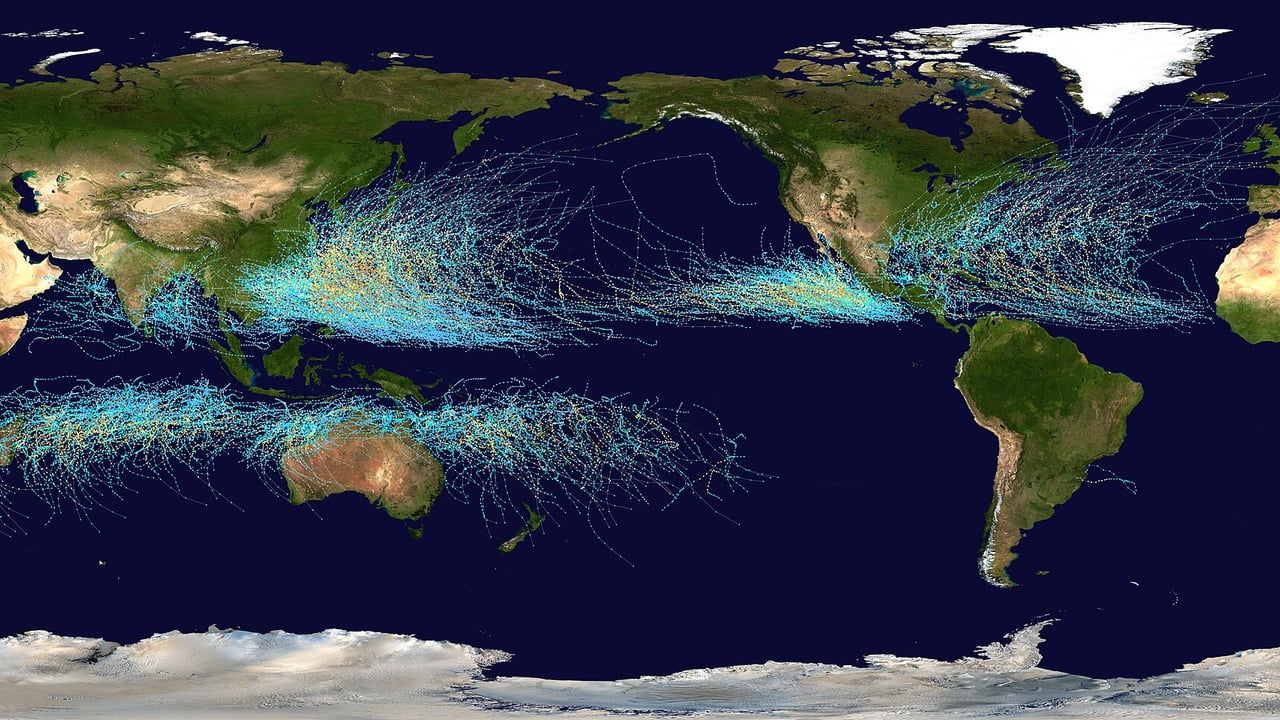
Background image: NASA
this version: Nilfanion via Wikimedia Commons, Public domain
The Brief
China has issued a new development plan for its national meteorological observation infrastructure over the upcoming 15th Five-Year Plan period. Jointly released by the China Meteorological Administration and the National Development and Reform Commission, the blueprint outlines a strategy to construct an integrated observation system spanning land, sea, air, and space. The plan expands the scope of meteorological monitoring from atmospheric conditions to multi-sphere Earth system sensing, aiming to accelerate the delivery of real-time data products for disaster mitigation, climate response, and industrial operations.
Why it matters
Meteorological observation serves as the frontline defense against natural hazards and provides critical baseline data for climate policy and infrastructure planning. Upgrading to a multi-sphere, integrated observation architecture across space, atmosphere, and oceans will directly impact the precision of extreme weather early warnings, agricultural planning, renewable energy grid stability, and transport safety across China.
China context
The plan aligns with Beijing's broader national agenda to achieve modernization in meteorological science, technological capability, and public services. The joint issuance by the National Development and Reform Commission—China's top macroeconomic planner—alongside the China Meteorological Administration underscores that meteorological monitoring is treated as foundational economic and public safety infrastructure rather than purely a scientific undertaking.
Editor's View
EDITOR'S VIEW — Analysis and inference, not factual reporting.
By officially broadening observation priorities from atmospheric parameters to multi-sphere Earth system dynamics, China is positioning its meteorological apparatus to handle complex climate risks. The joint release with the NDRC indicates that future infrastructure investments and public procurement will prioritize automated, high-precision sensors and cross-departmental data sharing mechanisms spanning transport, water resources, and energy sectors.
What to watch
- Release of the full text of the plan and detailed implementation roadmaps by the CMA and NDRC
- Procurement tenders and R&D funding for spaceborne, maritime, and smart terrestrial sensing equipment
- Mechanisms established between meteorological agencies and industrial sectors such as energy, civil aviation, and agriculture for data sharing
Key Takeaways
- 1CMA and NDRC jointly issued the 15th Five-Year Plan for the National Comprehensive Meteorological Observation System.
- 2The blueprint establishes an integrated land-sea-air-space observation network emphasizing cross-industry collaboration and smart sensing.
- 3Monitoring scope will expand from atmospheric conditions to multi-sphere Earth system interactions.
- 4Data transformation into early warning and operational monitoring products will be accelerated to support disaster mitigation and economic sectors.
China has released a national blueprint to modernize and expand its comprehensive meteorological observation network over the next five years, according to state media reports.
The 15th Five-Year Plan for the Construction of the National Comprehensive Meteorological Observation System was jointly issued by the China Meteorological Administration (CMA) and the National Development and Reform Commission (NDRC). The document sets the strategic direction for national weather and climate observation infrastructure, focusing on disaster prevention, mitigation, and socio-economic support.
According to the plan, China will accelerate the development of a modern, intelligent, and highly precise observation architecture integrating land, sea, air, and space capabilities. The framework emphasizes cross-sector coordination, optimized deployment of monitoring assets, and enhanced operational synergy to lay a solid foundation for meteorological capabilities and social services.
A key focus of the blueprint is the expansion of observation targets. Rather than monitoring atmospheric conditions in isolation, the national system will transition toward comprehensive sensing across multiple spheres of the Earth system, including interactions between the atmosphere, oceans, and land surface.
The plan also mandates faster translation of raw observation data into actionable monitoring products and tailored service feeds. These outputs are intended to directly support natural disaster preparedness, national strategies for climate change adaptation, and the routine operational needs of key economic sectors, including agriculture, energy, and transportation.
Sources
- 《国家综合气象观测系统建设“十五五”规划》印发 — State Council of China · 8/13/2026