
Policy & RegulationAnalysis
China Outlines Power Grid Expansion Plans for 15th Five-Year Plan
The National Energy Administration calls for coordinated grid architecture and invites private investment as demand grows.
Share
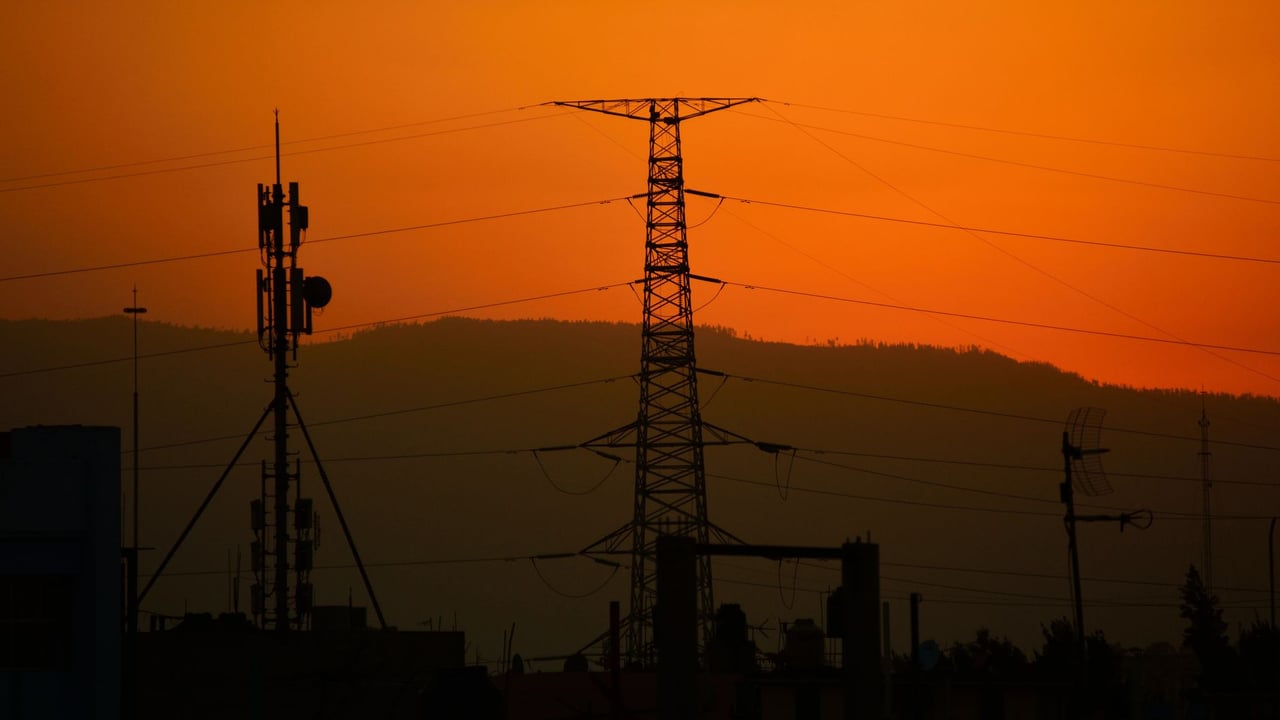
Photo by Miguel Á. Padriñán on Pexels
The Brief
China's National Energy Administration has announced comprehensive plans to upgrade the country's power network during the 15th Five-Year Plan period. Officials anticipate electricity demand will expand at an average annual rate of approximately 5%, driven by rising renewable integration and power-hungry high-tech industries. To address these demands, the agency plans to establish a coordinated architecture linking the main grid, distribution networks, and smart microgrids. Regulators also pledged support for private capital participation in grid infrastructure investments.
Why it matters
Grid construction involves extensive capital expenditure and widespread industrial supply chains. Beyond safeguarding mid-to-long-term energy security and absorbing renewable generation, modernising power infrastructure serves as a major mechanism to stabilize fixed-asset investment and integrate computing power with electricity delivery.
China context
As preparatory planning begins for the 15th Five-Year Plan (2026–2030), the National Energy Administration's strategy reflects an effort to balance centralized grid stability with localized flexibility. Explicitly welcoming private enterprises into grid investment also signals an intent to mobilize diverse capital sources in a sector historically dominated by state-owned power utilities.
Editor's View
EDITOR'S VIEW — Analysis and inference, not factual reporting.
The explicit call for private investment marks a notable shift in a sector traditionally dominated by state giants State Grid and China Southern Power Grid. While transmission corridors will remain under strict state control, peripheral opportunities in distribution networks, microgrids, and computing-power-energy coordination could offer tangible entry points for private capital if local regulatory approvals keep pace.
What to watch
- Publication of provincial-level new grid project lists and task schedules by local energy authorities
- Approval and construction timelines for cross-regional transmission corridors and computing-power-grid integration projects
- Specific policy rules clarifying which subsectors and ownership models will be accessible to private enterprises
Key Takeaways
- 1Electricity consumption in China is projected to grow by roughly 5% annually during the 15th Five-Year Plan period.
- 2The NEA plans a three-tier architecture connecting the main power grid, distribution platforms, and smart microgrids.
- 3Priority technical areas include artificial intelligence, grid-forming technology, intelligent dispatch, and long-duration storage.
- 4Regulators explicitly expressed support for private enterprises to invest in new grid construction projects.
China will step up the construction of next-generation power grid infrastructure during the 15th Five-Year Plan period to handle steadily expanding domestic electricity consumption, the National Energy Administration (NEA) announced.
According to reports published by People's Daily and Xinhua, electricity demand is projected to grow at an average annual rate of around 5% over the period. The agency cited a rising share of renewable energy, higher quality standards from advanced manufacturing sectors, and new commercial models as primary drivers requiring a fundamental overhaul of existing transmission and distribution networks.
NEA Director Wang Hongzhi outlined a coordinated architecture linking the main transmission backbone, regional distribution networks, and smart microgrids. Under this blueprint, the bulk power grid is tasked with maintaining baseline reliability and system security, distribution systems will operate as public platforms, and intelligent microgrids are expected to provide flexible, interactive local balancing.
To support this architecture, the agency urged accelerated deployment of emerging technologies, including artificial intelligence applications, grid-forming technology, intelligent dispatching, and long-duration energy storage. The NEA also called for improved grid services tailored to large-scale renewable integration, high-reliability power delivery, and computing-power-electricity coordination, where energy infrastructure aligns directly with digital data centers.
Wang emphasized that new grid development links upstream renewable power generation with downstream industrial, commercial, and residential consumption, carrying significant capital expenditure and wide-ranging supply-chain effects. He called on grid enterprises to manage project execution efficiently to maximize investment impact, while urging provincial energy authorities to expedite approvals for major power corridors and compile prioritized project lists.
Notably, the NEA explicitly stated that it supports private enterprises investing in next-generation grid projects, urging them to participate in the commercial opportunities created by the network overhaul.
Sources
- 国家能源局部署新型电网建设重大任务--经济·科技--人民网 — People's Daily · 9/2/2026
- “十五五”时期 我国将加大新型电网建设力度--经济·科技--人民网 — People's Daily · 9/3/2026