
Technology & AIAnalysis
China's 16th Arctic Expedition Concludes with New Geological and Ecological Data
Icebreakers Xue Long and Xue Long 2 returned to Shanghai with field observations on Gakkel Ridge and deep-sea hydrothermal activity.
Share
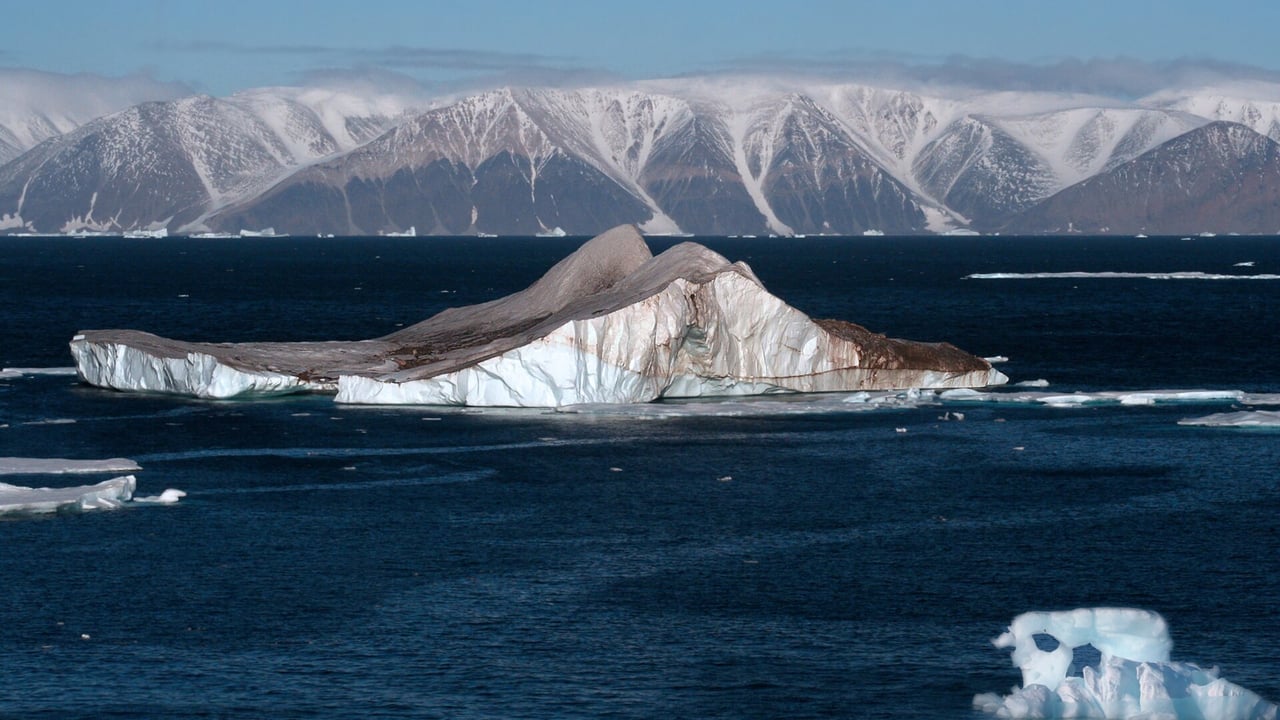
Brocken Inaglory. via Wikimedia Commons, CC BY-SA 3.0
The Brief
China's 16th Arctic Ocean expedition has concluded its primary leg as the research icebreakers Xue Long and Xue Long 2 returned to Shanghai after a three-month voyage. Organized by the Ministry of Natural Resources, the mission yielded new findings across the Canada Basin and the Gakkel Ridge, including evidence that challenges traditional plate-cooling models. Scientific crews also conducted large-scale tests of domestically developed autonomous observation hardware, supported international scientific partners, and deployed a notably younger research cohort.
Why it matters
The expedition's geological findings at the ultra-slow-spreading Gakkel Ridge challenge standard assumptions about lithospheric thickening, while oceanographic observations of increased Pacific warm water intrusion offer fresh data on changing Arctic sea-ice dynamics. In parallel, the deployment of domestically designed unmanned ice stations and profiling buoys reflects China's push to establish persistent, independent polar monitoring capabilities.
China context
This voyage marked the first Arctic expedition conducted under China's 15th Five-Year Plan period and demonstrated an expanding multi-vessel coordination model. In addition to Xue Long and Xue Long 2, two other vessels—the Jidi and Tansuo-3—were deployed to separate Arctic sectors, supported by an increasingly young scientific staff where over 70 percent of participants were under the age of 40.
Editor's View
EDITOR'S VIEW — Analysis and inference, not factual reporting.
The 16th Arctic expedition illustrates two distinct tracks in Chinese polar policy: expanding foundational earth-system research while steadily proving field-ready indigenous oceanographic hardware. The geophysical surveying along the Gakkel Ridge—capturing electrical structure over a 25-million-year scale—shows growing competence in hard-to-reach marine geophysics. Meanwhile, scientific cooperation with French, German, and Russian counterparts underscores Beijing's intention to maintain collaborative scientific links in the high north even as geopolitical interest in Arctic navigation and resource mapping continues to climb.
What to watch
- The expected return in mid-October of the remaining two expedition vessels, the Jidi and Tansuo-3, and subsequent integration of their survey data.
- Peer-reviewed academic publications detailing the horizontal lithospheric boundary discovered at the Gakkel Ridge and its theoretical implications for plate tectonics.
- Long-term data transmission and operational resilience of the newly deployed autonomous polar ecological ice stations and profiling buoys.
Key Takeaways
- 1Icebreakers Xue Long and Xue Long 2 returned to Shanghai on September 30 after a nearly three-month Arctic voyage organized by the Ministry of Natural Resources.
- 2Geophysical mapping at the Gakkel Ridge revealed a horizontal lithospheric boundary at approximately 60 kilometers depth, diverging from traditional plate-cooling models.
- 3Surveys documented a new hydrothermal plume field at the Gakkel Ridge and enhanced Pacific subsurface warm water inflow in the Canada Basin.
- 4Domestically developed autonomous polar ice stations and ice-based ocean profiling buoys underwent large-scale field operational testing.
- 5International collaboration included logistics support for France's Tara Polar Station, joint fish surveys with Germany, and ice observations with Russia.
- 6Two other Chinese research ships, the Jidi and Tansuo-3, continued Arctic operations with an expected return in mid-October.
China's 16th Arctic Ocean scientific expedition concluded its main seaborne phase as the research icebreakers Xue Long and Xue Long 2 returned to port in Shanghai following an expedition lasting nearly three months, state media outlets reported.
Organized by the Ministry of Natural Resources, the expedition completed comprehensive surveys across the Chukchi Plateau, the Canada Basin, and the central Arctic Ocean. According to mission organizers, the operation reached record highs in survey scale and overall workload, focusing on marine environmental monitoring, geophysics, and autonomous polar equipment testing.
Key scientific findings centered on deep-sea geophysics and changing high-latitude ecosystems. In the eastern sector of the Gakkel Ridge abyssal plain, researchers reported locating a previously undocumented, massive hydrothermal plume field. Geophysical imaging of the ridge acquired a continuous record of lithospheric electrical structure spanning 25 million years. Crucially, researchers found that the lithosphere-asthenosphere boundary extends nearly horizontally at a depth of roughly 60 kilometers, a structural feature that diverges from the thickening predicted by standard plate-cooling models.
In the Canada Basin, researchers detected an intensified inflow of subsurface warm water originating from the Pacific Ocean, alongside unexpected concentrations of juvenile polar cod within the high-latitude sea ice zone to the north. These ecological observations shed light on shifts in marine habitats driven by warming and sea-ice retreat.
Technologically, the mission served as an operational proving ground for domestically developed observational instruments. Scientific crews carried out large-scale deployments and field evaluations of autonomous polar ecological ice stations and ice-based ocean profiling buoys. The voyage also maintained international scientific links: Xue Long 2 provided icebreaking assistance and fuel support to the French Tara Polar Station during its first winter drifting mission, while also conducting joint fishery surveys with German researchers and sea-ice monitoring alongside Russian scientists.
Two additional Chinese expedition vessels, the Jidi and Tansuo-3, remained in the Arctic to complete secondary tasks and are scheduled to return in mid-October. Expedition team leader Wang Jinhui noted that this voyage marked the opening Arctic campaign under China's 15th Five-Year Plan cycle, characterized by a younger scientific workforce where roughly 40 percent were first-time polar researchers and over 70 percent were under age 40.
Sources
- 中国第16次北冰洋考察成果丰硕 --经济·科技--人民网 — People's Daily · 9/30/2026
- 中国第16次北冰洋考察队返沪-中新网视频 — China News Service · 10/2/2026