
Business & IndustryAnalysis
China's Air Cargo Volume Tops 10 Million Metric Tons as International Routes Expand
An annual industry report released at the CATA conference highlights double-digit cargo growth, fleet modernization, and ongoing digital infrastructure upgrades.
Share
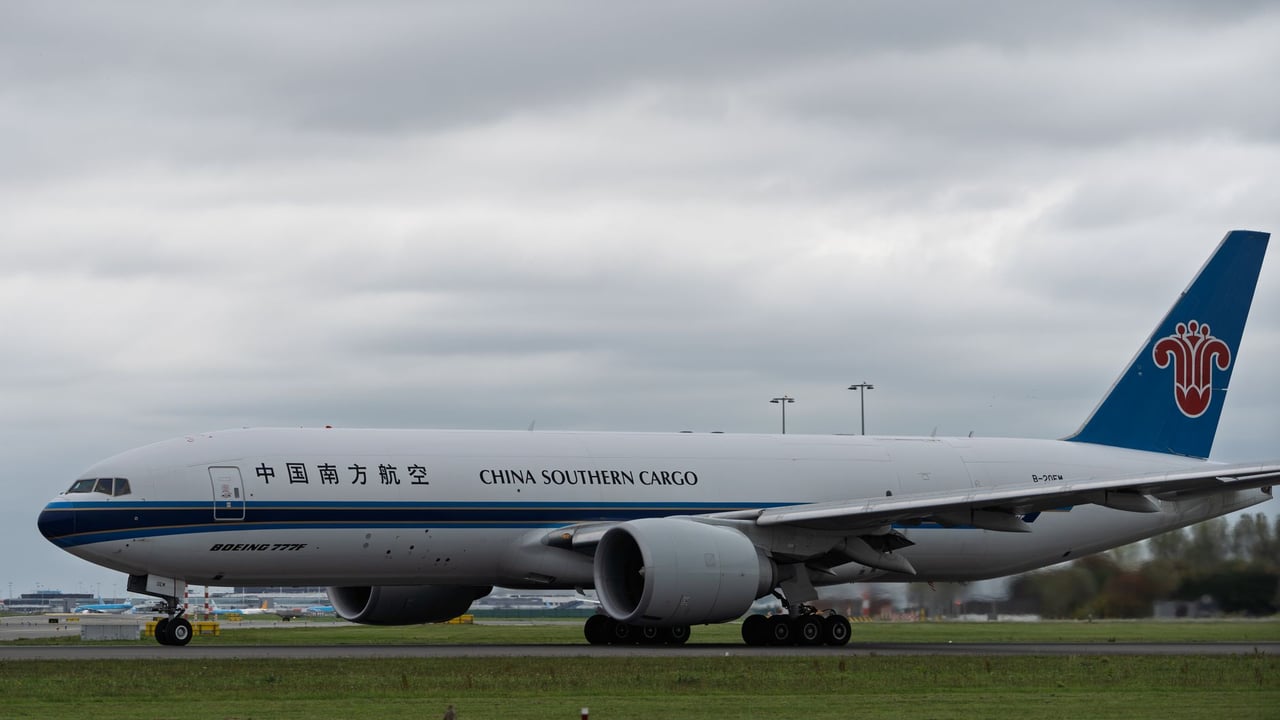
Photo by Martijn Stoof on Pexels
The Brief
China's civil aviation freight and mail transport surpassed 10 million metric tons for the first time in 2025, reaching 10.172 million tons, up 13.3 percent year-on-year. According to an industry development report released at the China Air Transport Association conference, international routes accounted for over 40 percent of the total volume. Despite rapid expansion in freight corridors and all-cargo aircraft fleets, industry officials noted structural challenges in aligning transport capacity with high-value goods demand and highlighted digital infrastructure integration across airports and airlines as an immediate priority.
Why it matters
Crossing the 10-million-ton threshold while expanding international cargo by more than 20 percent highlights China's deepening integration into global high-end supply chains. Air logistics serves as a core conduit for time-sensitive, high-value trade such as advanced electronics and cross-border e-commerce. As global manufacturing networks recalibrate, a modern and resilient aviation logistics network directly influences export agility and industrial competitiveness.
China context
Under Beijing's broader dual-circulation economic agenda, policymakers are steering civil aviation away from pure volume expansion toward high-efficiency, digitally integrated operations. The concentration of over 85 percent of airport cargo across 24 national logistics hub airports underscores an intentional agglomeration strategy. However, bottlenecks in end-to-end data sharing and equipment matching remain hurdles as the Civil Aviation Administration of China pushes for digital modernization.
Editor's View
EDITOR'S VIEW — Analysis and inference, not factual reporting.
The latest figures show clear progress in fleet scale and international route development, particularly the expansion of widebody freighters. Yet the real test for Chinese air logistics lies in qualitative service transformation. Moving from standard bulk freight to handling temperature-sensitive pharmaceuticals and precision components requires tight supply-demand calibration and seamless logistics data interchange. Wang Weijun's emphasis on unified public information platforms signals that regulatory authorities view digital interoperability, rather than just physical aircraft additions, as the primary lever for future competitiveness.
What to watch
- Implementation and airline data-connection progress on CAAC's public information service platform for aviation logistics.
- Fleet adjustments by Chinese cargo carriers, particularly the acquisition pace of widebody freighters for long-haul international routes.
- The evolution of cargo composition as high-value sectors like cross-border e-commerce and pharmaceuticals demand more customized capacity.
Key Takeaways
- 1China's air cargo and mail volume reached 10.172 million metric tons in 2025, up 13.3% year-on-year.
- 2International freight rose 22.1% to 4.4025 million metric tons, making up over 40% of the total.
- 3The sector launched 252 new cargo routes, including 214 international routes, with the all-cargo fleet reaching 272 aircraft.
- 4Twenty-four national airport logistics hubs handled more than 85% of total airport cargo.
- 5CAAC is prioritizing supply-demand alignment and a unified public data platform to address logistics information bottlenecks.
China's civil aviation logistics sector achieved significant volume milestones in 2025, with national freight and mail traffic exceeding 10 million metric tons for the first time, according to data released at the China Air Transport Association (CATA) Aviation Conference.
The industry report, titled "China Aviation Transport Development (2026)" and cited by People's Daily, showed that total civil aviation cargo and mail transport reached 10.172 million metric tons in 2025, representing a 13.3 percent year-on-year increase. Growth was heavily driven by foreign trade corridors: international routes handled 4.4025 million metric tons, an increase of 22.1 percent year-on-year, accounting for more than 40 percent of total nationwide cargo volume.
The surge in volume was supported by network and fleet expansion. Across China, 252 new cargo routes were launched during the period, 214 of which were international connections. The nationwide all-cargo aircraft fleet expanded to 272 planes, with widebody freighters accounting for 22 percent of the total. Logistics activities also showed sharp geographical concentration, with 24 designated airport-type national logistics hubs processing over 85 percent of all airport cargo volume across the country.
Industry observers and officials speaking at the three-day CATA conference noted that aviation logistics is entering a critical transition phase from simple physical expansion toward efficiency and quality gains. A rising share of cargo consists of time-sensitive, high-value-added goods.
Li Zongling, general manager of the transport business department at CATA, noted that high-value products match the timeliness, safety, and convenience offered by airline transport. However, he cautioned that the primary challenge currently facing the sector is whether supply capabilities can adequately align with these evolving market demands.
To address structural gaps, civil aviation authorities are focusing on digitalization. Wang Weijun, deputy director of the Department of Transport at the Civil Aviation Administration of China (CAAC), stated that authorities are accelerating data integration for a public aviation logistics information service platform. Wang stressed that CAAC aims to advance data interoperability across more airlines and airports, leveraging airport group resources to eliminate information silos across the entire logistics chain.
Sources
- 我国航空物流发展规模持续创新高 — China News Service · 9/19/2026
- 我国航空物流发展规模持续创新高--经济·科技--人民网 — People's Daily · 9/19/2026