
Business & IndustryAnalysis
Heilongjiang Highlights Modern Agricultural Gains and Food Security Role
The northeastern grain powerhouse reports advancements in mechanization, processing, and branding.
Share
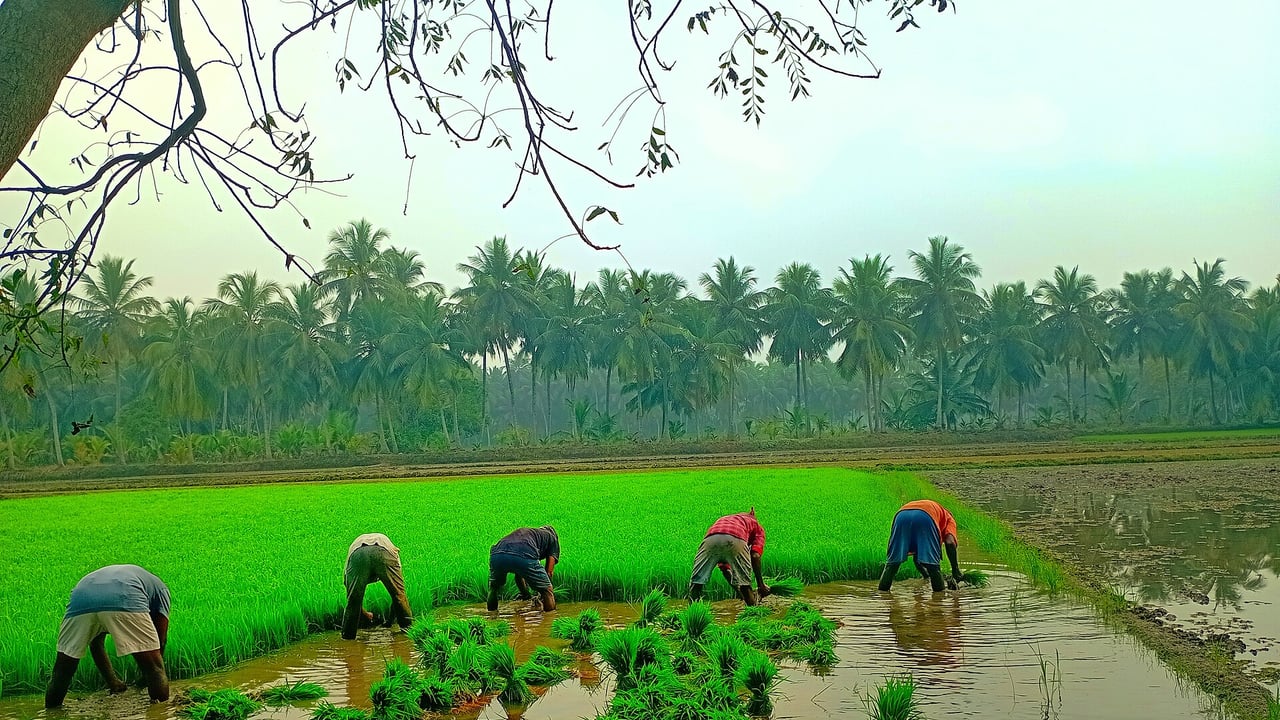
Ch Maheswara Raju via Wikimedia Commons, CC BY-SA 4.0
The Brief
Heilongjiang province has released new performance indicators highlighting its role as China's primary grain production base and a testing ground for agricultural modernization. According to state media reports, the province continues to lead the nation in comprehensive agricultural mechanization while accelerating downstream processing and regional agricultural branding. These efforts reflect Beijing's broader push to safeguard national food self-sufficiency while raising rural incomes through industrial upgrading and black-soil conservation.
Why it matters
As China's top grain-producing province, Heilongjiang's agricultural efficiency directly shapes national food security and supply stability. The province's transition from raw grain cultivation toward higher-value processing and branded distribution offers a benchmark for whether agricultural provinces can convert volume into economic resilience.
China context
Under the central government's directive to keep 'China's rice bowl firmly in Chinese hands,' Heilongjiang serves as the country's strategic grain ballast. The province is tasked with balancing grain security mandates with local economic growth, deploying regional public brands such as 'Heitu Youpin' to capture higher retail margins across national consumer markets.
Editor's View
EDITOR'S VIEW — Analysis and inference, not factual reporting.
Heilongjiang's agricultural scorecard underscores a persistent structural challenge facing China's rural heartlands: converting high output volumes into sustainable local wealth. For decades, northeastern provinces bore the heavy burden of commodity grain production with minimal downstream capture. The current emphasis on processing conversion rates and regional brand equity shows that local authorities recognize raw volume alone cannot sustain rural modernization.
What to watch
- Subsequent case reports on smart farming practices and black-soil protection from state research tours
- Mechanization progress and total yield metrics during the upcoming autumn grain harvest
- Expansion of retail and distribution channels for regional brands like 'Heitu Youpin' outside the province
Key Takeaways
- 1Heilongjiang has reported steady progress across key modern agricultural metrics, including mechanization and crop processing conversion.
- 2The province continues to serve as China's primary grain-producing anchor under national food security mandates.
- 3Local development strategies are focusing on regional branding, such as 'Heitu Youpin', to move beyond commodity grain shipping and capture downstream retail value.
- 4Policy attention remains centered on balancing high-volume agricultural output with long-term black-soil conservation.
Heilongjiang province has highlighted its recent agricultural achievements, underscoring its dual role as China's leading grain producer and an anchor for modern agricultural reform, according to reports published by the Economic Daily and distributed by China News Service.
Widely regarded as China's agricultural 'ballast stone,' the northeastern province has maintained nationwide leadership in comprehensive agricultural mechanization. Authorities point to steady gains not only in field-level operational efficiency, but also in the transformation and processing rate of raw agricultural commodities. This push aims to retain more processing value within the province rather than merely shipping unprocessed staple crops to southern consumer centers.
A central component of this strategy involves advancing regional public agricultural brands, most notably 'Heitu Youpin' (Black Soil Superior Products). By tying market identity directly to the fertile black soil of northeastern China, regional planners are attempting to integrate primary farming with secondary food processing and tertiary commercial logistics. Provincial initiatives prioritize turning staple grains, soybeans, and specialty agricultural goods into higher-margin packaged foods destined for major retail hubs across the country.
These developments come amid heightened strategic attention from Beijing on national grain resilience. With geopolitical volatility and climate disruptions complicating global food supply chains, the central government has repeatedly reiterated that domestic grain self-sufficiency remains an existential priority. Heilongjiang's performance is closely monitored by national policymakers as an indicator of whether large-scale mechanization and soil stewardship can sustain output over the long term.
Looking forward, the province faces the task of broadening market adoption for its branded produce in highly competitive coastal markets, while continuing to preserve the fragile black-soil ecosystem that underpins its high yields. Observers will be watching autumn harvest operations and related commercial distribution channels to evaluate whether these agricultural gains translate into sustained income growth for rural farming households across the region.
Sources
- 黑龙江农业“硬核”成绩单来了 — China News Service · 9/1/2026