
Policy & RegulationAnalysis
China Issues First Standard for AI-Driven Brain-Computer Interface Devices
The national medical regulator has published benchmark criteria for EEG datasets, setting a compliance deadline for September 2027.
Share
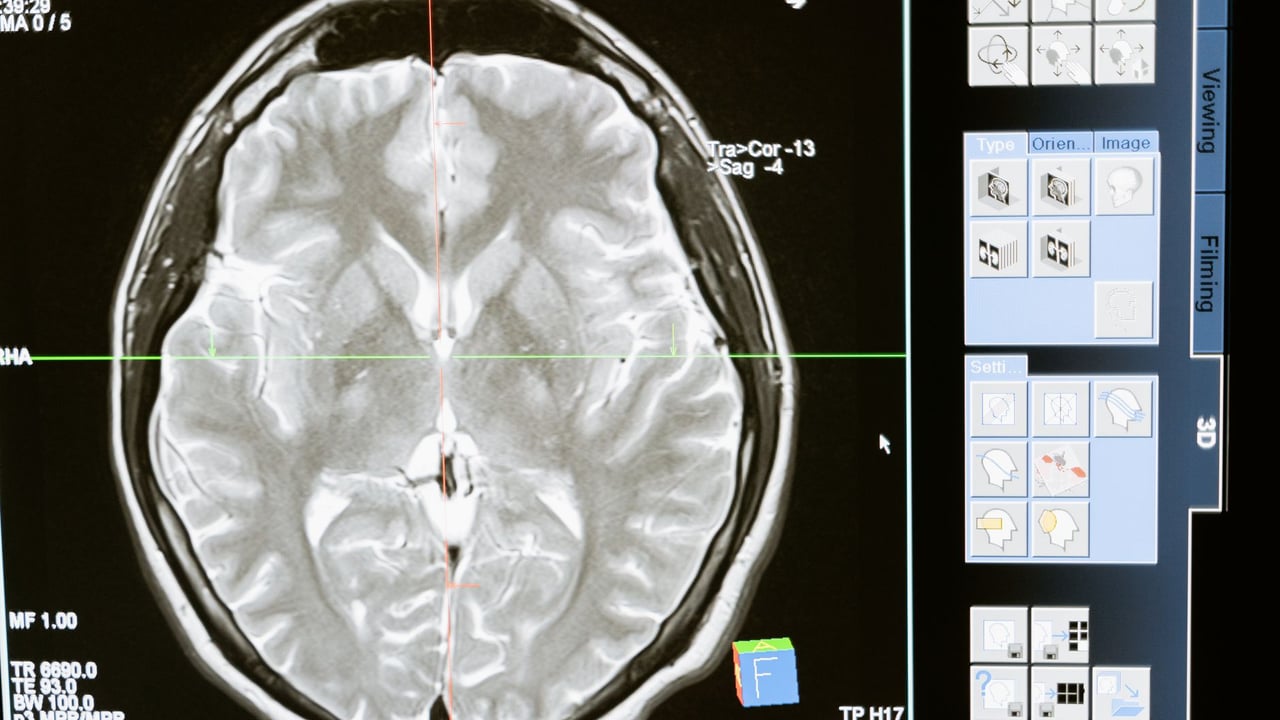
Photo by MART PRODUCTION on Pexels
The Brief
China's National Medical Products Administration (NMPA) has approved a landmark industry standard regulating brain-computer interface (BCI) medical devices that utilize artificial intelligence to process electroencephalogram (EEG) data. Announced on September 14, the measure is China's third BCI-related medical standard and is identified by state media as the world's first product standard addressing AI-based EEG signal processing. Set to take effect on September 1, 2027, the standard defines dataset quality requirements and evaluation methodologies across the research, manufacturing, and quality assurance phases of device development.
Why it matters
BCI technology represents a critical intersection of neuroscience, medical hardware, and advanced machine learning. Because raw neural signals are noisy and subject to significant variability, the integrity of underlying training and validation datasets directly impacts clinical efficacy and patient safety. By formalizing technical benchmarks for EEG data quality, regulatory authorities are establishing standardized criteria for pre-clinical assessment and device review, which could reduce uncertainty for commercial developers and lower compliance hurdles for cross-disciplinary medical technology.
China context
Beijing has prioritized brain science, neural interfaces, and artificial intelligence within its national technological roadmaps and strategic emerging industries. Through rapid standard-setting under the NMPA, Chinese regulatory bodies are seeking to move beyond catch-up compliance, actively positioning domestic frameworks to influence international norms for frontier medical devices. The multi-year implementation runway until 2027 reflects a calibrated approach, granting domestic developers sufficient lead time to align data pipelines and algorithm architectures with state requirements.
Editor's View
EDITOR'S VIEW — Analysis and inference, not factual reporting.
Setting explicit technical standards for AI-assisted neural data processing highlights a growing regulatory maturity in China's oversight of frontier medical technology. Rather than waiting for market maturation, the NMPA is establishing procedural guardrails early in the commercialization cycle. However, technical standards are only as effective as the evaluation metrics they prescribe; market participants must closely watch how stringently dataset diversity, artifact filtering, and signal provenance are audited once the standard enters force.
What to watch
- Release of the full regulatory text, standard identifier, and drafting notes on official NMPA portals
- Potential technical review guidelines issued by the Center for Medical Device Evaluation (CMDE) for AI-BCI products
- Dataset adaptation and compliance efforts by BCI hardware and software developers ahead of the September 2027 deadline
Key Takeaways
- 1The National Medical Products Administration (NMPA) approved China's third BCI medical device standard on September 14.
- 2State media reported the standard as the first globally to regulate AI-driven post-processing of EEG data in medical devices.
- 3The standard defines quality requirements and evaluation methods for datasets used in BCI research, production, and quality control.
- 4The regulatory requirements will formally take effect on September 1, 2027.
China's drug and medical device regulator has approved a new national standard governing the use of artificial intelligence in brain-computer interface (BCI) medical hardware, marking an early regulatory step to codify technical requirements for neural data processing.
The National Medical Products Administration (NMPA) approved the document on September 14, according to a report by Xinhua News Agency. The measure represents China's third specialized medical device standard for brain-computer interfaces and has been characterized by state media as the world's first product standard dedicated to BCI devices that deploy artificial intelligence algorithms to interpret electroencephalogram (EEG) signals. The standard is scheduled to take effect formally on September 1, 2027.
Technically, the standard establishes specific quality benchmarks and evaluation methodologies for EEG datasets used in conjunction with machine-learning algorithms. Its scope covers the entire product development lifecycle, applying to datasets utilized in research and development, manufacturing, and post-market quality control for devices where AI models perform post-processing on captured neural electrical signals.
Brain-computer interfaces translate electrical activity from the brain into actionable commands or diagnostic data. In non-invasive and semi-invasive systems, EEG signals are notoriously prone to interference from muscle movement, electrical noise, and anatomical differences across subjects. Consequently, the performance and reliability of AI models used to filter, decode, and interpret these signals depend heavily on the quality, labeling, and consistency of the training and validation data.
By codifying data quality metrics, Chinese regulators aim to resolve evaluation ambiguities during clinical trials and regulatory reviews. The nearly three-year gap before the standard takes legal effect in late 2027 gives medical device manufacturers and research institutions an extended transition window to audit their data collection protocols, update algorithm pipelines, and align proprietary testing frameworks with state specifications.
Sources
- 首个人工智能+脑机接口医疗器械标准发布--经济·科技--人民网 — People's Daily · 9/14/2026
- 全球首个AI脑机接口标准发布!产业落地按下加速键 融资客提前埋伏多股(名单) _ 东方财富网 — Eastmoney · 9/15/2026