
Policy & RegulationAnalysis
Wang Yi Urges France to Uphold One-China Principle and Ease EU Trade Tensions
In a call with French counterpart Jean-Noël Barrot, China's foreign minister warns against protectionism and calls for constructive dialogue.
Share
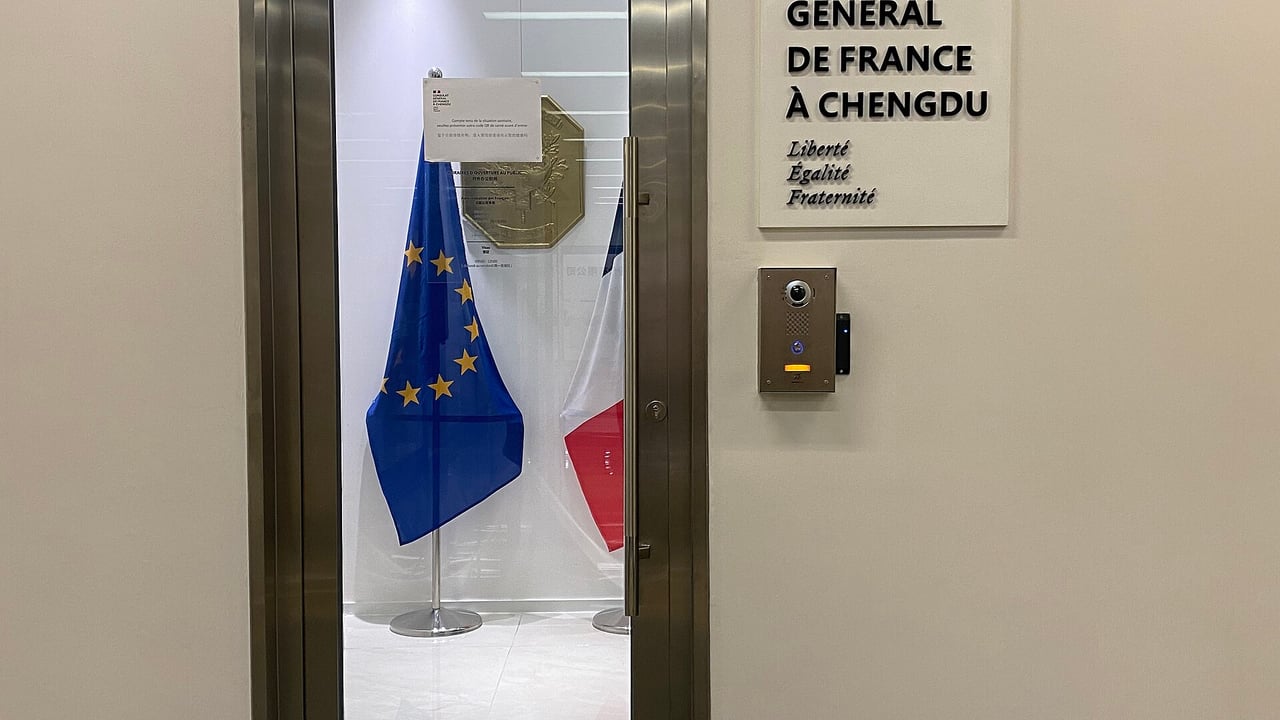
Cgfchengdu via Wikimedia Commons, CC BY-SA 4.0
The Brief
Chinese Foreign Minister Wang Yi spoke by phone with French Foreign Minister Jean-Noël Barrot on September 14, urging Paris to adhere strictly to the one-China principle through concrete actions and avoid official exchanges with Taiwan. Addressing escalating trade friction between China and the European Union, Wang warned that European protectionism would fail to improve competitiveness while driving up inflation and slowing the green transition. According to Chinese state media, Barrot reaffirmed France's commitment to its one-China policy and expressed a willingness to seek constructive solutions to ongoing China-EU economic disputes.
Why it matters
The high-level exchange comes amid heightened trade disputes between Beijing and Brussels, notably over European tariffs on Chinese electric vehicles and Chinese trade investigations into European goods like brandy. As a leading EU member state and a permanent member of the UN Security Council, France wields significant influence over the bloc's trade stance and multilateral security debates. Beijing's direct appeal to Paris underscores its strategy of engaging key European capitals to temper collective EU trade actions and prevent broader commercial retaliation from spiraling into diplomatic confrontation.
China context
Beijing treats the one-China principle as the non-negotiable political foundation of its bilateral ties, routinely reiterating it whenever European officials or parliamentarians engage with Taipei. Simultaneously, Chinese officials frame European trade defensiveness not as legitimate economic security measures, but as self-defeating protectionism that imperils shared decarbonization goals. By invoking French strategic autonomy, Beijing seeks to encourage Paris to act as a stabilizing counterweight within the European Commission against harder-line trade policies.
Editor's View
EDITOR'S VIEW — Analysis and inference, not factual reporting.
The Chinese readout highlights a dual-track diplomatic pitch: offering multilateral cooperation at the United Nations while warning against economic decoupling and diplomatic drift on Taiwan. Wang's explicit warning on protectionism directly reflects Beijing's unease over European trade measures, including anti-subsidy duties targeting Chinese green tech exports. While Paris has historically pursued an independent foreign policy posture, France has also been among the key proponents of stronger EU trade defense tools. Beijing's emphasis on the 'Dujiangyan spirit' and mutual benefits serves as a diplomatic nudge for France to moderate Brussels' regulatory offensive, though whether dialogue alone can bridge deep structural divergences over market access and industrial subsidies remains highly doubtful.
What to watch
- Official statements or readouts from the French Ministry for Europe and Foreign Affairs regarding the call, particularly regarding trade and Taiwan.
- France's voting stance and diplomatic maneuvering within the EU regarding definitive tariffs on Chinese electric vehicles.
- Coordinated initiatives or debates between China and France within the UN Security Council during France's rotational presidency.
Key Takeaways
- 1Wang Yi held a phone call with French Foreign Minister Jean-Noël Barrot on September 14.
- 2Wang urged France to adhere strictly to the one-China principle and avoid any official interactions with Taiwan.
- 3Wang warned that European protectionism harms consumers, elevates inflation, and hinders the green transition.
- 4According to Chinese readouts, Barrot reaffirmed France's one-China policy and supported constructive talks to resolve EU-China trade issues.
- 5The ministers exchanged views on Ukraine, Iran, and France's role holding the rotating UN Security Council presidency.
Chinese Foreign Minister Wang Yi held a phone call on September 14 with French Foreign Minister Jean-Noël Barrot, calling on Paris to uphold the one-China principle and work constructively to resolve mounting economic disputes between China and the European Union, according to reports published by People's Daily and Xinhua.
During the discussion, Wang emphasized that the one-China principle constitutes the political foundation of the China-France comprehensive strategic partnership. He stated that Beijing expects France to honor this principle with concrete actions, refrain from official exchanges with Taiwan in any form, and avoid sending erroneous signals to separatist elements on the island.
Turning to broader relations between Beijing and Brussels, Wang addressed the current friction over trade policy. He argued that China and the EU should preserve their partnership positioning, pursue mutual benefit, and resolve commercial differences through constructive dialogue rather than escalating toward confrontation. Wang cautioned that European protectionist measures would fail to enhance Europe's industrial competitiveness. Instead, he argued, such barriers would deprive European consumers of quality goods, aggravate domestic inflation, and undermine the continent's green transition goals.
Describing China as one of the world's largest consumer markets, Wang characterized China's ongoing economic development as an opportunity rather than a systemic challenge for the European Union. He urged France, as a major power with strategic vision, to adopt a pragmatic and rational approach to guide the European Union toward compromise and mutual accommodation.
According to the Chinese state media account, Barrot noted that bilateral relations have sustained positive momentum following French President Emmanuel Macron's visit to China, guided by continuous dialogue and mutual accommodation. Barrot reportedly affirmed that France remains firmly committed to its one-China policy. Acknowledging that economic and trade ties between the EU and China currently face difficulties, Barrot conveyed France's willingness to encourage constructive engagement to reach workable solutions.
The two foreign ministers also touched on broader geopolitical issues, including the conflict in Ukraine and the situation surrounding Iran. Wang noted China's support for France's role holding the rotating presidency of the United Nations Security Council this month, expressing expectations for the council to address pressing global security challenges.
Sources
- 王毅:希望法方以实际行动恪守一个中国原则 — China News Service · 9/14/2026
- 王毅同法国外长巴罗通电话 --时政--人民网 — People's Daily · 9/15/2026
- 王毅同法国外长巴罗通电话--时政--人民网 — People's Daily · 9/15/2026