
Policy & RegulationAnalysis
China Concludes Beidaihe Retreat for Top Experts as 15th Five-Year Plan Begins
Central leadership hosted 60 prominent researchers and scholars, signaling a continued focus on technological self-reliance and foundational research.
Share
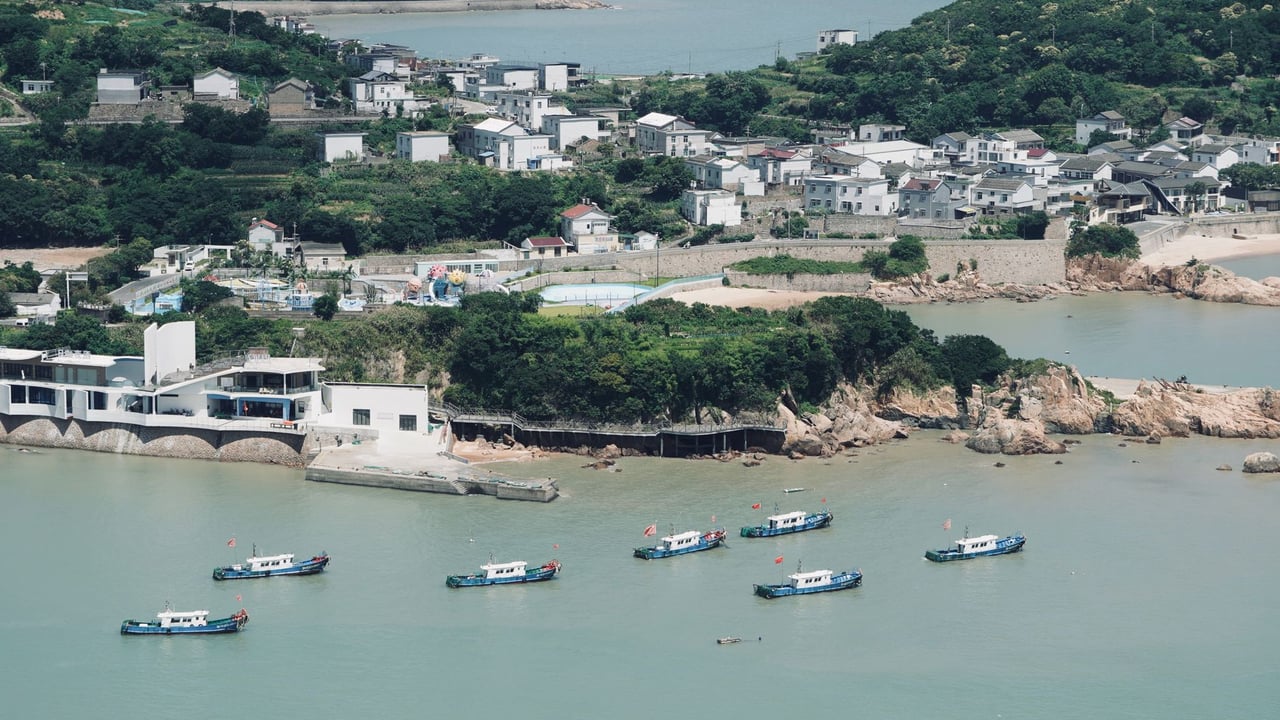
Photo by Ran Hua on Pexels
The Brief
China's central authorities hosted 60 leading experts across basic research, frontier technology, critical engineering, and social sciences for the annual summer retreat in Beidaihe from August 1 to 7, 2026. Coming at the launch of China's 15th Five-Year Plan period, the gathering underscored Beijing's strategy of elevating key scientific personnel to drive long-term innovation and self-reliance. On August 3, senior official Cai Qi visited the experts on behalf of General Secretary Xi Jinping, urging researchers to achieve new breakthroughs to support basic socialist modernization.
Why it matters
The annual Beidaihe gathering for experts serves as a major political signal of national priorities, emphasizing self-reliance in critical technology, basic scientific research, and intellectual development as China begins its 15th Five-Year Plan.
China context
In Chinese governance culture, high-level central leadership engagement at Beidaihe underscores the elevated political status of top scientific talents and aligns technological innovation directly with long-term state planning goals.
Editor's View
EDITOR'S VIEW — Analysis and inference, not factual reporting.
The high-profile recognition of researchers across both cutting-edge technology and fundamental sciences at Beidaihe indicates that state planners view human capital as the central pillar for navigating external technological pressures during the 15th Five-Year Plan. By explicitly highlighting both veteran academicians and younger scholars, Beijing is reinforcing a political mandate for patience in long-cycle basic research alongside rapid core-technology breakthroughs.
What to watch
- Subsequent policy announcements and research initiatives originating from key institutions represented at the gathering.
- Further political outreach and resource allocation aimed at young scientific leaders during the early phase of the 15th Five-Year Plan.
- Specific funding mechanisms and institutional support targeting long-term basic research and foundational science.
Key Takeaways
- 1Sixty experts in basic research, core technology, and social sciences attended the annual Beidaihe retreat from August 1 to 7, 2026.
- 2The retreat marks the start of the 15th Five-Year Plan period, placing scientific talent at the forefront of national planning.
- 3Senior leader Cai Qi visited the experts on August 3 on behalf of Xi Jinping, encouraging researchers to focus on key technological breakthroughs.
- 4Attendees spanned multi-generational scholars, from 88-year-old engineering academician Qian Qihu to young frontier technology researchers from Tsinghua University.
From August 1 to 7, 2026, the Communist Party of China Central Committee and the State Council hosted 60 invited experts and scholars at the coastal resort of Beidaihe for the annual summer retreat, according to reports by state media outlet Xinhua.
The cohort of attendees represented key technical and academic domains, including basic scientific research, strategic frontier technology, critical core tech sectors, and philosophy and social sciences. The event holds heightened institutional significance as 2026 marks the opening year of China's 15th Five-Year Plan period (2026–2030).
On August 3, Cai Qi, a member of the Standing Committee of the Political Bureau of the CPC Central Committee and the Secretariat, visited the attending experts on behalf of General Secretary Xi Jinping and central leadership. Addressing the researchers, Cai conveyed official greetings and urged scientists and scholars to carry forward the scientific spirit, pursue pioneering innovations, and achieve new accomplishments across their respective fields to support basic socialist modernization.
The Beidaihe expert retreat represents a long-standing institutional policy designed to demonstrate official respect for high-level intellectual talent under the central governance principle that human talent constitutes the country's primary strategic resource. The delegation included researchers from diverse background generations and disciplines.
Among the attendees was 88-year-old Qian Qihu, a Chinese Academy of Engineering academician and professor at the PLA Army Engineering University, who highlighted the retreat as both an honor and a weighty political responsibility. Other attendees included Wang Enge, former vice president of the Chinese Academy of Sciences; Yuan Yang, assistant dean and associate professor at Tsinghua University's Institute for Interdisciplinary Information Sciences and the youngest invitee in this year's group; and Xu Xianying, a veteran desertification researcher from the Gansu Desertification Control Research Institute who has worked in ecological restoration for 40 years.
Participants emphasized that long-term state support provides the necessary institutional stability for scientists to focus on lengthy basic research projects and venture into unexplored technological sectors during the upcoming five-year development cycle.
Sources
- 潮起渤海湾 奋楫“十五五”——党中央国务院邀请优秀专家人才代表北戴河休假侧记 — State Council of China · 8/10/2026
- 潮起渤海湾 奋楫“十五五”——党中央国务院邀请优秀专家人才代表北戴河休假侧记 — China Military Online · 8/10/2026
- 潮起渤海湾 奋楫“十五五”——党中央国务院邀请优秀专家人才代表北戴河休假侧记 — Xinhua News Agency · 8/10/2026