
Defense & StrategyAnalysis
China Decommissions Pioneer Type 052 Destroyer Harbin After 32 Years of Service
The lead vessel of China's second-generation guided-missile destroyers steps down from active service, marking a generational shift in naval modernization.
Share
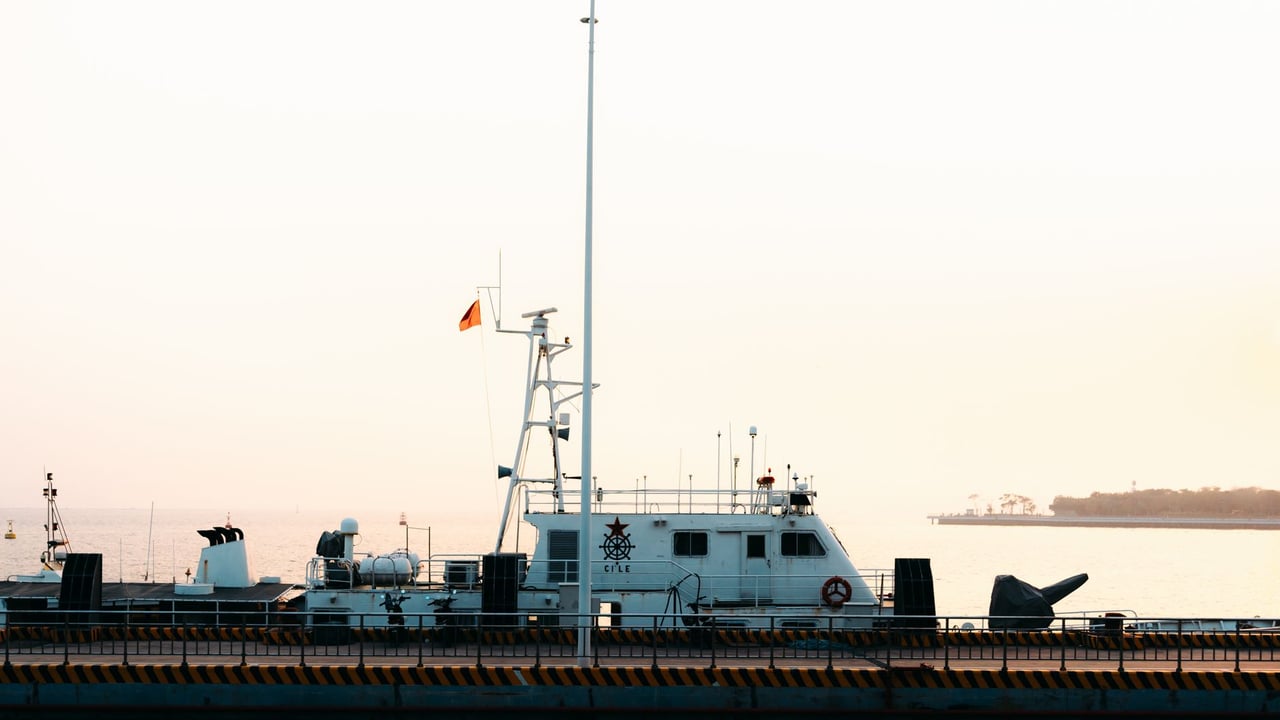
Photo by Blackcurrant Great on Pexels
The Brief
The People's Liberation Army Navy (PLAN) has officially decommissioned Hull 112, the guided-missile destroyer Harbin, concluding 32 years of operational service. Commissioned in May 1994 as the lead ship of the Type 052 class, the vessel represented China's first domestically designed second-generation combatant capable of multi-mission blue-water operations. Following comprehensive demilitarization and equipment stripping in Qingdao, the warship will be relocated to Changsha, Hunan Province, to serve as a national defense education venue, while naval naming traditions dictate that its name will eventually transfer to a newer surface combatant.
Why it matters
The retirement of Hull 112 signifies the phased departure of second-generation surface combatants from frontline PLAN task forces. As the Chinese navy transitions entirely toward advanced third- and fourth-generation platforms—such as Type 052D and Type 055 destroyers—the decommission highlights the qualitative expansion and technological maturity of Beijing's modern blue-water fleet architecture.
China context
Within China's naval modernization narrative, Harbin held exceptional prestige, widely dubbed 'China's Number One Warship' and awarded the honorary title of 'Maritime Vanguard Ship' by the Central Military Commission in 2003. Its transition from active military duty to a public patriotic education facility in Changsha, the birthplace of the PLAN's inaugural commander Xiao Jingguang, follows standard Chinese protocol for preserving historically significant naval vessels.
Editor's View
EDITOR'S VIEW — Analysis and inference, not factual reporting.
The retirement of the Type 052 lead ship provides a clear historical yardstick for evaluating China's naval shipbuilding trajectory over the past three decades. When Hull 112 entered service in 1994, it served as a rare, highly prized testbed for integrated systems and foreign-derived subsystems during an era of limited indigenous capability. Today, the PLAN's rapid, serial commissioning of advanced large surface combatants renders the vessel technically obsolete, yet its decommissioning underscores how early experimental platforms laid the engineering and operational foundation for China's contemporary maritime reach.
What to watch
- The operational timeline and eventual decommissioning arrangements for Hull 112's sister ship, the Type 052 destroyer Qingdao (Hull 113).
- Official PLAN announcements regarding the commissioning of a new-generation surface combatant inheriting the name Harbin.
- The progress of demilitarization and exhibition preparation for Hull 112 prior to its public opening at the Changsha defense education site.
Key Takeaways
- 1Hull 112 (Harbin), the lead Type 052 guided-missile destroyer, was officially decommissioned in Qingdao after 32 years of service.
- 2Commissioned in May 1994, the ship was China's first indigenous second-generation destroyer equipped with multi-domain combat systems and gas turbine propulsion.
- 3The vessel accumulated more than 400,000 nautical miles, completing over 100 major missions and pioneering long-range trans-Pacific naval deployments.
- 4Following complete demilitarization and removal of classified electronic systems, the warship will be preserved as a defense education base in Changsha, Hunan.
- 5Under PLAN naming conventions, the name Harbin is scheduled to be inherited by a next-generation surface warship.
The Chinese People's Liberation Army Navy (PLAN) officially decommissioned its pioneer second-generation guided-missile destroyer, Hull 112 (Harbin), during a ceremony at a naval port in Qingdao, state-affiliated media reported. The ceremony brought an end to the vessel's 32-year operational career in the PLAN battle order.
Commissioned on May 8, 1994, Harbin was the lead ship of the Type 052 destroyer class, widely recognized in Chinese defense discourse as 'China's Number One Warship.' Military specialists noted that the vessel served as a critical technological bridge between China's earlier coastal-defense combatants and its modern expeditionary fleet. According to naval analyst Zhang Junshe, earlier first-generation destroyers focused narrowly on single combat domains, whereas the Type 052 integrated comprehensive air defense, anti-ship, and anti-submarine warfare suites alongside gas turbine propulsion.
During its three decades of service, Hull 112 logged over 400,000 nautical miles and completed more than 100 major training exercises and strategic missions. The vessel achieved several operational milestones for the contemporary PLAN, including early trans-Pacific goodwill voyages and extended operations beyond the first island chain. In recognition of its operational record, the Central Military Commission conferred the honorary title of 'Maritime Vanguard Ship' upon the vessel in 2003.
Following standard naval de-induction protocols, Harbin underwent an extensive demilitarization process before departing its home port. Sensitive systems—including primary radar arrays, sonar equipment, missile launchers, and classified communication hardware—were stripped to remove operational military functionality.
According to state media reports, the decommissioned hull will be transferred to Changsha, Hunan Province—the hometown of the PLAN's first commander, Xiao Jingguang—where it will be permanently berthed as a patriotic and national defense education base. In line with PLAN traditions, the name Harbin is anticipated to be reassigned to a newly constructed surface combatant in the future.
Sources
- 军事专家:“中华第一舰”退役是中国海军装备现代化重要节点 — China News Service · 8/28/2026
- 曾经创造多个“第一”,“海上先锋舰”退出现役 — iFeng · 8/30/2026