
Defense & StrategyAnalysis
China's Defense Ministry Outlines Naval Port Calls and Student Military Drills
A regular briefing details naval diplomacy in Southeast Asia and nationwide student training revisions.
Share
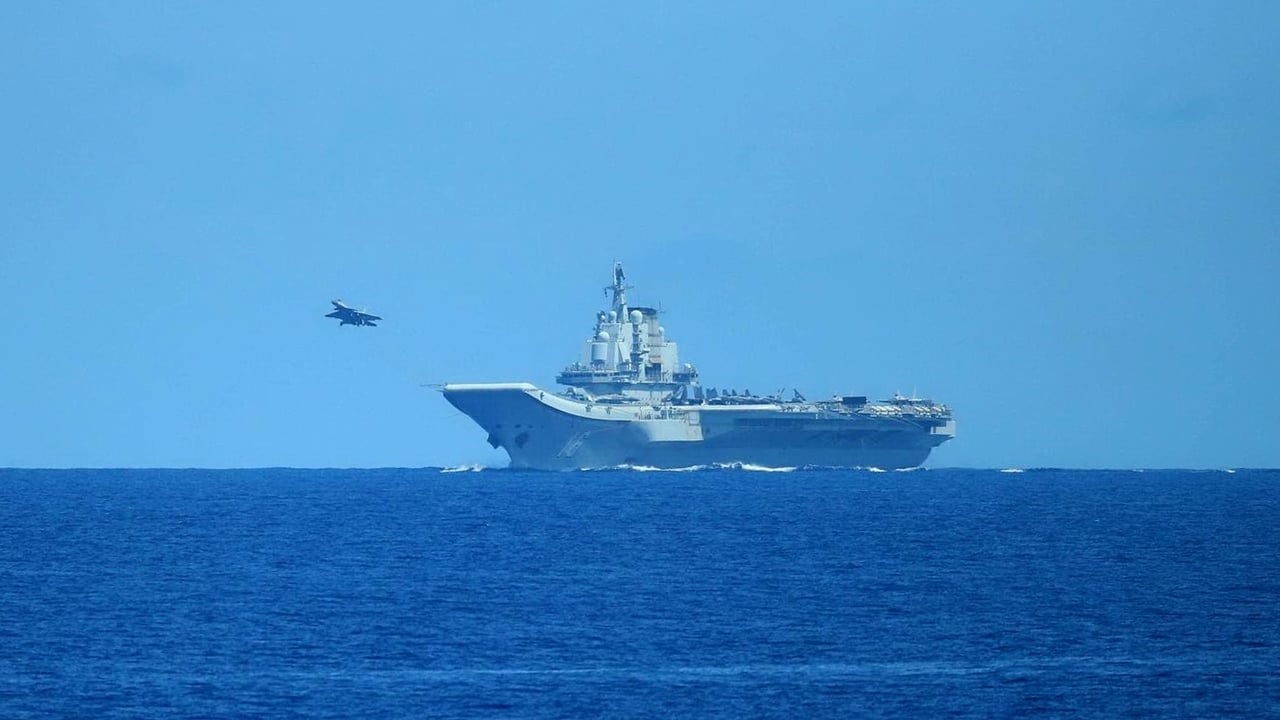
日本防衛省・統合幕僚監部 via Wikimedia Commons, CC BY 4.0
The Brief
China's Ministry of National Defense announced key military diplomacy and domestic defense mobilization measures during a mid-September briefing. Senior Colonel Jiang Bin reported that the People's Liberation Army Navy's 48th escort task group is conducting port visits to Bangladesh, Myanmar, and Malaysia following operations in the Gulf of Aden. Domestically, the military deployed certified instructors to train nearly 30 million students across more than 20,000 schools this year, while defense authorities collaborate with the Ministry of Education to update the national student military training syllabus with digital and intelligent instruction methods.
Why it matters
The briefing highlights how China balances outward military diplomacy in its immediate neighborhood with broad internal defense mobilization. Port calls across the Bay of Bengal and Southeast Asia demonstrate naval operational reach and bilateral engagement. Simultaneously, mass student military training programs reflect Beijing's institutionalized effort to instill defense readiness and civic alignment across the younger generation.
China context
Under the Defense Law, Education Law, and National Defense Education Law, military training for high school and university entrants is a mandatory component of Chinese education. Amid evolving security environments, the Central Military Commission's National Defense Mobilization Department and the Ministry of Education are overhauling this curriculum to incorporate modernized, intelligent teaching methods, reinforcing ideological framing alongside practical defense basics.
Editor's View
EDITOR'S VIEW — Analysis and inference, not factual reporting.
The dual focus of the briefing reveals Beijing's integrated approach to civil-military coordination and international engagement. On the external front, dispatching naval escort task forces to littoral neighbors functions as routine naval diplomacy aimed at building regional trust. Internally, standardizing training for tens of millions of students demonstrates that national defense mobilization remains deeply embedded in the state's educational ecosystem, linking routine school curricula directly to military readiness structures.
What to watch
- Implementation and regional reception of the 48th escort task group's port visits to Bangladesh, Myanmar, and Malaysia.
- The rollout and trial results of the revised student military training syllabus in designated provinces.
- Outcomes of multilateral defense events, including the medical assistance workshop with the OPCW and the international cadet technology week.
Key Takeaways
- 1The PLA Navy's 48th escort task group is conducting port calls to Bangladesh, Myanmar, and Malaysia after completing its mission in the Gulf of Aden.
- 2China and the OPCW are co-hosting a specialized medical defense and assistance course for 28 participants from nearly 20 state parties in Xi'an.
- 3Nearly 500,000 certified military instructor deployments covered training for roughly 30 million students across over 20,000 Chinese schools this year.
- 4The Ministry of Education and the CMC National Defense Mobilization Department are updating the student military training syllabus to include smart and digital instructional methods.
China's Ministry of National Defense detailed a series of external diplomatic missions and domestic defense education efforts during its regular press briefing in mid-September.
Defense Ministry spokesperson Senior Colonel Jiang Bin announced that the People's Liberation Army Navy's 48th escort task group had concluded its operational mission in the Gulf of Aden and was sailing homeward. On its return transit, the naval task group will pay port calls to Bangladesh, Myanmar, and Malaysia. According to the ministry, the visits will include professional exchanges and public ship-open days aimed at deepening traditional friendships, reinforcing strategic mutual trust, and contributing to regional stability.
On multilateral commitments, Jiang stated that China's government and the Organisation for the Prohibition of Chemical Weapons are co-hosting the fourth training course on medical assistance and protection against chemical weapons at the Air Force Medical University from September 14 to 18. The program convened 28 participants from nearly 20 state parties, including Algeria, Austria, and Argentina. Training sessions center on diagnosing chemical poisoning, clinical treatment of chemical casualties, and organizing protective medical rescue through tabletop exercises and field simulations.
In addition, the National University of Defense Technology is scheduled to hold the 2026 Future Military Technology International Cadet Week in Changsha, welcoming international cadets from countries including Pakistan, Laos, Egypt, Oman, and Kazakhstan.
Turning to domestic defense mobilization, the spokesperson reviewed ongoing military training for incoming university and secondary school students. Jiang reported that the military mobilized certified instructors nearly 500,000 person-times this year to organize training for approximately 30 million students in more than 20,000 educational institutions nationwide. The training fulfills statutory requirements under China's Defense Law, Education Law, and National Defense Education Law.
To adapt to contemporary needs, the Ministry of Education and the Central Military Commission's National Defense Mobilization Department are revising the official student military training syllabus. The proposed updates incorporate modernized content and expand the use of intelligent and information-based pedagogical tools, which are currently undergoing trials and pilot instruction in selected provinces.
Sources
- 2026年9月中旬国防部例行新闻发布 — China Military Online · 9/14/2026
- 国防部:军训不只是队列与汗水 更是青春的锻造与成长 — China Military Online · 9/14/2026
- 国防部:第四期化学武器医学援助与防护培训班将举办 — China News Service · 9/14/2026
- 国防部:港澳青年进军营活动将在广州举行 — China News Service · 9/14/2026
- 国防部:国际学员科技周将在国防科技大学举办 — China News Service · 9/14/2026
- 国防部:第十三届北京香山论坛即将开幕 — China News Service · 9/14/2026