
Business & IndustryAnalysis
China Launches First Cross-Border Sea-Rail-Highway Single-Ticket Train
The new multimodal transport route connects South Korea to Kyrgyzstan via China, cutting transit times by nearly 30 percent.
Share
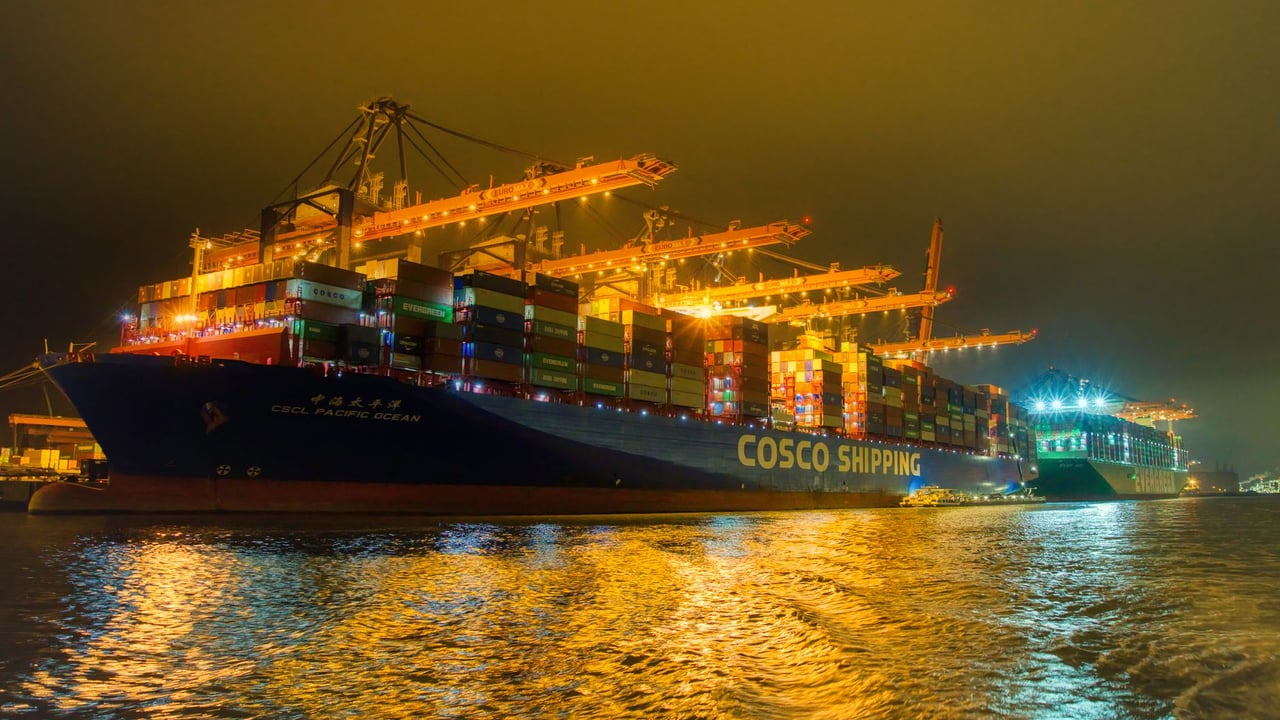
Photo by A P on Pexels
The Brief
On July 21, 2026, China launched its first cross-border sea-rail-highway "single-ticket" (yidanzhi) freight train, departing from Yantai Port with commercial vehicles and auto parts. The X80442 train utilizes a seamless multimodal transport model, carrying goods from Incheon, South Korea, by sea to Yantai, then by rail to Kashgar, and finally by highway to Bishkek, Kyrgyzstan. This unified documentation system reduces the transit time to 12 days—five days faster than traditional shipping methods—by eliminating administrative barriers between different transport sectors.
Why it matters
This development represents a major breakthrough in China's logistics integration, successfully implementing a unified 'single-ticket' system across sea, rail, and highway transport. By cutting transit times by nearly 30%, it establishes a highly efficient trade corridor connecting South Korea, China, and Central Asia.
China context
The initiative aligns with China's national strategy to reduce logistics costs, enhance supply chain resilience, and promote the high-quality development of the Belt and Road Initiative through institutional and operational innovations in transport.
Editor's View
EDITOR'S VIEW — Analysis and inference, not factual reporting.
The successful launch of the "single-ticket" system highlights China's ongoing efforts to address institutional bottlenecks in domestic and international logistics. Historically, transitioning cargo between maritime, rail, and road networks required separate documentation, leading to delays and administrative redundancies. By establishing a unified bill of lading, China is attempting to standardize logistics data and legal liabilities across different jurisdictions and transport modes. If scaled successfully, this model could significantly boost the competitiveness of land-sea corridors linking East Asia to Central Asia and Europe.
What to watch
- Whether this 'single-ticket' model will be expanded to other ports and international routes.
- The progress of exploring the 'property rights' (物权化) of multimodal transport documents to facilitate trade financing.
- The long-term operational frequency and commercial viability of the X80442 train route.
Key Takeaways
- 1The X80442 train departed Yantai Port on July 21, 2026, carrying commercial vehicles and auto parts.
- 2The route connects Incheon, South Korea, to Bishkek, Kyrgyzstan, via China's Yantai Port and Kashgar.
- 3The "single-ticket" system allows for a single bill of lading, one-time settlement, and a single container throughout the journey.
- 4Transit time was reduced from 17 days to 12 days, representing an approximate 30% increase in efficiency.
- 5Future plans include exploring the "property rights" of multimodal transport documents to support trade financing.
On July 21, 2026, China successfully launched its first cross-border sea-rail-highway "single-ticket" (yidanzhi) freight train. The X80442 train, loaded with commercial vehicles and automotive spare parts, departed from Yantai Port in Shandong Province at approximately 10:00 AM, marking a significant operational milestone in international multimodal transport.
According to China State Railway Group Co., Ltd., the new service integrates maritime, rail, and highway transport under a unified administrative framework. The shipment originated in Incheon, South Korea, from where it was shipped by sea to Yantai Port. Upon arrival, the cargo was transferred directly to a freight train bound for Kashgar (Kashi) in Xinjiang. From Kashgar, customs-registered highway vehicles transported the goods across the border to their final destination in Bishkek, Kyrgyzstan.
The entire journey took 12 days, representing a five-day reduction compared to traditional transport methods. This represents an approximate 30% improvement in logistics efficiency.
The core innovation of the service lies in its "single-ticket" system, which addresses long-standing administrative barriers between different transport sectors. Under this model, a single, unified bill of lading is issued through the national railway platform. This document is mutually recognized by maritime, rail, and road operators, allowing clients to complete the entire shipping process with a single commission, one-time settlement, and a single container from start to finish.
Liu Tao, an official from the transport management department of the Shandong Provincial Department of Transportation, noted that the system coordinates cargo, container, and transport capacity. This integration helps prevent capacity mismatches and transit delays at key transfer hubs like ports and border crossings.
Looking forward, China Railway Container Transport Co., Ltd. and China Railway Jinan Group Co., Ltd. plan to expand the application of this "single-ticket" model. The agencies aim to deepen partnerships with ports, shipping lines, and foreign trade enterprises, while also exploring the "property rights" (wuquanhua) of multimodal transport documents to facilitate trade financing.
Sources
- 我国首趟跨境海铁公“一单制”班列成功开行--经济·科技--人民网 — People's Daily · 7/21/2026
- China Daily — China Daily
- China Daily — China Daily
- Yantai Launches First ‘Single Bill of Lading’ Sea-Rail Intermodal Train — State Council of China