
Policy & RegulationAnalysis
China Unveils Five-Year Crop Plan Targeting Grain Security and Green Tech by 2030
The Ministry of Agriculture outlines targets to safeguard staple food supplies, consolidate oilseeds, and deploy advanced farm machinery under the 15th Five-Year Plan.
Share
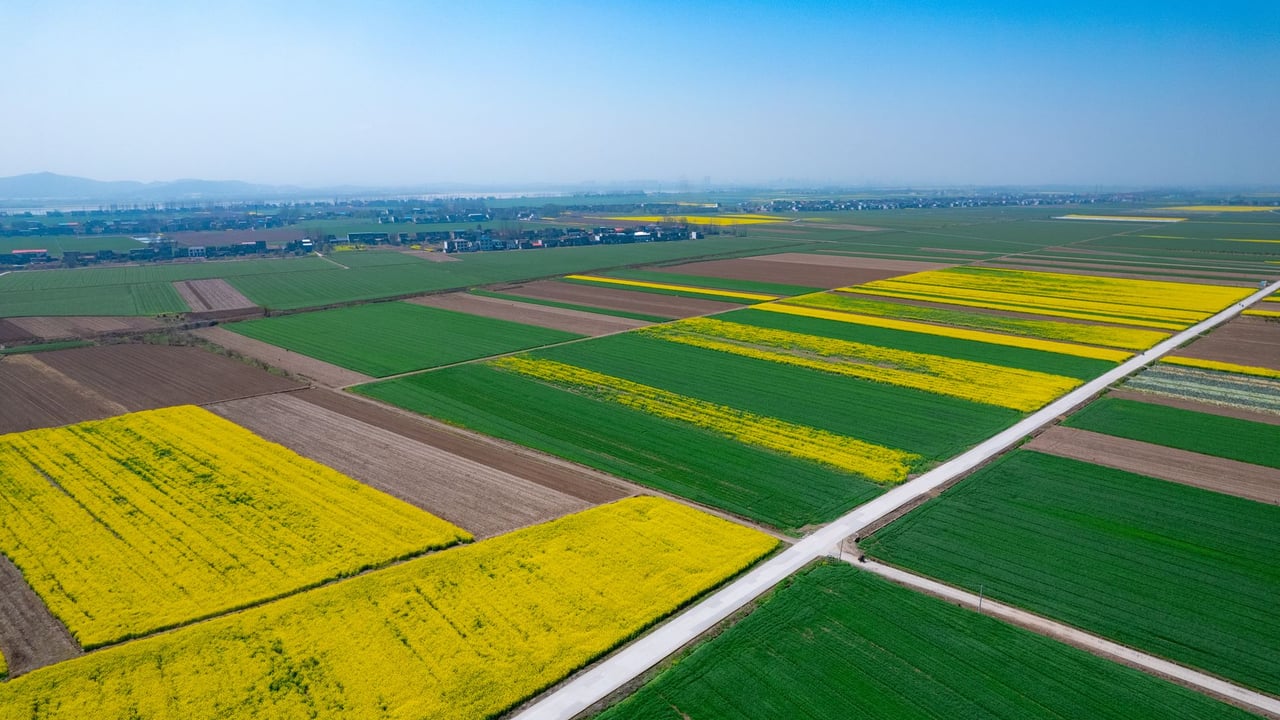
Photo by jason hu on Pexels
The Brief
China's Ministry of Agriculture and Rural Affairs has issued the 15th Five-Year Plan for National Crop Cultivation Development, setting targets to steadily enhance comprehensive grain production capacity through 2030. The blueprint reaffirms China's baseline principles of basic self-sufficiency in grains and absolute security in staple food, while mandating steady capacity gains in soybeans, oilseeds, cotton, and sugar crops. The policy prioritizes agricultural 'new quality productive forces'—including seed breeding, precision irrigation, and tailored machinery—alongside water conservation and green production methods.
Why it matters
The plan establishes the overarching blueprint for China's cropping sector and agricultural resource management through the 2026–2030 period. As land and water constraints tighten, Beijing is shifting its food security strategy toward tech-enabled yields, input efficiency, and localized mechanization, directly shaping domestic farm policy, agritech investment, and global commodity import expectations.
China context
Food security remains a top national priority for Chinese leadership, frequently described as an essential national foundation. With domestic science and technology already contributing over 64% to agricultural output growth, policymakers are relying on high-standard farm technology, seed innovation, and smart mechanization to maintain self-sufficiency without increasing environmental pressure.
Editor's View
EDITOR'S VIEW — Analysis and inference, not factual reporting.
The 15th Five-Year Plan for crop cultivation reflects Beijing's dual imperatives: insulating the world's most populous market from global food supply shocks while steering agriculture toward environmental sustainability. Rather than chasing yield gains through intensive chemical inputs, the strategy pivots heavily toward precision agriculture, resource efficiency, and domestic technological capability. By specifically calling for large-scale intelligent machinery for contiguous fields and lightweight equipment for hilly regions, the government acknowledges the structural diversity of China's agricultural landscape. The ultimate challenge will lie in local implementation—ensuring that smallholders and regional cooperatives can afford and adopt these precision tools.
What to watch
- Publication of the full text and quantitative indicator breakdowns of the 15th Five-Year Plan for Crop Cultivation.
- Specific subsidy and support programs for domestic soybean and oilseed production and seed breeding programs.
- Procurement targets and commercial deployment timelines for high-end smart farm machinery and hillside-adapted equipment.
Key Takeaways
- 1The Ministry of Agriculture and Rural Affairs released the 15th Five-Year Plan for National Crop Cultivation Development through 2030.
- 2China committed to preserving basic self-sufficiency in grains and absolute security in staple foods, alongside higher output capacity in soybeans and oilseeds.
- 3Science and technology currently account for more than 64% of China's agricultural growth, serving as the basis for new productivity initiatives.
- 4Key measures include precision irrigation, microbial pesticides, large-scale smart machinery, and specialized equipment for hilly farming areas.
China's Ministry of Agriculture and Rural Affairs has released the 15th Five-Year Plan for National Crop Cultivation Development, establishing core production and technological targets through 2030, state media reported on Wednesday.
The framework outlines a mandate to steadily elevate the country's comprehensive grain production capacity over the coming five-year cycle, according to reports by Xinhua. A central tenet of the strategy is maintaining firm adherence to bottom-line security goals: ensuring basic self-sufficiency in grains and absolute security in staple food provisions.
Beyond staple grains, the plan directs authorities to consolidate and raise production capacity for soybeans, oil crops, cotton, and sugar crops to secure balanced self-sufficiency levels. It also calls for balanced supply, rich variety, and reliable quality for vegetable, fruit, and tea cultivation to meet evolving domestic dietary demands.
Policy emphasis is placed heavily on environmental sustainability and resource efficiency. The ministry designated green production as the baseline for the sector, ordering targeted measures to advance agricultural water efficiency, implement differentiated water-saving practices by region, and heighten the precision of fertilizer application. The guidelines also instruct farming operations to refine chemical pesticide usage and expand the adoption of eco-friendly biological and plant-derived alternatives.
Technological modernization serves as the primary engine for these targets. Official data highlighted in the policy indicates that science and technology currently account for more than 64% of China's agricultural yield growth. Under the framework of developing 'new quality productive forces' in farming, the government plans to accelerate the breeding and commercialization of breakthrough crop varieties.
The plan specifies several technical priorities across major staples: smart nursery raising and precision irrigation for rice; micro-sprinkler irrigation and quality-preserving cultivation for wheat; precision management and mechanized grain harvesting for corn; and wide-ridge dense planting coupled with integrated water-and-fertilizer management for soybeans.
To overcome equipment bottlenecks, the ministry urged the development and rollout of large-scale, high-end intelligent farm machinery designed for vast agricultural parcels, alongside lightweight, efficient equipment tailored for hilly and mountainous regions. The document also outlined enhanced capabilities for agricultural disaster prevention, mitigation, and relief, stressing tighter meteorological monitoring, early warning systems, and integrated pest control.
Sources
- 到2030年 我国粮食综合生产能力稳步提升 — China News Service · 9/17/2026
- 我国力争到2030年粮食综合生产能力稳步提升 — Xinhua News Agency · 9/17/2026