
Business & IndustryAnalysis
China's Foreign Trade Exceeds 30 Trillion Yuan in First Seven Months of 2026
Robust demand for high-tech exports and surging imports drive a 17.3% year-on-year increase in overall goods trade.
Share
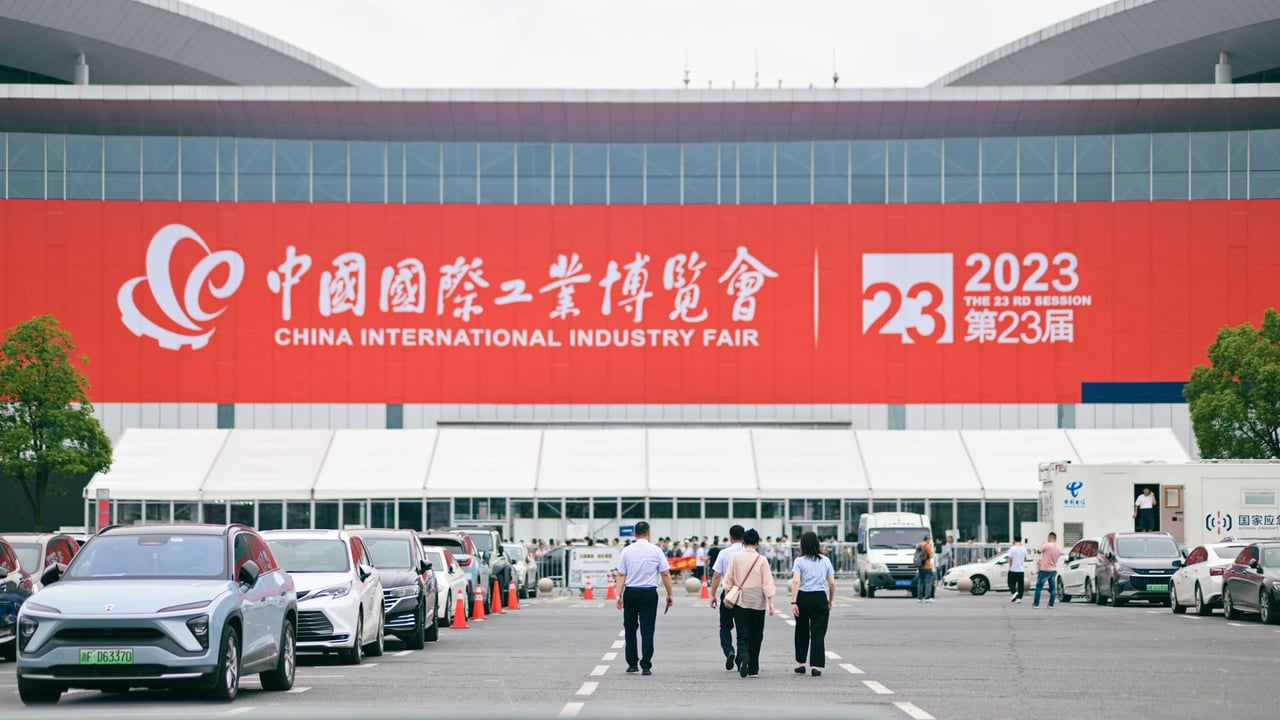
Photo by Wang Shui on Pexels
The Brief
China's foreign trade in goods reached 30.13 trillion yuan ($4.2 trillion) during the first seven months of 2026, marking a 17.3% increase year-on-year, according to official customs data reported by state media outlets. Exports rose 14% to 17.44 trillion yuan, while imports expanded at a faster pace of 22% to 12.69 trillion yuan. Monthly trade value exceeded 4 trillion yuan for the fifth consecutive month in July, buoyed by expanding mechanical and electrical shipments, high-tech goods, and strong domestic import demand.
Why it matters
China's trade expansion highlights a dual trend: strong international demand for Chinese advanced manufacturing goods alongside recovering domestic demand for imported components and commodities. With import growth outpacing export growth by 8 percentage points, China's trade trajectory is contributing to broader global trade balance while reinforcing its position in high-tech supply chains.
China context
Private enterprises continue to serve as the main driver of China's foreign trade, accounting for over 56% of total trade volume. Meanwhile, trade partnerships are shifting toward regional networks and Belt and Road partner countries, with trade with ASEAN reaching 5.14 trillion yuan. This diversification helps mitigate trade friction with traditional markets, even as trade with the United States saw its year-on-year contraction narrow to 1.6%.
Editor's View
EDITOR'S VIEW — Analysis and inference, not factual reporting.
The surge in high-tech exports—particularly in integrated circuits, electric vehicles, and industrial robotics—demonstrates China's ongoing industrial upgrading. However, the contrast between booming high-tech shipments and declining traditional labor-intensive exports underlines a changing structural footprint. Policymakers face the dual challenge of sustaining high-value export competitiveness while managing global trade headwinds and domestic inventory cycles.
What to watch
- Whether high-tech export growth, particularly in integrated circuits and green technology, can sustain its momentum amid potential trade restrictions abroad.
- The impact of strong mechanical and electrical import growth on domestic industrial production and technology integration.
- The trajectory of trade with major partners like ASEAN and the EU compared to the stabilization of bilateral trade volume with the United States.
Key Takeaways
- 1Total goods trade grew 17.3% YoY in the first seven months of 2026 to 30.13 trillion yuan, with July marking the fifth consecutive month above 4 trillion yuan.
- 2Imports increased 22% YoY to 12.69 trillion yuan, outstripping export growth of 14% (17.44 trillion yuan) by 8 percentage points.
- 3Mechanical and electrical products dominated both exports (11.12 trillion yuan, up 21.2%) and imports (5.31 trillion yuan, up 29.7%).
- 4High-tech exports jumped over 50% in July alone, contributing nearly 60% of the month's overall export increase.
- 5Private enterprises remained the largest trade sector, representing 56.9% of total foreign trade.
China's foreign trade in goods expanded 17.3% year-on-year during the first seven months of 2026, reaching a total value of 30.13 trillion yuan, according to data released by the General Administration of Customs and reported by state media including People's Daily and Securities Times.
During the January–July period, exports climbed 14% to 17.44 trillion yuan, while imports grew 22% to 12.69 trillion yuan. In July alone, trade value reached 4.66 trillion yuan, up 19.2% year-on-year, marking the fifth consecutive month in which monthly trade exceeded 4 trillion yuan.
Import growth outpaced exports by 8 percentage points over the seven-month period. Customs official Lyu Daliang noted that economic resilience and structural improvements provided strong support for trade expansion. Imported mechanical and electrical products rose 29.7% to 5.31 trillion yuan, representing 41.9% of total import value. Bulk commodity imports also edged up, with metal ore volume increasing 8.2%. Official reports emphasized that China has implemented zero-tariff policies for 63 countries, maintaining its position as the world's second-largest import market for 17 consecutive years.
On the export side, mechanical and electrical products accounted for 63.8% of total shipments, rising 21.2% to 11.12 trillion yuan. Green and high-tech sectors saw significant gains: electric vehicle exports jumped 71.2%, lithium battery exports increased 35.8%, and 3D printers more than doubled with a 110% surge. Integrated circuit cumulative export value reached $216.02 billion in the first seven months, up 99.5% year-on-year. In July, high-tech exports—including industrial robots and 3D printers—grew over 50% year-on-year, accounting for nearly 60% of the month's overall export expansion. Conversely, labor-intensive product exports dropped 1.4% to 2.37 trillion yuan.
Private enterprises maintained their leading role, generating 17.16 trillion yuan in trade, up 17.2% and comprising 56.9% of the national total. Foreign-invested enterprises grew 17.6% to 8.78 trillion yuan, and state-owned enterprises expanded 17.3% to 4.14 trillion yuan.
By region, trade with ASEAN grew 20% to 5.14 trillion yuan, while trade with Belt and Road participating nations reached 15.36 trillion yuan, up 15.5%. Trade with the European Union rose 9.5% to 3.67 trillion yuan. Trade with the United States contracted 1.6% to 2.38 trillion yuan, though the rate of decline narrowed by 2 percentage points compared to the first six months of the year.
Sources
- 超30万亿元!今年前7月我国货物贸易进出口延续增长态势 — Securities Times · 8/7/2026
- 海关总署:今年前7个月我国进口增速快于出口8个百分点 — Securities Times · 8/7/2026
- 我国外贸进出口规模连续5个月超过4万亿元--经济·科技--人民网 — People's Daily · 8/7/2026
- Com — People's Daily · 8/7/2026
- 前7个月我国货物贸易进出口超30万亿元--经济·科技--人民网 — People's Daily · 8/7/2026